
Introduction
The alphabet soup of medical device regulation – UDI, EUDAMED, MDR – can make even the most seasoned regulatory manager twitch. But there’s no escaping it: UDI and EUDAMED are now at the heart of European medical device traceability.
As the European Commission moves closer to full EUDAMED activation, enforcement pressure is rising fast. The clock is ticking: four EUDAMED modules – Actors, UDI/Devices, Notified Bodies & Certificates, and Market Surveillance – are on track to be fully functional by Q2 2025, with mandatory use from 1 January 2026 (Rimsys). That’s less than a year to ensure your data is clean, consistent, and ready for upload.
The risk of not preparing now? Incomplete UDI data or missed EUDAMED registration can block market access, trigger non-conformities, or delay device approvals. Regulators, Notified Bodies, and even customers are already checking EUDAMED entries as part of due diligence.
Get expert help implementing UDI and EUDAMED compliance with Patient Guard — your regulatory co-pilot for smooth MDR navigation. Learn more here.
What Are UDI and EUDAMED – and Why They Matter for MDR Compliance
Let’s simplify the jargon.
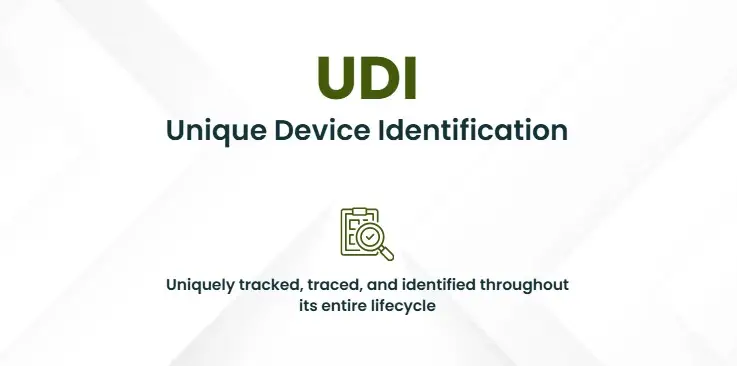
UDI, or Unique Device Identification, is a code that gives every medical device a unique digital fingerprint. It’s made up of a Basic UDI-DI (for device families) and a UDI-DI (for specific models). Think of it like a VIN number for your medical devices.
EUDAMED, the European Database on Medical Devices, is the online platform where all this identification and registration data lives. The European Commission manages it and connects manufacturers, importers, distributors, Notified Bodies, and regulators. You can view the official overview on the European Commission’s EUDAMED portal.
Together, UDI and EUDAMED are the backbone of EU MDR compliance. They ensure traceability throughout a device’s life, from manufacturing to post-market surveillance and allow authorities to identify, recall, or investigate devices efficiently.
You can find the legal details in Article 27 of Regulation (EU) 2017/745, which spells out UDI obligations for all “economic operators” – that means manufacturers, authorised representatives, importers, and distributors alike.
How UDI and EUDAMED Support Medical Device Traceability
Traceability is the heart of modern regulation. The MDR demands that every device on the EU market can be traced back to its origin, manufacturing site, and batch – no matter how complex the supply chain.
Here’s how it works:
- UDI provides the unique identifier printed on the label and encoded in barcodes or RFID.
- EUDAMED stores the official registration details linked to that identifier, including certificates, actors, and vigilance data.
When combined, they make the medical-device ecosystem more transparent. Manufacturers get faster access to post-market data, distributors can verify devices instantly before sale, and regulators can act swiftly if safety issues arise.
The result: fewer recalls gone wrong, faster investigations, and a more trustworthy market for patients and professionals.
Key Roles and Responsibilities Under UDI and EUDAMED
Manufacturers
Manufacturers bear the lion’s share of responsibility. They must:
- Assign and maintain Basic UDI-DI and UDI-DI codes for every product family and model.
- Keep device master data updated.
- Upload device and certificate data into EUDAMED via the UDI/Device module.
- Maintain control over version history and ensure data integrity.
Full details are available in the UDI/Device Registration guidance published by the Commission.
Authorised Representatives
Non-EU manufacturers must appoint an Authorised Representative (AR) in the EU. The AR verifies the manufacturer’s EUDAMED entries, supports vigilance reporting, and ensures the data meets MDR requirements.
Importers and Distributors
Importers and distributors act as gatekeepers. Before placing devices on the EU market, they must confirm:
- A valid UDI is affixed and readable on the packaging or product.
- The device is listed correctly in EUDAMED.
- The manufacturer and AR are registered actors.
Under distributor responsibilities, MDR, they must also retain traceability records, including UDI data, and support field safety actions when needed.
Suppliers and Subcontractors
Suppliers provide the granular data that makes traceability possible. Under supplier UDI requirements, they must communicate component lot numbers, raw-material identifiers, or sub-assembly trace data upstream so manufacturers can maintain complete UDI linkage.
If you’re a supplier, make sure your contracts explicitly include UDI data obligations – auditors are now checking this.

Common UDI and EUDAMED Compliance Pitfalls (and How to Avoid Them)
Mistakes happen. Unfortunately, when they happen in EUDAMED, everyone can see them.
Here are the repeat offenders:
- Duplicate or inconsistent UDI-DIs – often from spreadsheet chaos.
- Incomplete EUDAMED fields – missing Basic UDI-DI or device group data.
- Out-of-sync supplier information – untraceable component batches.
- Incorrect device status – obsolete models still marked “active”.
- No ownership matrix – confusion over who updates what and when.
How to fix it:
- Apply strict data-validation rules before uploading.
- Use EMDN (European Medical Device Nomenclature) correctly and consistently.
- Create a RACI chart defining who owns each data field.
- Connect change-control procedures to your EUDAMED update process.
Practical Steps to Achieve UDI and EUDAMED Compliance
Map Your Device Portfolio
Start by inventorying every SKU, model, and configuration. Determine which belong under a Basic UDI-DI and which require unique UDI-DI entries. Many manufacturers underestimate how large their device family tree really is.
Verify Data Accuracy and Ownership
Establish clear accountability. Who maintains the master UDI list? Who verifies supplier data? Who handles EUDAMED submissions? Define it now, before you discover duplicate uploads the hard way.
Integrate EUDAMED Uploads Into the QMS
Treat EUDAMED like any other controlled process. Tie updates to document control, design change records, and release management. Include EMDN codes and ensure new product launches trigger automatic registration steps.
Train Teams and Partners
UDI and EUDAMED compliance isn’t just an IT job. Train your regulatory, supply-chain, and quality teams – and yes, your distributors too.
Audit training and internal audit best practices should include mock data-verification exercises. Staff should be able to demonstrate how UDI and EUDAMED data align with technical documentation.

Use Technology and External Support
Manual uploads are fine for small portfolios. For larger ones, consider regulatory software or expert support. Patient Guard’s UDI and EUDAMED Compliance Support services help integrate tools, train teams, and manage uploads efficiently.
Maintain Continuous Compliance
Once your data is live, your work isn’t done. Build traceability audits into your annual schedule. Periodically review UDI and EUDAMED entries to ensure they match real-world products and certificates.
As of 30 June 2024, the European Commission’s 10th Notified Body survey reported 2,980 MDR certificates issued – a growing baseline that signals steady market migration into EUDAMED (RAPS). More certificates mean more scrutiny; your data quality will be under the microscope.
The Business Impact of Getting UDI and EUDAMED Right
Compliance isn’t just about avoiding fines—it’s a competitive advantage.
Companies that handle UDI and EUDAMED well can:
- Accelerate product registrations.
- Strengthen credibility in tenders.
- Improve recall and vigilance efficiency.
- Reduce audit stress and data-correction costs.
In the MedTech Europe 2024 regulatory survey, manufacturers reported steep ongoing cost pressure: over a five-year cycle, medical device companies face about 50% higher maintenance and re-certification costs, while IVD manufacturers see roughly 70% increases. Clean, validated UDI and EUDAMED data can dramatically reduce rework and regulatory friction.
Conclusion
UDI and EUDAMED aren’t just IT projects – they’re the nervous system of MDR compliance. When managed well, they deliver visibility, safety, and credibility. When ignored, they can shut down market access overnight.
With 2025 set to be the final grace period before full activation, now is the time to get your data house in order. Review your portfolio, define ownership, and build traceability checks into your QMS.
Contact Patient Guard today to streamline your UDI and EUDAMED processes and keep your MDR compliance future-proof. Speak with our experts.
Frequently Asked Questions
UDI is the unique identification code assigned to each medical device. EUDAMED is the European database where that information – and related regulatory data – is stored. Together, they enable full traceability under MDR.
Manufacturers are primarily responsible for entering and maintaining device data. Authorised representatives validate non-EU manufacturer entries, while importers and distributors must verify that devices appear correctly in EUDAMED before sale.
Incorrect or missing data can result in failed submissions, audit findings, or even blocked market access. Regulators can suspend listings or delay certification renewals until data is corrected.
UDI provides a unique code for each device, allowing authorities, distributors, and healthcare providers to trace products throughout their lifecycle, from production to end-of-life.
Distributors and importers need access to verify listings and store UDI data for traceability. Suppliers must share correct lot or component information so manufacturers can maintain accurate upstream records.
Absolutely. Patient Guard offers tailored training, mock audits, and EUDAMED submission support for manufacturers, distributors, and suppliers. We help you stay compliant without losing your sanity (or your spreadsheets).
Patient Guards Recent Posts

EUDAMED Enters a New Phase: Are You Ready for May 2026?
EUDAMED enters a new phase as four modules become mandatory from 28 May 2026. Learn what changes and how to prepare for compliance.

ISO 14971 Risk Management Implementation Guide
Medical devices exist to improve health outcomes, but every device carries potential risk. Managing those risks in a structured, documented, and defensible way is essential for regulatory approval and patient safety.

Clinical Evaluation Report: EU MDR Requirements
Clinical evidence is central to demonstrating the safety and performance of medical devices in the European Union.