
21 CFR Part 820 QMSR Implementation Services (FDA Quality System Regulation)
Our 21 CFR Part 820 implementation services support medical device organisations in developing and implementing a compliant Quality Management System Regulation (QMSR) aligned with FDA requirements. Patient Guard provides expert guidance to ensure your Quality Management System (QMS) meets US FDA expectations and is inspection-ready.
21 CFR Part 820 QMSR Implementation Services
21 CFR Part 820, now known as the FDA Quality Management System Regulation (QMSR), establishes quality management system requirements for manufacturers of finished medical devices intended for the U.S. market.
Effective from 2 February 2026, the QMSR incorporates ISO 13485:2016 by reference, bringing FDA quality system requirements into closer alignment with the internationally recognised medical device quality management standard while maintaining additional FDA-specific regulatory requirements.
Manufacturers subject to 21 CFR Part 820 must establish and maintain a Quality Management System appropriate to their devices and activities, covering applicable processes throughout design, manufacture, packaging, labelling, storage, installation and servicing.
Patient Guard provides expert 21 CFR Part 820 QMSR implementation services, helping medical device manufacturers establish, transition, remediate and maintain Quality Management Systems aligned with both FDA QMSR and ISO 13485:2016 requirements.
Our consultants can support the complete implementation process, from initial gap analysis and QMS planning through procedure development, process implementation, staff training, internal auditing and FDA inspection readiness.
For organisations already operating an ISO 13485 Quality Management System, we can assess the existing QMS against the additional requirements and terminology of the FDA QMSR, helping identify and address gaps before FDA inspection.
Whether you are entering the U.S. medical device market for the first time, transitioning from the former FDA Quality System Regulation, or strengthening an existing QMS, Patient Guard provides a practical and structured approach to achieving and maintaining 21 CFR Part 820 QMSR compliance.
New to FDA Medical Device Regulations?
Understanding the wider FDA regulatory framework is an important part of bringing a medical device to the US market. For a practical overview of FDA device classification, establishment registration, product listing, 510(k), De Novo, PMA, Quality Management System Regulation (QMSR), labelling, and post-market requirements, read our Complete Guide to FDA Medical Device Regulations.
Quality Assurance Manager
Why Choose Patient Guard for QMSR Implementation?
QMSR Gap Analysis
We assess your existing Quality Management System against 21 CFR Part 820 QMSR and ISO 13485:2016 requirements to identify gaps, risks, and priorities for implementation.
ISO 13485 Alignment
We help align your QMS with ISO 13485:2016 while addressing the additional FDA-specific requirements needed for U.S. regulatory compliance.
Practical QMS Implementation
We develop and implement clear, proportionate procedures and processes that reflect your organisation, device portfolio, and operational activities.
FDA Inspection Readiness
We prepare your organisation for FDA inspection by reviewing documentation, records, implementation evidence, responsibilities, and areas commonly scrutinised by investigators.
Documentation & Process Control
We support development and remediation of key QMS processes including document control, CAPA, supplier controls, production controls, complaints, and management review.
Ongoing Compliance Support
Our support can continue after implementation through internal audits, QMS maintenance, remediation, training, and preparation for future FDA inspections.
What Our 21 CFR Part 820 Implementation Service Includes
QMS Gap Analysis
Reviewing your existing Quality Management System against 21 CFR Part 820 QMSR, ISO 13485:2016 and applicable FDA-specific requirements to identify compliance gaps and implementation priorities.
QMS Documentation
Developing and updating quality manuals, policies, procedures, forms and records required to establish a structured and effective FDA-compliant Quality Management System.
Design & Development Controls
Implementing appropriate processes for design and development planning, design inputs and outputs, verification, validation, design changes and transfer where applicable.
Production & Supplier Controls
Establishing processes for purchasing and supplier management, production controls, process validation, identification, traceability and other applicable operational activities.
CAPA & Post-Market Processes
Developing processes for nonconformities, corrective and preventive action, complaints, servicing and other post-market information to support effective quality management and regulatory compliance.
Training & Inspection Readiness
Supporting QMS implementation through staff training, internal audits and readiness activities to help ensure your organisation is prepared for FDA inspection.
Who Requires 21 CFR Part 820 Implementation?
- Medical device manufacturers entering the US market
- Organisations undergoing FDA inspections
- Companies with FDA compliance gaps or remediation needs
- Start-ups developing medical devices for US distribution
- Contract manufacturers and specification developers
21 CFR Part 820 Requirements Overview
Under the U.S. FDA regulatory framework, medical device manufacturers subject to 21 CFR Part 820 must establish and maintain a Quality Management System that meets the requirements of the FDA Quality Management System Regulation (QMSR).
Effective from 2 February 2026, the QMSR incorporates ISO 13485:2016 by reference while retaining additional FDA-specific requirements that manufacturers must address within their Quality Management System.
A comprehensive 21 CFR Part 820 QMSR-compliant Quality Management System typically includes:
| No | Heading | Contents |
|---|---|---|
| 1. | QMS Governance & Management | Quality objectives, organisational responsibilities, management commitment, management review and oversight of the Quality Management System. |
| 2. | Document & Record Control | Processes for creating, approving, controlling, maintaining and retaining QMS documents and quality records. |
| 3. | Design & Development | Design planning, inputs, outputs, reviews, verification, validation, transfer and control of design and development changes, where applicable. |
| 4. | Supplier & Production Controls | Supplier evaluation and monitoring, purchasing controls, production processes, process validation, identification and traceability, as applicable. |
| 5. | Risk & CAPA Processes | Risk-based quality processes, nonconformity management, corrective action and continual improvement activities. |
| 6. | Complaints & FDA Reporting | Complaint handling processes and integration with applicable FDA requirements for Medical Device Reporting, corrections and removals. |
| 7. | Audits & Inspection Readiness | Internal audits, management review, QMS effectiveness monitoring, staff readiness and preparation for FDA inspections. |
Our Process
Initial consultation
We assess your organisation, products, and FDA regulatory requirements.
Gap analysis
We identify areas requiring development to meet QMSR requirements.
QMS development
We build your QMS aligned with FDA expectations.
Training and implementation
We support rollout and train your team on FDA compliance.
Inspection readiness
We prepare your organisation for FDA inspections and audits.
Industries We Support
We support QMSR implementation across:
- Medical device manufacturers
- IVD manufacturers
- Software as a Medical Device (SaMD)
- Contract manufacturers
- Healthcare technology companies
Cost of Service
CFR 21 Part 820 Quality System Regulation Implementation
From
Ensure quality compliance and readiness with expert 21 CFR Part 820 QMSR implementation support. Pricing starts from £5,850 for a basic implementation.
Features
- Full CFR 21 Part 820 compliant QMS development tailored to your business
- Gap analysis and implementation roadmap
- Internal audit and management review support
- End-to-end support
Time Lines
Week 1–2 – Gap Analysis & Planning
Assess current processes and define the CFR 21 Part 820 implementation roadmap
Week 3–6 – QMS Development & Implementation
Develop documentation, map processes, and implement the Quality Management System
Week 7–20 – Audit Readiness
Conduct internal audits and prepare for inspection audits
Implementation typically takes between 4–20 weeks, depending on the size and complexity of your organisation
Frequently Asked Questions (FAQs)
What is 21 CFR Part 820?
21 CFR Part 820 is the FDA Quality Management System Regulation governing quality systems for medical device manufacturers selling in the United States.
Is 21 CFR Part 820 mandatory?
Yes, compliance is mandatory for organisations marketing medical devices in the US.
How long does QMSR implementation take?
Implementation typically takes between 8–20 weeks depending on organisation size and complexity.
How does QMSR compare to ISO 13485?
QMSR and ISO 13485 are closely aligned, but QMSR includes specific FDA requirements such as complaint handling and MDR reporting.
What happens during an FDA inspection?
FDA inspections assess compliance with QMSR requirements and may result in observations (Form 483) if issues are identified.
Related Services
Click on the links below to discover more:
- CFR 21 Part 820 QMSR Internal Audits
- ISO 13485 Implementation
- IEC/ISO 27001 Implementation
- ISO 9001 Implementation
Recent Blog Posts

FDA QMSR and ISO 13485: What Medical Device Manufacturers Need to Know in 2026
FDA’s Quality Management System Regulation (QMSR) is now in effect. This guide explains how QMSR incorporates ISO 13485:2016, what FDA-specific requirements remain, how FDA inspections have changed and what medical device manufacturers need to do to maintain US compliance.
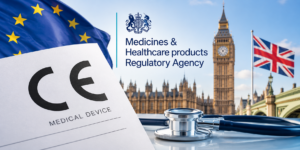
MHRA Confirms Indefinite Recognition of CE-Marked Medical Devices in Great Britain
The MHRA has confirmed plans to recognise CE-marked medical devices indefinitely in Great Britain, removing the planned 2030 deadline for qualifying EU MDR and IVDR devices. Discover what this significant regulatory announcement means for manufacturers, UKCA marking, UK Responsible Person requirements and future access to the UK medical device market.

FDA Medical Device Classification: Class I, Class II and Class III Explained
Understand FDA medical device classification and the differences between Class I, Class II and Class III devices. Learn how to identify your FDA product code, regulatory controls, 510(k) exemptions and the appropriate pathway to the US market.

FDA 510(k) Clearance: A Step-by-Step Guide for Medical Device Manufacturers
Does your medical device require FDA 510(k) clearance? This step-by-step guide explains the 510(k) process, substantial equivalence, predicate devices, testing, eSTAR submissions, FDA review and what manufacturers need to do after clearance.

FDA Medical Device Regulations: A Complete Guide for Manufacturers
Planning to place a medical device on the US market? This complete guide explains FDA medical device regulations, including device classification, 510(k), De Novo and PMA pathways, QMSR and ISO 13485, establishment registration, device listing, U.S. Agent requirements, UDI and post-market obligations.

How to Become NHS Procurement Ready: From DTAC to NHS Market Access
Preparing to sell digital health technology to the NHS requires more than completing DTAC. This guide explains how manufacturers can build a procurement-ready position by aligning regulatory compliance, clinical safety, data protection, cybersecurity, interoperability, accessibility and commercial evidence for NHS market access.