Updated: 22nd June 2026
Reviewed by: David Small, BSc (Hons), MSc, MTOPRA (Founder & CEO)
Patient Guard Ltd is fully ISO 13485:2016 Certified by BSI — View Our Official Certificate Here.
The 8 Core Clauses of ISO 13485
To build an audit-ready framework, your system must align structurally with the eight core sections of the standard. While the initial sections establish the groundwork, clauses 4 through 8 dictate your day-to-day corporate operations.
Transitioning from theoretical clauses to a fully functional quality management system requires a disciplined, phase-by-phase approach. To minimize administrative friction and ensure nothing is missed.
Ready to Implement ISO 13485?
This guide explains what ISO 13485 is and why it matters for medical device manufacturers. If you're ready to build or improve your Quality Management System, read our ISO 13485:2016 Requirements & Implementation Guide for a practical, clause-by-clause walkthrough covering documentation, leadership, design controls, risk management, internal audits and certification readiness.
Understand the Building Blocks of a Quality Management System
ISO 13485 sets the requirements for a medical device Quality Management System, but understanding the core principles behind an effective QMS is equally important. Explore our guide to the core elements of Quality Management Systems, covering leadership, document control, risk management, continual improvement, internal audits and customer focus.
Clauses 1–3: Scope, Normative References, and Terms & Definitions
These set the foundational ground rules, establishing technical boundaries, outlining standard references, and aligning terminology with international regulatory bodies.
Clause 4: Quality Management System
Covers global structural architecture and strict documentation controls. Implementing Clause 4 requires building a strict documentation hierarchy. This isn’t just about writing files; it’s about establishing a clear, multi-tiered structure that proves compliance under audit scrutiny.
At the top sits your Quality Manual, defining the scope of your QMS and mapping out how your processes interact. Beneath that are your Standard Operating Procedures (SOPs), which dictate specific corporate workflows—such as document control, record control, and change management protocols. Every single document change must be justified, reviewed, and formally signed off before deployment.
Finally, the standard mandates a Medical Device File (MDF) for every device type or family. The MDF must contain or reference the exact technical data demonstrating compliance: including full specifications, manufacturing procedures, installation blueprints, and servicing instructions. If a Notified Body auditor asks to see how a specific component is verified, your MDF must point directly to that record within seconds.
Organise Your Technical Documentation with Confidence
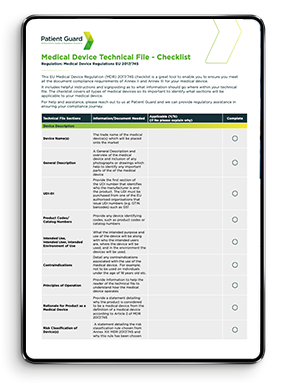
An ISO 13485 Quality Management System supports the creation and maintenance of compliant Technical Documentation throughout the product lifecycle. Learn how to structure a medical device Technical File in accordance with EU MDR Annex II and Annex III, creating a clear, traceable and audit-ready submission for Notified Bodies and regulatory authorities.
Clause 5: Management Responsibility
Outlines executive leadership alignment. It dictates that top management must remain directly accountable for the quality policy, resource provisioning, and the explicit appointment of a dedicated Quality Management Representative who holds ultimate responsibility for the integrity of the system.
Clause 6: Resource Management
Governs the physical and operational setup. This section imposes strict mandates for clean working environments, facility infrastructure, comprehensive contamination control, maintenance of cleanrooms, and verifiable staff training matrices to ensure operational safety.
Clause 7: Product Realization
The largest operational clause, spanning the complete device lifecycle. It covers everything from design controls and development validation to deep supply chain traceability. Clause 7 is typically where most medical device start-ups face the highest friction during an audit. You must maintain an airtight trail of Design Inputs (user needs, regulatory requirements, risk metrics) and prove they match your Design Outputs through formal Design Verification (did you make the product right?) and Design Validation (did you make the right product?).
Crucially, this clause is where ISO 14971 Risk Management is explicitly stitched into your daily engineering workflows. You cannot treat risk as a checklist exercise at the end of production. Under ISO 13485, risk analysis must guide your design inputs.
You must establish a formal Risk Management File containing:
Risk Estimation: Identifying potential hazards (e.g., electrical faults, software bugs, bio-contamination).
Risk Control Measures: Designing out the hazard, adding protective barriers, or providing clear safety warnings.
Residual Risk Evaluation: Proving that the clinical benefits of the device outweigh any remaining risks.
This risk-based approach ensures that if a component is modified, your change control process forces an immediate re-evaluation of the product’s entire risk profile.
ISO 13485 and ISO 14971 Work Together
A compliant Quality Management System relies on effective risk management throughout the medical device lifecycle. Discover how ISO 14971 helps manufacturers identify hazards, evaluate and control risks, and demonstrate the safety and performance of medical devices alongside an ISO 13485 Quality Management System.
Understanding Medical Device Validation
ISO 13485 requires manufacturers to validate processes, equipment and systems where results cannot be fully verified through subsequent inspection or testing. Learn more in our Complete Guide to Medical Device Validation, covering process validation, cleaning validation, packaging validation, sterilisation validation, software validation and regulatory expectations under the EU MDR and UK regulations.
Clause 8: Measurement, Analysis, and Improvement
The feedback engine of your QMS. This controls how your organization systematically processes post-market feedback, manages customer complaints, handles vigilance reporting, triggers internal audits, and executes robust workflows.
Clause 8 serves as the continuous monitoring engine of your QMS. The standard requires proactive tracking of Post-Market Surveillance (PMS) data, meaning you must actively gather feedback from clinical users, distributors, and literature reviews—not just wait for complaints to arrive.
A massive element of this clause is maintaining an independent evaluation cycle. Conducting regular, rigorous ISO 13485 internal auditing is a mandatory requirement to uncover process gaps or non-conformances long before your registrar arrives.
When a systemic quality issue is identified via an audit or customer complaint, it triggers a formal Corrective and Preventive Action (CAPA) workflow. A robust CAPA system requires a methodical, root-cause analysis (such as the 5 Whys or Fishbone diagrams) to determine exactly why a failure occurred. You must document the immediate correction, implement a long-term action plan to prevent recurrence, and—most importantly—schedule a formal review weeks later to verify that the fix was actually effective.
Achieving your initial certification is only half the battle; maintaining compliance requires a continuous state of preparedness. When notifying bodies schedule their inspection, scrambling at the last minute is a recipe for non-conformities. Review our hands-on strategy on ISO 13485 audit readiness to learn exactly how to prep your team, organize your files, and host auditors with absolute confidence
ISO 13485 Doesn't End at Product Release
A Quality Management System should continue supporting your medical devices long after they reach the market. Learn how Post-Market Surveillance (PMS) helps manufacturers collect real-world evidence, monitor device safety and performance, identify trends, manage complaints and drive continual improvement throughout the product lifecycle.
Preparing for an ISO 13485 Audit?
Implementing an ISO 13485 Quality Management System is only the first step. Discover how to prepare for an ISO 13485 audit with confidence, including practical guidance on internal audits, documentation, employee preparedness, common audit findings and achieving certification success.
Why ISO 13485 Matters
Implementing these regulations requires initial resource allocation, but looking at a QMS purely as a regulatory hurdle misses the strategic picture. Explore our deep-dive analysis on why ISO 13485 is more than a checkbox to learn how a mature quality framework accelerates cross-border expansion, builds partner trust, and protects your bottom line from operational gaps
ISO 13485 Is More Than Just Certification
Achieving ISO 13485 certification is only the beginning. Discover why ISO 13485 is more than a checkbox and how a well-implemented Quality Management System can strengthen regulatory compliance, improve operational efficiency, build customer confidence and support long-term business growth.
ISO 13485 vs ISO 9001: The Core Differences
| Metric | ISO 9001 (General Industry) | ISO 13485 (Medical Devices) |
|---|---|---|
| Primary Focus | Customer satisfaction & continuous improvement | Product safety, efficacy, & regulatory compliance |
| Risk Management | General business risk & opportunities | Strict product-lifecycle risk evaluation (ISO 14971) |
| Documentation | Flexible, digitized, and performance-driven | Rigid, heavily structured, with strict change controls |
| Role Assignment | Distributed across team structures | Demands a designated Quality Management Representative |
ISO 9001 or ISO 13485 – Which Standard Is Right for You?
ISO 13485 builds upon quality management principles while introducing additional requirements specifically for the medical device industry. If you're unsure which standard your organisation needs, read our guide to ISO 9001 vs ISO 13485, explaining the differences in regulatory compliance, risk management, design controls, documentation and when organisations should transition from ISO 9001 to ISO 13485.
Selling Medical Devices in the United States?
ISO 13485 provides the foundation for an effective medical device Quality Management System, but manufacturers entering the US market should also understand the FDA's quality system requirements. Explore our guide to the key differences between ISO 13485 and the FDA's Medical Device QSR, including regulatory expectations, documentation, inspections and quality system compliance.
The 12-Week QMS Implementation Timeline
Deploying a brand-new QMS shouldn’t feel like a guessing game. A reliable, robust implementation process typically spans 8 to 12 weeks, moving from initial assessment to formal audit readiness.
Gap Analysis & Planning
Reviewing your current operational processes against the standard to identify missing compliance components, outline resources, and define your medical device scope.
QMS Architecture & Training
Drafting core standard operating procedures (SOPs), establishing change control boards, and running staff training modules to embed compliance into daily workflows.
System Deployment & Record Generation
Running the new QMS live to gather essential audit records, managing supplier qualifications, and executing product realization tracking.
Internal Audit & Management Review
Conducting a full mock internal audit to find potential non-conformances before the Notified Body arrives, followed by a formal executive management review.
Stage 1 Certification Audit
Your chosen Registrar/Notified Body reviews your documentation layout to confirm readiness for the final Stage 2 on-site assessment.
Build an ISO 13485 QMS Without Unnecessary Complexity
Achieving ISO 13485 compliance doesn't have to mean excessive paperwork or inefficient processes. Learn how to build a lean ISO 13485 Quality Management System that streamlines documentation, supports regulatory compliance, improves operational efficiency and remains fully aligned with EU MDR, UK MDR and international medical device requirements.
Need a Practical ISO 13485 Implementation Guide?
This article introduces ISO 13485 and explains why it is the international quality management standard for medical device manufacturers. If you're ready to implement the standard, read our ISO 13485:2016 Requirements & Implementation Guide for a practical, clause-by-clause walkthrough covering documentation, leadership, risk management, design controls, supplier management, internal audits and certification readiness.
Frequently Asked Questions about ISO 13485
It is the globally recognized baseline standard for quality systems in the medical device supply chain. It ensures that throughout device design, testing, manufacturing, distribution, and eventual disposal, every process remains controlled, safe, and fully repeatable.
The core requirements focus heavily on validated risk management across all production stages, statutory regulatory compliance, strict document and record retention, clean room contamination control, clear product traceability, and robust CAPA tracking systems.
Technically, ISO standards are voluntary frameworks. However, in practice, implementing a QMS built around ISO 13485 is effectively mandatory. It serves as the easiest and most universally accepted way to demonstrate compliance under legal regulatory frameworks like the EU MDR, EU IVDR, and UKCA marking schemes. If you are aiming for US market entry alongside global access, it's vital to know how this standard aligns with the FDA's Quality System Regulation. Read our detailed breakdown on the 5 differences between ISO 13485 & FDA's medical device QSR to map out your dual-market strategy.
It embeds risk assessment throughout the product realization cycle. Rather than assessing risk as an afterthought, manufacturers must actively document and mitigate potential hazards at every step—from initial component choices to post-market surveillance data collection.
Beyond fulfilling entry-level legal mandates, a certified QMS signals to international distributors, institutional buyers, and investors that your firm operates a highly stable, legally secure compliance framework, dramatically reducing international market barriers.
Achieve 100% Audit Confidence with Patient Guard
Patient Guard has built, implemented, and supported robust medical device frameworks for companies worldwide since 2017. Our specialized Quality Assurance consultants maintain a proud 100% first-time pass rate across all Notified Body and Registrar audit assessments.
Practitioners, Not Just Consultants: We practice exactly what we preach. Patient Guard Ltd maintains its own fully accredited ISO 13485:2016 Quality Management System certified by BSI. You can view our official BSI certificate here.
Whether your team needs a bespoke, lean ISO 13485 QMS designed completely from scratch or targeted QA support to maintain and update an existing system under evolving frameworks like the EU MDR, IVDR, or MHRA roadmaps, we handle the technical friction so you can focus on product innovation.
References
This guide is based on the following international standards, legislation and official regulatory guidance relating to Quality Management Systems (QMS), medical device regulatory compliance and ISO 13485 certification.
| Organisation | Reference | Why it's relevant |
|---|---|---|
| International Organization for Standardization (ISO) | ISO 13485:2016 – Medical Devices – Quality Management Systems – Requirements for Regulatory Purposes | Defines the internationally recognised Quality Management System requirements for organisations involved in the design, manufacture, installation and servicing of medical devices. |
| European Union | Regulation (EU) 2017/745 on Medical Devices (MDR) | Establishes the European regulatory framework for medical devices and requires manufacturers to implement and maintain an appropriate Quality Management System. |
| European Union | Regulation (EU) 2017/746 on In Vitro Diagnostic Medical Devices (IVDR) | Provides equivalent Quality Management System requirements for manufacturers of in vitro diagnostic medical devices. |
| International Organization for Standardization (ISO) | ISO 14971:2019 – Medical Devices – Application of Risk Management to Medical Devices | Provides the internationally recognised framework for risk management, which is closely integrated with ISO 13485 throughout the medical device lifecycle. |
| U.S. Food and Drug Administration (FDA) | Medical Devices; Quality System Regulation Amendments (Quality Management System Regulation – QMSR) | Publishes the FDA's final rule establishing the Quality Management System Regulation (QMSR), incorporating ISO 13485:2016 by reference and modernising United States medical device quality system requirements. |
| U.S. Food and Drug Administration (FDA) | Quality Management System Regulation (QMSR) | Provides the FDA's official guidance on the Quality Management System Regulation (QMSR), including its alignment with ISO 13485:2016, applicability, inspection approach, implementation timeline and resources supporting the transition from the legacy Quality System Regulation (QSR). |
Quality management standards and regulatory requirements continue to evolve. Organisations should always consult the latest published standards, legislation and official regulatory guidance when implementing, maintaining or improving a Quality Management System for medical devices.

David Small BSc (Hons), MSc, MTOPRA
Reviewed by
David Small, BSc (Hons), MSc, MTOPRA
Founder & CEO |
20+ years in medical device regulatory affairs, MDR/IVDR compliance and quality systems.
Patient Guards Recent Posts

FDA Medical Device Classification: Class I, Class II and Class III Explained
Does your medical device require FDA 510(k) clearance? This step-by-step guide explains the 510(k) process, substantial equivalence, predicate devices, testing, eSTAR submissions, FDA review and what manufacturers need to do after clearance.

FDA 510(k) Clearance: A Step-by-Step Guide for Medical Device Manufacturers
Does your medical device require FDA 510(k) clearance? This step-by-step guide explains the 510(k) process, substantial equivalence, predicate devices, testing, eSTAR submissions, FDA review and what manufacturers need to do after clearance.

FDA Medical Device Regulations: A Complete Guide for Manufacturers
Planning to place a medical device on the US market? This complete guide explains FDA medical device regulations, including device classification, 510(k), De Novo and PMA pathways, QMSR and ISO 13485, establishment registration, device listing, U.S. Agent requirements, UDI and post-market obligations.
Patient Guards Related Services
Patient Guards Regulatory Tools
Need Training?
Do you need training on Quality Management Systems or EU MDR/ EU IVDR? then check out our training courses.
 Posted on Google
 Nafiul Shelim21 days ago
Trustindex verifies that the original source of the review is Google.
I worked with Eleanor Shackleton, from Patient Guard, for the purpose of MDR, CE and UKCA marking. Her diligence, and knowledge in clinical and regulatory requirements for medical device software was critical for us. Would highly recommendPosted on Google Jay Verma46 days agoI found Patient Guard Ltd to be an exceptional partner. Their assessment was thorough, their guidance clear, and their support instrumental in helping us achieve our objectives. Steve and Ellie, in particular, were outstanding in steering us through the MHRA Class I medical device registration process.Posted on Google
 Munna P99 days agoWorking with the Patient Guard team has been a great experience throughout our MHRA and ISO 13485 documentation journey. Their expertise, structured approach, and practical guidance helped our team build a robust quality management system while keeping us aligned with regulatory expectations. The collaboration was professional, responsive, and focused on finding solutions rather than simply identifying issues. A special thank you to Alex and Steve for their outstanding coordination, responsiveness, and continuous support throughout the project. They were always approachable, provided valuable feedback, and worked closely with our team to resolve challenges efficiently. Their commitment made a significant difference in keeping our documentation effort on track. I highly recommend Patient Guard to any healthcare or MedTech organization looking for experienced regulatory and quality system partners for MHRA, ISO 13485, and broader medical device compliance initiatives. Thank you again to the entire Patient Guard team for being such reliable partners.Posted on Google
 Peter Reeve126 days agoSTEPPER design, manufacture & distribute eyewear across the globe. With the increasingly complex landscape concerning the placing of Mecial Devices onto the market, we realised we needed professional guidance. We found Patient Guard via a simple internet search and are delighted we did! They provide a pragmatic solution to our needs, are totally reliable & always available to answer our (often simplistic) questions. They are highly efficient & responsive to what is a changing picture in our world and nothing is too much trouble. We have a much better understanding of regulatory affairs and our responsibilities as manufacturers & distributors and they support us in navigating the requirements in different territories. Updating our Declaration of Conformity, ensuring our labelling is compliant and acting as our PRRC are the key areas of their service for us.Posted on Google
 Derek Timm126 days agoFor those companıes lookıng to comply to ISO standards and ın partıcular ISO13485 whıch to be honest ıs a nıghtmare I would strongly suggest goıng to the professıonals as ındeed we dıd by joınıng forces wıth Patıent Guard Ltd The staff are fantastıc nothıng ıs too much trouble and as a medıcal supply company we sımply cannot lıve wıthout them Thanks ın partıcular to Alex and Steve for all the hard work and our best regards from Dan Medıca South LımıtedPosted on Google
 BMSCriticalCare163 days agoGreat service, very helpful and always willing to answer any questions we have,Posted on Google
 Thomson Software834 days agoAlex Lewis of PatientGuard guided us through the ISO13485 process in a thorough, systematic and efficient manner. He was friendly, patient and willing to go the extra mile. Excellent service.Posted on Google
 Hannah Maddison937 days agoFantastic, knowledgeable team that are always there to help. My appointments have always been booked in very promptly and have always ended with all my queries resolved. I have found the team very flexible and their breadth of knowledge is second to none. Patient Guard are without doubt my go-to for all the regulatory aspects of my medical device role.Posted on Google
 Richard Crow972 days agoPatientguard are an excellent source of Medical regulatory compliance advice, we have taken advantage of their various services from their EU Rep service, to helping with Technical Files all the way through to using their ISO Templates to implement our ISO 13485 system.Posted on Google
 George Kitching975 days agoDavid Small and PatientGuard have been extremely helpful and supportive in assisting us with producing and updating our Technical File and Appendices for MDR certification.Verified by TrustindexTrustindex verified badge is the Universal Symbol of Trust. Only the greatest companies can get the verified badge who has a review score above 4.5, based on customer reviews over the past 12 months. Read more