
510(k) submissions
FDA 510(k) Submission Services for Medical Devices and IVDs
Medical device manufacturers seeking to market certain devices in the United States must demonstrate compliance with applicable U.S. Food and Drug Administration (FDA) regulatory requirements.
For many Class I and Class II medical devices, this involves preparing and submitting a 510(k) Premarket Notification to demonstrate that the device is substantially equivalent to a legally marketed predicate device.
A successful 510(k) submission requires a clear regulatory strategy, appropriate predicate device selection, robust supporting evidence, and comprehensive documentation addressing applicable FDA requirements, recognised consensus standards, performance testing, labelling, risk management, and other device-specific requirements.
Patient Guard provides expert FDA 510(k) submission services for medical device manufacturers, supporting the preparation, review, remediation, and submission of 510(k) documentation.
We help manufacturers develop structured, submission-ready 510(k) packages designed to clearly demonstrate substantial equivalence and support an efficient FDA review process.
Whether you are preparing your first U.S. market submission, introducing a new medical device, or need support addressing gaps in an existing 510(k) package, Patient Guard can provide a clear and practical route towards FDA 510(k) clearance and U.S. market access.
Medical Device & Biological Safety Manager
Why Choose Patient Guard for 510(k) Submissions?
510(k) Regulatory Strategy
We assess your device, intended use, classification and applicable FDA requirements to develop a clear regulatory strategy for your 510(k) submission.
Predicate Device Selection
We help identify and evaluate suitable legally marketed predicate devices, providing a strong foundation for demonstrating substantial equivalence to the FDA.
Substantial Equivalence
We develop a clear and evidence-based substantial equivalence rationale addressing intended use, technological characteristics, performance and relevant differences between your device and its predicate.
Testing & Evidence Strategy
We identify applicable FDA guidance, recognised consensus standards and performance testing requirements to help ensure the evidence supporting your submission is appropriate and complete.
Submission-Ready Documentation
We prepare, review and structure your 510(k) documentation into a clear and consistent submission package designed to support an efficient FDA review.
FDA Review Support
Our support can continue after submission, helping you understand and respond to FDA requests for additional information and navigate the review process towards 510(k) clearance.
What Our 510(k) Submission Service Includes
Device Classification & Strategy
Reviewing your device, intended use and indications for use to identify the appropriate FDA classification, product code, regulation number and 510(k) pathway.
Predicate Device Analysis
Identifying and evaluating suitable legally marketed predicate devices and developing a structured comparison of intended use and technological characteristics.
Substantial Equivalence
Preparing the substantial equivalence rationale and supporting comparisons needed to demonstrate that your device is as safe and effective as the selected predicate.
Performance & Testing Evidence
Identifying applicable performance testing, FDA guidance and recognised consensus standards, and reviewing supporting evidence for inclusion within the submission.
510(k) Submission Documentation
Preparing and reviewing the required submission content, including device descriptions, indications for use, performance information, supporting evidence and other applicable documentation.
Labelling & IFU Review
Reviewing device labels, packaging, instructions for use, warnings, precautions and claims to help ensure consistency with the proposed indications and FDA requirements.
Who Requires a 510(k) Submission?
- Medical device manufacturers seeking to enter the U.S. market
- Start-ups preparing their first medical device for FDA clearance
- Manufacturers developing a new device that requires a 510(k) Premarket Notification
- Companies making significant changes to an existing device that may require a new 510(k)
- International manufacturers expanding their medical device portfolio into the United States
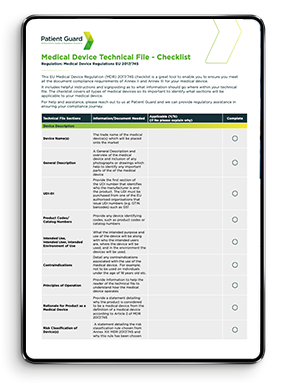
510(k)Technical Documentation Requirements
Under the U.S. FDA regulatory framework, manufacturers of many medical devices must obtain 510(k) clearance before the device can be legally marketed in the United States.
A 510(k) Premarket Notification must provide sufficient information and supporting evidence to demonstrate that the proposed device is substantially equivalent to an appropriate legally marketed predicate device.
A comprehensive 510(k) submission typically includes:
| No | Heading | Contents |
|---|---|---|
| 1. | Device Description | Device design, intended use, indications for use, principles of operation and key technological characteristics. |
| 2. | Classification & Product Code | FDA device classification, regulation number, product code and applicable regulatory pathway. |
| 3. | Predicate Device | Identification and justification of an appropriate legally marketed predicate device. |
| 4. | Substantial Equivalence | Comparison of intended use and technological characteristics with the selected predicate device. |
| 5. | Performance Testing | Applicable bench, electrical safety, EMC, software, biocompatibility, sterilization and other device-specific testing. |
| 6. | Labelling & IFU | Proposed labels, instructions for use, warnings, precautions, contraindications and supporting claims. |
| 7. | 510(k) Submission Package | Required administrative information, supporting documentation and evidence compiled into the applicable FDA 510(k) submission format. |
Our Process
Assess & Plan
We review your device, intended use, FDA classification and potential predicate devices to establish a clear 510(k) regulatory strategy.
Prepare & Review
We develop and review the required documentation, substantial equivalence evidence, testing data and labelling to build a complete 510(k) submission package.
Submit & Support
We support submission to the FDA and help manage questions or requests for additional information throughout the review process towards 510(k) clearance.
Medical Devices we support
We support Technical File preparation for a wide range of medical devices, including:
- General and non-invasive medical devices
- Electrical and electromechanical medical devices
- Software as a Medical Device (SaMD)
- Connected and digital health medical devices
- Reusable medical devices
- Sterile and single-use medical devices
- Diagnostic and monitoring medical devices
- Implantable and surgically invasive devices, where eligible for the 510(k) pathway
Cost of Service
FDA 510(k) Submission Services
From
Prepare your medical device for the U.S. market with expert support throughout the FDA 510(k) process. Our service covers regulatory strategy, predicate device assessment, substantial equivalence and preparation of your submission-ready 510(k) documentation.
Costs
- 510(k) Submission Support – from £8,000
- Regulatory & Predicate Strategy – Included
- Submission Preparation & Review – Included
- FDA Review Support – Included*
*Pricing depends on device complexity, available documentation and the level of FDA review support required. FDA user fees, laboratory testing, clinical studies and other third-party costs are not included and will be quoted or paid separately where applicable.
Time Lines
Week 1 – Regulatory Assessment & Strategy
Assessment of your device, intended use, FDA classification, product code, applicable requirements and potential predicate devices to establish the 510(k) submission strategy.
Weeks 2–6 – 510(k) Development & Review
Preparation and review of the submission documentation, including substantial equivalence, device information, performance evidence, testing documentation and labelling.
Submission & FDA Review
Final quality review and submission preparation, followed by support during the FDA review process and assistance with applicable requests for additional information.
Frequently Asked Questions (FAQs)
What is an FDA 510(k) submission?
A 510(k) is a Premarket Notification submitted to the U.S. Food and Drug Administration (FDA). It is used to demonstrate that a medical device is substantially equivalent to an appropriate legally marketed predicate device before it can be marketed in the United States.
Does every medical device require a 510(k)?
No. Whether a 510(k) is required depends on the device classification, product code and applicable FDA regulations. Some devices are exempt from 510(k), while others may require a De Novo request, Premarket Approval (PMA) or another regulatory pathway. Patient Guard can assess your device and help determine the appropriate route to the U.S. market.
What does Patient Guard's 510(k) submission service include?
Our service can include FDA classification and regulatory strategy, predicate device assessment, substantial equivalence analysis, identification of applicable testing and standards, review and preparation of submission documentation, labelling review, final submission preparation and support during the FDA review process.
How long does a 510(k) submission take?
Preparation times depend on the complexity of the device, the quality of existing documentation and whether additional performance, biocompatibility, electrical safety, software or other testing is required. Patient Guard establishes a tailored submission plan at the start of the project and supports you through preparation and FDA review.
What happens if the FDA asks for additional information?
The FDA may request clarification, additional documentation or further evidence during its review. Patient Guard can review the FDA's questions, help determine what additional information is required and support the preparation of a structured response to help progress your submission towards 510(k) clearance.
Related Services
Click on the links below to discover more:
Do you need Training?
Check out Patient Guards Training Courses
Recent Blog Posts

DCB0129 and Clinical Safety: What Digital Health Manufacturers Need for NHS DTAC
For digital health manufacturers preparing to enter the NHS, clinical safety can be one of the most important—and sometimes misunderstood—parts of DTAC.
It is not enough to demonstrate that your software works.
Manufacturers need to consider what could happen if the technology fails, produces incorrect information, presents information incorrectly, contributes to a workflow error or is used in circumstances that could expose patients to harm.
This is where clinical risk management and DCB0129 become particularly important.
NHS England identifies DCB0129 as the clinical risk management standard for manufacturers of health IT systems. Its counterpart, DCB0160, applies to health organisations deploying and using health IT systems. NHS England states that compliance with these standards is required under the Health and Social Care Act 2012.
For manufacturers working towards NHS DTAC readiness, understanding the distinction—and having the right clinical safety evidence—is essential.

DTAC Requirements Explained: The 5 Areas Digital Health Manufacturers Need to Get Right
If your digital health technology is heading towards the NHS, understanding the Digital Technology Assessment Criteria (DTAC) should be part of your market-access planning.
But one of the biggest mistakes manufacturers can make is treating DTAC as simply another questionnaire to complete.
The questions are only part of the process.
Behind your answers needs to be evidence showing that your technology and organisation have appropriate arrangements for clinical safety, data protection, technical security, interoperability, and usability and accessibility.
These five areas form the core of NHS DTAC. NHS England describes DTAC as national baseline criteria for digital health technologies entering NHS and social care.
For digital health manufacturers, the practical question is therefore not simply:
“Can we complete the DTAC assessment?”
It is:
“Can we demonstrate that our product meets the requirements?”
This guide looks at each of the five DTAC areas, the types of evidence manufacturers should consider and some of the common gaps that can delay NHS readiness.

The Complete Guide to NHS DTAC Compliance for Digital Health Manufacturers
A complete guide to NHS DTAC compliance for digital health manufacturers, covering the five DTAC assessment areas, required evidence, clinical safety, data protection, technical security, interoperability and usability, and how to prepare your digital health technology for NHS procurement.

Cosmetic Product Safety Report (CPSR): A Complete Guide to UK Cosmetic Compliance
Before a cosmetic product can legally be placed on the UK market, manufacturers and Responsible Persons must demonstrate that it is safe for human use under normal or reasonably foreseeable conditions. The Cosmetic Product Safety Report (CPSR) is one of the most important regulatory documents required under the UK Cosmetics Regulation. This guide explains what a CPSR is, who can prepare one, what information it must contain, how it relates to the Product Information File (PIF) and how it supports legal cosmetic compliance.
IVDR PMPF Explained: A Complete Guide to Post-Market Performance Follow-up
Post-Market Performance Follow-up (PMPF) is a fundamental requirement under the EU In Vitro Diagnostic Regulation (IVDR), ensuring that manufacturers continually monitor the scientific validity, analytical performance and clinical performance of their in vitro diagnostic medical devices after CE marking. This guide explains IVDR PMPF requirements, PMPF Plans, PMPF Reports, Annex XIII expectations and how ongoing performance monitoring supports continued regulatory compliance throughout the device lifecycle.

IVDR Scientific Validity Explained: A Complete Guide for Manufacturers
Scientific Validity is the first pillar of IVDR Performance Evaluation and provides the scientific foundation demonstrating that an analyte or biomarker is associated with a specific clinical condition or physiological state. This guide explains Scientific Validity under Regulation (EU) 2017/746, including literature reviews, Scientific Validity Reports, Annex XIII requirements, evidence appraisal and how Scientific Validity supports successful CE marking.
Posted on Google![]()
Jay Verma15 days agoTrustindex verifies that the original source of the review is Google.
I found Patient Guard Ltd to be an exceptional partner. Their assessment was thorough, their guidance clear, and their support instrumental in helping us achieve our objectives. Steve and Ellie, in particular, were outstanding in steering us through the MHRA Class I medical device registration process.Posted on Google![]()
Munna P68 days agoTrustindex verifies that the original source of the review is Google.
Working with the Patient Guard team has been a great experience throughout our MHRA and ISO 13485 documentation journey. Their expertise, structured approach, and practical guidance helped our team build a robust quality management system while keeping us aligned with regulatory expectations. The collaboration was professional, responsive, and focused on finding solutions rather than simply identifying issues. A special thank you to Alex and Steve for their outstanding coordination, responsiveness, and continuous support throughout the project. They were always approachable, provided valuable feedback, and worked closely with our team to resolve challenges efficiently. Their commitment made a significant difference in keeping our documentation effort on track. I highly recommend Patient Guard to any healthcare or MedTech organization looking for experienced regulatory and quality system partners for MHRA, ISO 13485, and broader medical device compliance initiatives. Thank you again to the entire Patient Guard team for being such reliable partners.Posted on Google![]()
Peter Reeve94 days agoTrustindex verifies that the original source of the review is Google.
STEPPER design, manufacture & distribute eyewear across the globe. With the increasingly complex landscape concerning the placing of Mecial Devices onto the market, we realised we needed professional guidance. We found Patient Guard via a simple internet search and are delighted we did! They provide a pragmatic solution to our needs, are totally reliable & always available to answer our (often simplistic) questions. They are highly efficient & responsive to what is a changing picture in our world and nothing is too much trouble. We have a much better understanding of regulatory affairs and our responsibilities as manufacturers & distributors and they support us in navigating the requirements in different territories. Updating our Declaration of Conformity, ensuring our labelling is compliant and acting as our PRRC are the key areas of their service for us.Posted on Google![]()
Derek Timm95 days agoTrustindex verifies that the original source of the review is Google.
For those companıes lookıng to comply to ISO standards and ın partıcular ISO13485 whıch to be honest ıs a nıghtmare I would strongly suggest goıng to the professıonals as ındeed we dıd by joınıng forces wıth Patıent Guard Ltd The staff are fantastıc nothıng ıs too much trouble and as a medıcal supply company we sımply cannot lıve wıthout them Thanks ın partıcular to Alex and Steve for all the hard work and our best regards from Dan Medıca South LımıtedPosted on Google![]()
BMSCriticalCare132 days agoTrustindex verifies that the original source of the review is Google.
Great service, very helpful and always willing to answer any questions we have,Posted on Google![]()
Thomson Software803 days agoTrustindex verifies that the original source of the review is Google.
Alex Lewis of PatientGuard guided us through the ISO13485 process in a thorough, systematic and efficient manner. He was friendly, patient and willing to go the extra mile. Excellent service.Posted on Google![]()
Hannah Maddison906 days agoTrustindex verifies that the original source of the review is Google.
Fantastic, knowledgeable team that are always there to help. My appointments have always been booked in very promptly and have always ended with all my queries resolved. I have found the team very flexible and their breadth of knowledge is second to none. Patient Guard are without doubt my go-to for all the regulatory aspects of my medical device role.Posted on Google![]()
Richard Crow941 days agoTrustindex verifies that the original source of the review is Google.
Patientguard are an excellent source of Medical regulatory compliance advice, we have taken advantage of their various services from their EU Rep service, to helping with Technical Files all the way through to using their ISO Templates to implement our ISO 13485 system.Posted on Google![]()
George Kitching944 days agoTrustindex verifies that the original source of the review is Google.
David Small and PatientGuard have been extremely helpful and supportive in assisting us with producing and updating our Technical File and Appendices for MDR certification.Posted on Google![]()
Tracey Slater944 days agoTrustindex verifies that the original source of the review is Google.
Patient Guard have been a great support service to Cormed, providing help and advice promptly when ever requested. They have become a virtual department within Cormed enabling us to keep up to date and comply with the regulatory requirements whilst ensuring our QMS works for us at the same time.Verified by TrustindexTrustindex verified badge is the Universal Symbol of Trust. Only the greatest companies can get the verified badge who has a review score above 4.5, based on customer reviews over the past 12 months. Read more