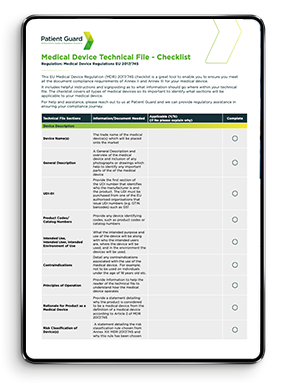

EU IVDR 2017/746 Qualification & Strategy Tool
Use our interactive assessment tool to quickly evaluate your product against the exact criteria of EU Regulation 2017/746 Article 2. Get immediate clarity on whether your device qualifies as an In Vitro Diagnostic (IVD), an accessory, or falls under the MDR.
Published: 20th May 2026

Founder and CEO
Is Your Product an IVD? Check Now
IVDR Article 2(2) Qualification Tool
Determine if your product qualifies as an In Vitro Diagnostic Medical Device (IVD) under EU Regulation 2017/746.
Does the product examine specimens derived from the human body?
This includes blood, tissue, saliva, urine, or hair samples taken from patients.
What is the primary intended medical purpose of the information provided by the device?
Select the option that matches your device's primary function as stated in its intended use statement.
Is the product a specimen receptacle or an accessory intended specifically to enable an IVD examination?
Specimen receptacles are vacuum or non-vacuum tubes, cups, or containers intended to contain and preserve human specimens.
Determination Result
Legal Disclaimer: Patient Guard does not accept legal responsibility for the use of this tool. Any information provided should be checked by a qualified professional before determining the legal status of your product.
Understanding the definition of an IVD
To successfully launch and market a diagnostic product in the European Union, you must look strictly at Article 2(2) of Regulation (EU) 2017/746 (IVDR). The regulation defines an IVD as any medical device which is a reagent, reagent product, calibrator, control material, kit, instrument, apparatus, piece of equipment, software or system.
However, a product only qualifies legally as an IVD if it is explicitly intended by the manufacturer to be used in vitro for the examination of specimens derived from the human body (including blood and tissue donations).
The Six Core Intended Purposes Under IVDR
Under the legal framework, the in vitro examination of a human specimen must be performed solely or principally to provide information concerning one or more of the following:
- Physiological or pathological process or state: Providing data regarding a normal or abnormal biological state.
- Congenital impairments: Identifying physical or mental impairments present from birth.
- Predisposition to a medical condition: Determining a patient's genetic or environmental susceptibility to a specific disease.
- Safety and compatibility: Testing to determine safety and compatibility with potential recipients (e.g., blood banking and tissue transplantation).
- Predicting treatment response: Identifying patients who will respond to or have adverse reactions from specific therapies (Companion Diagnostics / CDx).
- Therapeutic measures: Defining, establishing, or monitoring therapeutic measures to optimize clinical interventions.
Case Studies
Case Study: Automated Specimen Extraction Tube
Device Type: Specimen Receptacle / Consumable
The Scenario: A pre-filled plastic tube containing a stabilizing buffer, explicitly designed for the collection, stabilization, and safe transport of human saliva samples for downstream PCR testing.
As a non-sterile specimen receptacle, this product can be self-declared by the manufacturer via a Class A declaration of conformity, provided a robust Technical File is established and registered in EUDAMED.
Case Study: Total Cholesterol Clinical Chemistry Assay
Device Type: In Vitro Diagnostic Reagent Kit
The Scenario: An enzymatic colorimetric assay used in routine laboratory settings to measure total cholesterol levels in human serum or plasma to evaluate a patient's lipid profile.
Class B is the default "catch-all" classification tier under the IVDR. While it represents low individual risk, it still requires an audit of the Technical Documentation and Quality Management System (ISO 13485) by a Notified Body.
Case Study: Oncology NGS Interpretation Software
Device Type: Medical Device Software (MDSW) / Bioinformatics Pipeline
The Scenario: A cloud-based platform processes raw Next-Generation Sequencing (NGS) data from human tumor biopsies to identify somatic mutations and predict patient response to specific targeted therapies.
Because the software's clinical performance directly dictates whether a patient receives toxic oncology drugs, it requires full Notified Body assessment of its software life cycle (EN 62304) and performance evaluation.
Case Study: Blood Donor Screening Multiplex Assay
Device Type: In Vitro Diagnostic Assay Kit
The Scenario: A high-throughput multiplex PCR kit designed to screen blood donations for the presence of HIV-1, HIV-2, Hepatitis B, and Hepatitis C before clinical transfusion.
This falls into the highest possible risk tier under the IVDR. It requires rigorous Notified Body inspection, physical batch testing by an EU Reference Laboratory (EURL), and an exhaustive Clinical Performance Study.
The Risks of Misclassification
Misclassifying your product at the initial qualification stage is one of the most expensive mistakes a medical device or software manufacturer can make in the EU marketplace.
The Risk of Over-Regulating
You risk spending hundreds of thousands of Euros on Notified Body audits, clinical performance studies, and technical documentation updates for a product that legally could have been sold under a simpler framework or as Research Use Only (RUO).
The Risk of Under-Regulating
You risk severe regulatory enforcement actions, immediate market withdrawal, massive corporate liability, and brand damage for placing an uncertified diagnostic device onto the European Union market.
While our interactive validation tool provides an excellent legal baseline, complex borderline cases—especially involving Medical Device Software (MDSW), Companion Diagnostics, or multiplex assays—require a comprehensive, defensible Regulatory Strategy Report.
FAQs
What is the core definition of an IVD under IVDR Article 2(2)?
Under Article 2(2) of Regulation (EU) 2017/746, an In Vitro Diagnostic (IVD) is any medical device—such as a reagent, kit, instrument, software, or system—intended by the manufacturer to be used in vitro for examining specimens derived from the human body. The primary purpose must be to provide medical information regarding a physiological or pathological state, congenital impairments, disease predisposition, donor safety, or therapeutic monitoring.
How do I distinguish between a general laboratory product and a regulated IVD?
The distinction hinges entirely on the manufacturer's intended purpose. If an instrument, reagent, or software is designed for general laboratory applications or scientific research without any specific diagnostic or medical claims, it is classified as Research Use Only (RUO) and falls outside the scope of the IVDR. However, if the product is marketed with explicit parameters, instructions, or claims to achieve a diagnostic outcome from a human specimen, it must comply with the IVDR.
Are specimen collection tubes and transport containers considered IVDs?
Yes. Article 2(2) explicitly states that specimen receptacles are considered in vitro diagnostic medical devices. A specimen receptacle is any container (whether vacuum-type or not) explicitly intended by its manufacturer to primarily contain and preserve human specimens for subsequent diagnostic examination. Under the Annex VIII classification rules, these are typically regulated as Class A devices.
Does standalone software or an AI algorithm qualify as an IVD?
Standalone software, mobile apps, and artificial intelligence models qualify as Medical Device Software (MDSW) under the IVDR if they process data derived from human specimens to achieve an IVD medical purpose (for example, analyzing genomic data to predict cancer risks or staging a disease). Software that merely stores, archives, or transfers data without performing analytical or diagnostic modifications does not qualify as an IVD.
What is a Companion Diagnostic (CDx) under the IVDR definition?
Defined in Article 2(4), a Companion Diagnostic is a specialized IVD essential for the safe and effective use of a corresponding medicinal product. Its job is to identify patients who are most likely to benefit from a specific drug, or to identify patients at a high risk of serious adverse reactions. Under the IVDR classification system, all companion diagnostics automatically escalate to a Class C pathway, requiring strict Notified Body oversight.
How does a product get classified if it has a dual MDR and IVDR purpose?
If a system has features that fall under both the Medical Device Regulation (MDR 2017/745) and the IVDR (2017/746), the rules apply concurrently. The physical component interacting directly with the patient's body (like a collection biopsy needle) is regulated under the MDR, while the downstream laboratory assay or software interpreting the specimen data is regulated under the IVDR. Manufacturers must clearly delineate these components in their technical documentation.