
Updated: 26th May 2026
Reviewed by: Eleanor Shackleton BSc
The Big Shift: Essential Requirements vs. GSPRs
While the core philosophy remains the same—proving your IVD is safe and performs as intended—the GSPRs expand drastically on what is required. The legacy IVD Directive split its Essential Requirements into two sections (General Requirements and Design/Manufacturing Requirements) across a relatively compact list.
The IVDR Annex I expands this into three distinct chapters spanning 20 comprehensive requirements, many containing highly detailed sub-clauses:
Chapter I: General Requirements (Risk management, life-cycle safety, and elimination of risks).
Chapter II: Requirements Regarding Performance, Design, and Manufacture (Chemical, physical, biological properties, sterilisation, software, and measuring capabilities).
Chapter III: Requirements Regarding Information Supplied with the Device (Labelling and Instructions for Use).
To successfully update your old checklist, you must perform a gap analysis across several core technical categories.
Looking for Current IVDR Requirements?
The IVD Directive (98/79/EC) has been replaced by the In Vitro Diagnostic Regulation (IVDR). For a complete guide to Regulation (EU) 2017/746, including classification, performance evaluation, technical documentation, CE marking and compliance requirements, explore our Complete EU IVDR Guide.
Need to Understand Biological Evaluation?
Many IVDs and medical devices require manufacturers to assess the biological safety of materials that come into contact with patients or specimens. Learn how Biological Evaluation supports compliance with ISO 10993, risk management and regulatory requirements throughout the device lifecycle.
Understanding Medical Device Sterilisation
Sterilisation is a critical part of demonstrating the safety of many medical devices. Learn about common sterilisation methods, validation requirements, ISO standards and the evidence manufacturers need to support regulatory compliance throughout the product lifecycle in our guide to Medical Device Sterilisation.
Key Gap Areas When Transitioning Your IVD Checklist
1. Continuous, Iterative Risk Management
Under the old Directive, risk assessment was often treated as a point-in-time exercise completed during design closure. The IVDR changes this completely.
In your updated checklist, your risk management arguments must prove that you operate a continuous, life-cycle process integrated directly with your Quality Management System (QMS). Risks must be reduced “as far as possible” without compromising the benefit-risk ratio, and you must account for predictable misuse throughout the entire expected lifespan of the IVD.
Building an ISO 13485 Quality Management System?
Compliance with the IVDR General Safety and Performance Requirements is supported by a robust quality management system. Discover how ISO 13485 helps manufacturers manage design controls, risk management, supplier oversight, technical documentation and post-market activities throughout the medical device lifecycle.
Need to Understand ISO 14971 Risk Management?
Effective risk management is a fundamental requirement of the IVDR General Safety and Performance Requirements (GSPRs). Discover how ISO 14971 helps manufacturers identify hazards, evaluate risks, implement risk controls and maintain compliance throughout the medical device lifecycle.
2. Elevated Performance Evaluation and Clinical Evidence
The old Essential Requirements accepted high-level performance data. Under the IVDR, your GSPR arguments must be backed by a formal Performance Evaluation Report (PER).
You must explicitly separate and provide objective evidence for:
Scientific Validity: The association of an analyte with a clinical condition.
Analytical Performance: The ability of the device to correctly detect or measure a specific analyte (sensitivity, specificity, accuracy, limits of detection).
Clinical Performance: The ability of the device to yield results that are correlated with a target clinical condition or a physiological/pathological state in the intended population.
Moving from IVDD Performance Evidence to IVDR?
The IVDR introduces substantially stronger performance evidence requirements than the IVDD. Understand scientific validity, analytical performance, clinical performance, PEPs, PERs and ongoing PMPF in our Complete IVDR Performance Evaluation Guide.
3. Software and Cybersecurity (SaMD)
If your IVD incorporates software, or is a standalone Software as a Medical Device (SaMD), the legacy Directive gave very little guidance. The IVDR addresses this head-on in Chapter II.
Your updated checklist must include robust compliance verification for software life-cycle processes (validation, verification, and configuration management) alongside clear arguments for IT security, cybersecurity protections, and compatibility with mobile platforms or hardware environments.
Developing Medical Device Software?
Many IVDR General Safety and Performance Requirements apply directly to software used within or as an in vitro diagnostic medical device. Learn how IEC 62304 supports compliant software development, lifecycle management, verification, validation, cybersecurity and risk management for medical device software and Software as a Medical Device (SaMD).
4. Self-Testing and Near-Patient Testing Nuances
For manufacturers of home testing or point-of-care devices, the technical file burden has risen dramatically. The GSPRs dictate that your design verification must prove the device can be handled easily and safely by the intended lay user at every step.
If you are developing or selling self-testing products, read our specific Home Testing Kits Regulations & IVDR Compliance Guide for a deeper breakdown of layperson validation requirements.
Developing a Home Testing Kit?
IVDR places additional requirements on self-testing and home-use IVDs, including usability, labelling, performance evaluation and user safety. Read our Home Testing Kits IVDR Compliance Guide to understand the regulatory expectations for bringing home-use diagnostic devices to the European market.
Need Help Determining Your IVDR Classification?
One of the biggest changes when transitioning from the IVDD to the IVDR is the introduction of a new risk-based classification system. Learn how the seven IVDR classification rules are applied, how to determine whether your IVD is Class A, B, C or D, and what your classification means for Notified Body involvement and regulatory compliance in our Complete Guide to IVDR Classification.
5. Rigorous Labelling and IFU Requirements (Chapter III)
Chapter III of the GSPRs introduced highly prescriptive rules for information supplied with the device. Your updated checklist must cross-reference and verify:
The presence of the Unique Device Identification (UDI) carrier on the labelling.
Explicit declarations regarding whether the device is for professional use, near-patient testing, or self-testing.
Electronic Instructions for Use (eIFU) formatting standards and web availability.
Need to Understand Medical Device UDI?
Unique Device Identification (UDI) is a key requirement under the IVDR, helping improve device traceability, post-market surveillance and patient safety. Learn how the UDI system works, including UDI-DI, UDI-PI, labelling requirements and implementation strategies in our Medical Device UDI for Beginners Guide.

Key Differences Between the IVDD Essential Requirements and the IVDR GSPRs
The transition from the In Vitro Diagnostic Medical Devices Directive (98/79/EC) to Regulation (EU) 2017/746 represents far more than a change in terminology. While both frameworks share the common objective of ensuring safe and effective in vitro diagnostic medical devices, the IVDR introduces significantly more detailed requirements, stronger regulatory oversight and a lifecycle approach to compliance. The table below highlights some of the most important differences manufacturers should consider when updating an existing Essential Requirements Checklist to meet the General Safety and Performance Requirements (GSPRs).
| IVDD (Directive 98/79/EC) | IVDR (Regulation (EU) 2017/746) | What This Means for Manufacturers |
|---|---|---|
| Essential Requirements (Appendix I) | General Safety and Performance Requirements (Annex I) | Existing Essential Requirements Checklists should be reviewed and updated to align with the IVDR GSPRs. |
| Limited risk-based classification | New risk-based classification system (Classes A, B, C and D) | Many devices now require Notified Body involvement that was not previously required. |
| Many devices could be self-declared | Most Class B, C and D devices require Notified Body assessment | Manufacturers should plan certification activities well in advance due to increased regulatory oversight. |
| Limited performance evidence requirements | Scientific validity, analytical performance and clinical performance are required | Manufacturers must generate and maintain more comprehensive evidence supporting device performance. |
| Simpler technical documentation | Expanded technical documentation requirements under Annex II and III | Technical files must contain more detailed information and remain up to date throughout the device lifecycle. |
| No Unique Device Identification (UDI) system | UDI and improved traceability requirements | Devices must be uniquely identified to improve traceability and support market surveillance. |
| Limited post-market surveillance requirements | Comprehensive post-market surveillance and vigilance system | Manufacturers must actively monitor device performance, investigate complaints and report serious incidents where required. |
| Minimal lifecycle oversight | Continuous lifecycle compliance | Compliance is no longer limited to CE marking but extends throughout the entire commercial lifecycle of the device. |
| Less prescriptive quality management expectations | Strong emphasis on quality management systems | A robust Quality Management System, typically aligned with ISO 13485, supports ongoing compliance with the IVDR. |
Need Help Achieving IVDR Compliance?
Meeting the IVDR General Safety and Performance Requirements can be challenging, particularly when preparing technical documentation, performance evaluation and Notified Body submissions. Discover how our IVD Consultancy Services help manufacturers develop practical compliance strategies, resolve regulatory challenges and successfully bring IVDs to market.
Step-by-Step: How to Upgrade Your Technical Checklist
To update your legacy document into an audit-ready IVDR GSPR Checklist, follow this practical workflow:
Map the GSPRs to Your Device: Review Annex I of EU 2017/746 and determine which requirements are “Applicable” or “Not Applicable” to your specific IVD. Every single “Not Applicable” designation must have a thoroughly documented justification.
Perform a Documentation Gap Analysis: Look at your old Essential Requirements list. Where you referenced a single validation report previously, identify whether you now need a comprehensive Clinical Performance study or updated stability testing data.
Align with Harmonised Standards: Reference state-of-the-art standards (such as EN ISO 14971 for risk management and EN ISO 13485 for quality systems) within your checklist columns to justify your compliance methods.
Link Directly to Precise Evidence: Do not just write “Compliant.” Your checklist must specify exact document numbers, revisions, and section numbers within your technical file (e.g., See Performance Evaluation Report, Document PER-004, Revision B, Section 4.2).
Track Transitional Milestones: Ensure your technical documentation updates align perfectly with the evolving regulatory landscape. Check our updated guide on IVDR Transitional Provisions and Milestones to make sure your compliance timelines are secure.
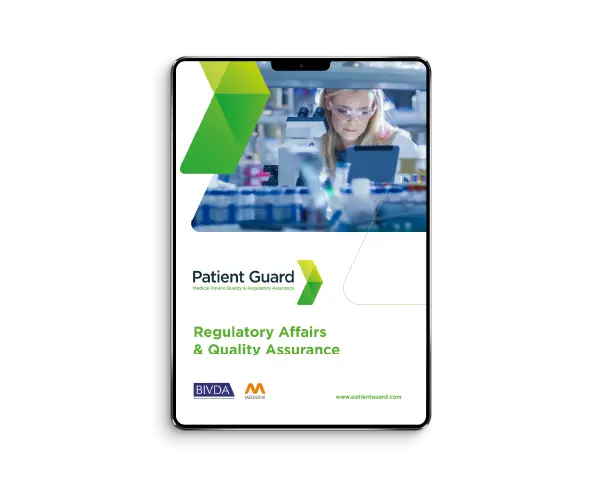
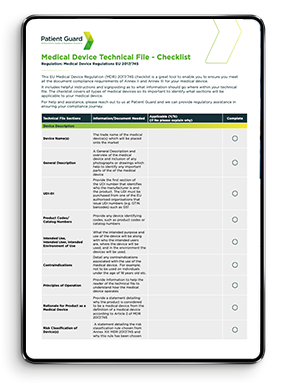
Free Download: IVDR Annex I GSPR Compliance Checklist
Download our free IVDR Annex I General Safety & Performance Requirements (GSPR) Compliance Checklist to help assess conformity with Regulation (EU) 2017/746. This practical checklist provides a structured framework for reviewing the key requirements of Annex I, recording objective evidence and identifying potential compliance gaps before your Notified Body assessment.
⬇ Download Free PDF ChecklistPreparing for a Notified Body Assessment?
Demonstrating compliance with the IVDR General Safety and Performance Requirements is a key part of every Notified Body conformity assessment. Learn how Notified Bodies assess technical documentation, performance evaluation, quality management systems and regulatory evidence during the IVDR certification process.
Need Expert Support with Your GSPR Transition?
Transitioning an entire legacy technical file from the old Directive to the rigorous standards of the IVDR can be an overwhelming administrative and technical burden. Missing sub-clauses in Annex I or failing to provide sufficient clinical performance data is one of the leading causes of Notified Body delays.
At Patient Guard, we act as your dedicated regulatory partner. Our specialists can conduct a comprehensive gap analysis of your legacy technical files, build your compliance roadmaps, and author audit-ready GSPR checklists that stand up to Notified Body scrutiny.
Contact Patient Guard Today to discuss how we can streamline your path to IVDR compliance.
Frequently Asked Questions
The General Safety and Performance Requirements (GSPRs) are the essential safety, performance and information requirements set out in Annex I of Regulation (EU) 2017/746 (IVDR). Every IVD manufacturer must demonstrate compliance with the applicable GSPRs before placing a device on the European market.
No. Manufacturers only need to demonstrate compliance with the GSPRs that are applicable to their specific device. Where a requirement is not applicable, the manufacturer should provide a documented justification within the technical documentation.
Compliance is typically demonstrated through objective evidence contained within the technical documentation. This may include the Risk Management File, Performance Evaluation Report, verification and validation reports, labelling, Instructions for Use, usability documentation and post-market surveillance records.
A GSPR Checklist is a structured document that maps each applicable Annex I requirement against the evidence demonstrating compliance. It helps manufacturers identify compliance gaps, supports internal audits and provides traceability during Notified Body conformity assessments.
The IVDR does not explicitly require a document called a "GSPR Checklist". However, manufacturers must demonstrate conformity with all applicable Annex I requirements, and a structured checklist or compliance matrix is widely recognised as best practice for organising supporting evidence.
Typical evidence includes the Technical Documentation, Risk Management File, Performance Evaluation Report, verification and validation reports, stability studies, software documentation (where applicable), labelling, Instructions for Use, PMS documentation and the Declaration of Conformity.
ISO 14971 provides the internationally recognised framework for medical device risk management. It supports several Annex I requirements by helping manufacturers identify hazards, evaluate risks, implement risk controls and monitor residual risks throughout the device lifecycle.
ISO 13485 establishes the quality management system processes needed to consistently meet the IVDR General Safety and Performance Requirements. It covers areas such as design controls, document management, supplier management, production controls, CAPA and post-market activities.
Yes. Software used as, or within, an IVD medical device must comply with the applicable General Safety and Performance Requirements. Depending on the device, manufacturers may also need to demonstrate compliance with standards such as IEC 62304 for software lifecycle processes and implement appropriate cybersecurity controls.
Manufacturers should review and update their GSPR Checklist whenever significant changes are made to the device, technical documentation, intended purpose or applicable legislation. It should also be reviewed during design changes, post-market surveillance activities and before Notified Body assessments.
References
This guide is based on the following legislation, international standards and official regulatory guidance relating to the transition from the In Vitro Diagnostic Medical Devices Directive (IVDD) to the In Vitro Diagnostic Medical Devices Regulation (IVDR).
| Organisation | Reference | Why it's relevant |
|---|---|---|
| European Union | Regulation (EU) 2017/746 on In Vitro Diagnostic Medical Devices (IVDR) | Provides the legal framework that replaced the IVDD Essential Requirements with the General Safety and Performance Requirements (GSPRs) contained within Annex I. |
| European Commission | MDCG Endorsed Documents and Other Guidance | Provides official Medical Device Coordination Group (MDCG) guidance supporting implementation of the IVDR, including technical documentation, Performance Evaluation and General Safety and Performance Requirements. |
| International Organization for Standardization (ISO) | ISO 13485:2016 – Medical Devices – Quality Management Systems – Requirements for Regulatory Purposes | Defines the internationally recognised Quality Management System requirements supporting the preparation, maintenance and ongoing review of compliant technical documentation. |
| International Organization for Standardization (ISO) | ISO 14971:2019 – Medical Devices – Application of Risk Management to Medical Devices | Provides the internationally recognised framework for documenting and maintaining risk management throughout the medical device lifecycle, supporting compliance with the IVDR GSPRs. |
| European Commission | Notified Bodies for Medical Devices | Provides official information on the designation and responsibilities of Notified Bodies involved in IVDR conformity assessment and the review of technical documentation. |
| European Commission | EUDAMED – European Database on Medical Devices | Provides official information on EUDAMED, supporting device registration, traceability and lifecycle compliance under the IVDR. |
The transition from the IVDD to the IVDR continues to evolve through legislation, recognised standards and official guidance. Manufacturers should always consult the latest published requirements when updating legacy Essential Requirements Checklists and demonstrating compliance with the IVDR General Safety and Performance Requirements.

Eleanor Shackleton, BSc
Reviewed by
Eleanor Shcackleton, BSc
Clinical & Regulatory Specialist
10+ years in medical device regulatory affairs MDR/IVDR compliance.
Patient Guards Recent Posts

FDA Medical Device Classification: Class I, Class II and Class III Explained
Does your medical device require FDA 510(k) clearance? This step-by-step guide explains the 510(k) process, substantial equivalence, predicate devices, testing, eSTAR submissions, FDA review and what manufacturers need to do after clearance.

FDA 510(k) Clearance: A Step-by-Step Guide for Medical Device Manufacturers
Does your medical device require FDA 510(k) clearance? This step-by-step guide explains the 510(k) process, substantial equivalence, predicate devices, testing, eSTAR submissions, FDA review and what manufacturers need to do after clearance.

FDA Medical Device Regulations: A Complete Guide for Manufacturers
Planning to place a medical device on the US market? This complete guide explains FDA medical device regulations, including device classification, 510(k), De Novo and PMA pathways, QMSR and ISO 13485, establishment registration, device listing, U.S. Agent requirements, UDI and post-market obligations.
Patient Guards Related Services
Patient Guards Regulatory Tools
Check out Patient Guards Training Courses
 Posted on Google
 Nafiul Shelim21 days ago
Trustindex verifies that the original source of the review is Google.
I worked with Eleanor Shackleton, from Patient Guard, for the purpose of MDR, CE and UKCA marking. Her diligence, and knowledge in clinical and regulatory requirements for medical device software was critical for us. Would highly recommendPosted on Google Jay Verma46 days agoI found Patient Guard Ltd to be an exceptional partner. Their assessment was thorough, their guidance clear, and their support instrumental in helping us achieve our objectives. Steve and Ellie, in particular, were outstanding in steering us through the MHRA Class I medical device registration process.Posted on Google
 Munna P99 days agoWorking with the Patient Guard team has been a great experience throughout our MHRA and ISO 13485 documentation journey. Their expertise, structured approach, and practical guidance helped our team build a robust quality management system while keeping us aligned with regulatory expectations. The collaboration was professional, responsive, and focused on finding solutions rather than simply identifying issues. A special thank you to Alex and Steve for their outstanding coordination, responsiveness, and continuous support throughout the project. They were always approachable, provided valuable feedback, and worked closely with our team to resolve challenges efficiently. Their commitment made a significant difference in keeping our documentation effort on track. I highly recommend Patient Guard to any healthcare or MedTech organization looking for experienced regulatory and quality system partners for MHRA, ISO 13485, and broader medical device compliance initiatives. Thank you again to the entire Patient Guard team for being such reliable partners.Posted on Google
 Peter Reeve126 days agoSTEPPER design, manufacture & distribute eyewear across the globe. With the increasingly complex landscape concerning the placing of Mecial Devices onto the market, we realised we needed professional guidance. We found Patient Guard via a simple internet search and are delighted we did! They provide a pragmatic solution to our needs, are totally reliable & always available to answer our (often simplistic) questions. They are highly efficient & responsive to what is a changing picture in our world and nothing is too much trouble. We have a much better understanding of regulatory affairs and our responsibilities as manufacturers & distributors and they support us in navigating the requirements in different territories. Updating our Declaration of Conformity, ensuring our labelling is compliant and acting as our PRRC are the key areas of their service for us.Posted on Google
 Derek Timm126 days agoFor those companıes lookıng to comply to ISO standards and ın partıcular ISO13485 whıch to be honest ıs a nıghtmare I would strongly suggest goıng to the professıonals as ındeed we dıd by joınıng forces wıth Patıent Guard Ltd The staff are fantastıc nothıng ıs too much trouble and as a medıcal supply company we sımply cannot lıve wıthout them Thanks ın partıcular to Alex and Steve for all the hard work and our best regards from Dan Medıca South LımıtedPosted on Google
 BMSCriticalCare163 days agoGreat service, very helpful and always willing to answer any questions we have,Posted on Google
 Thomson Software834 days agoAlex Lewis of PatientGuard guided us through the ISO13485 process in a thorough, systematic and efficient manner. He was friendly, patient and willing to go the extra mile. Excellent service.Posted on Google
 Hannah Maddison937 days agoFantastic, knowledgeable team that are always there to help. My appointments have always been booked in very promptly and have always ended with all my queries resolved. I have found the team very flexible and their breadth of knowledge is second to none. Patient Guard are without doubt my go-to for all the regulatory aspects of my medical device role.Posted on Google
 Richard Crow972 days agoPatientguard are an excellent source of Medical regulatory compliance advice, we have taken advantage of their various services from their EU Rep service, to helping with Technical Files all the way through to using their ISO Templates to implement our ISO 13485 system.Posted on Google
 George Kitching975 days agoDavid Small and PatientGuard have been extremely helpful and supportive in assisting us with producing and updating our Technical File and Appendices for MDR certification.Verified by TrustindexTrustindex verified badge is the Universal Symbol of Trust. Only the greatest companies can get the verified badge who has a review score above 4.5, based on customer reviews over the past 12 months. Read more