Medical Device Validation

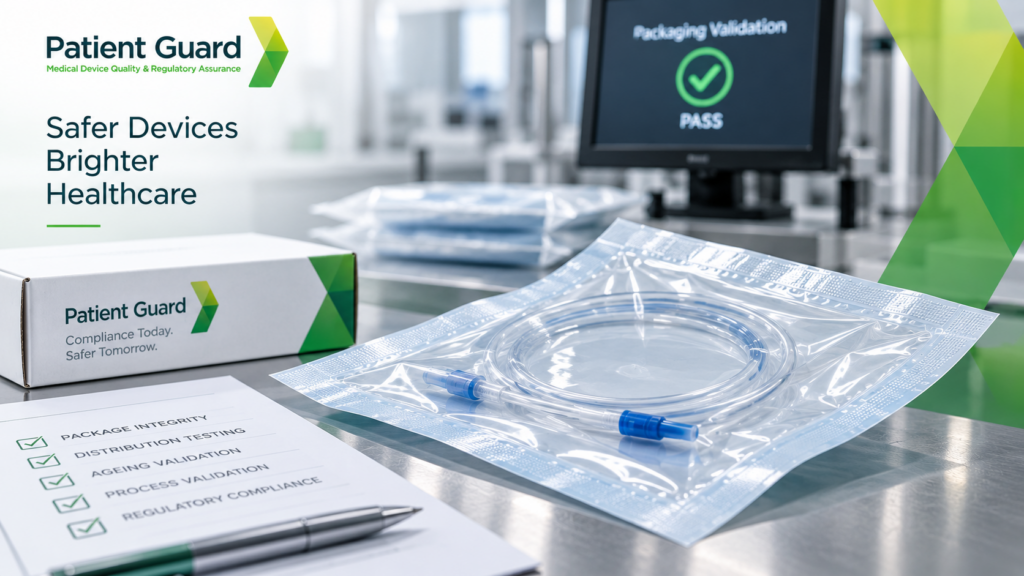
Medical device packaging validation showing sterile barrier packaging and ISO 11607 compliance testing.

Medical Device Packaging Validation: ISO 11607 Requirements

Understand medical device packaging validation, including ISO 11607 requirements, sterile barrier systems, seal integrity, ageing, distribution testing and packaging process validation.

Medical Device Packaging Validation: ISO 11607 Requirements Read More »

Medical device validation showing design verification, process validation, cleaning, sterilisation and packaging validation for medical device compliance.

Medical Device Validation: A Complete Guide to Verification and Validation

Medical device validation provides documented evidence that devices, manufacturing processes and associated systems consistently meet their intended requirements and are suitable for their intended use.

From design verification and validation through to process validation, cleaning, sterilisation, packaging and software, manufacturers must determine which activities require validation and establish objective evidence that applicable regulatory and quality requirements have been met.

This guide explains the key principles of medical device verification and validation, the requirements of the EU MDR, UK MDR and ISO 13485, and how manufacturers can develop a risk-based validation strategy throughout the medical device lifecycle.


Medical Device Validation: A Complete Guide to Verification and Validation Read More »

Medical device cleaning validation showing reusable surgical instruments undergoing a controlled cleaning process.

Medical Device Cleaning Validation: A Complete Guide

Medical device cleaning validation provides documented evidence that a defined cleaning process can consistently reduce contaminants and residues to predetermined acceptable levels without adversely affecting device safety or performance.

Cleaning validation may be required during medical device manufacturing and is particularly important for reusable devices that must be safely cleaned and reprocessed between uses.

This guide explains the regulatory requirements for medical device cleaning validation, applicable standards, acceptance criteria, worst-case selection, test methods, validation protocols and the evidence manufacturers need to demonstrate an effective and reproducible cleaning process.

Medical Device Cleaning Validation: A Complete Guide Read More »

Professional illustration showing compliant medical device and IVD labelling under the EU MDR and IVDR, including labelled medical devices, IVD packaging, Instructions for Use, UDI barcode, ISO 15223-1 symbols, CE marking and regulatory documentation demonstrating lifecycle labelling compliance.

Medical Device and IVD Labelling Under the EU MDR & IVDR

Medical device and IVD labelling plays a critical role in patient safety, product traceability and regulatory compliance. This guide explains the labelling requirements under the EU Medical Device Regulation (EU MDR 2017/745) and In Vitro Diagnostic Medical Devices Regulation (IVDR 2017/746), including mandatory label information, Instructions for Use (IFUs), UDI, symbols, language requirements and best practices for maintaining compliant labels throughout the product lifecycle.

Medical Device and IVD Labelling Under the EU MDR & IVDR Read More »

Notified Bodies for medical devices under the EU MDR and IVDR, illustrating conformity assessment and certification requirements.

Notified Bodies for Medical Devices: A Guide to EU MDR and IVDR Certification

Notified Bodies play a central role in the conformity assessment of medical devices and in vitro diagnostic devices under the EU MDR and IVDR. This guide explains when a Notified Body is required, how they are designated, what they assess, the conformity assessment process, and how manufacturers can prepare for certification.

Notified Bodies for Medical Devices: A Guide to EU MDR and IVDR Certification Read More »

Electrical safety testing of a medical device in accordance with IEC 60601-1 requirements.

Electrical Safety Testing and Validation for Medical Devices

Electrical safety testing is essential for demonstrating the safety and performance of electrically powered medical devices. This guide explains IEC 60601-1, EMC testing, risk management, applicable standards and the evidence manufacturers need to support regulatory compliance in the UK, EU and other major markets.

Electrical Safety Testing and Validation for Medical Devices Read More »

Software as a Medical Device (SaMD)

Software as a Medical Device (SaMD): Regulatory & Development Guide

Software as a Medical Device (SaMD) has fundamentally changed the clinical landscape. From AI-driven diagnostic image scanning to standalone smartphone apps used for real-time clinical decision-making, digital health tools are scaling faster than ever. However, understanding exactly how SaMD is regulated, classified, and maintained is critical to securing market access under current MHRA and EU Notified Body expectations.

Software as a Medical Device (SaMD): Regulatory & Development Guide Read More »

Illustration showing the medical device clinical evaluation process under the EU MDR, with scientific literature, clinical investigations, Post-Market Surveillance, Post-Market Clinical Follow-up, risk management and Clinical Evaluation Reports combining to demonstrate device safety, clinical performance and an acceptable benefit-risk profile for CE marking.

Medical Device Clinical Evaluation: A Complete Guide

Clinical evaluation is a continuous process used to demonstrate that a medical device is safe, achieves its intended clinical performance and maintains an acceptable benefit-risk profile throughout its lifecycle. This comprehensive guide explains the EU MDR clinical evaluation process, including Clinical Evaluation Plans (CEPs), Clinical Evaluation Reports (CERs), clinical evidence, literature reviews, equivalence, Post-Market Clinical Follow-up (PMCF) and ongoing compliance.

Medical Device Clinical Evaluation: A Complete Guide Read More »

Illustration showing the biological evaluation of a medical device under ISO 10993, highlighting the risk-based process from the Biological Evaluation Plan (BEP) through biological assessment, Biological Evaluation Report (BER), Post-Market Surveillance (PMS), and integration with ISO 14971 Risk Management throughout the medical device lifecycle.
Biological Evaluation of Medical Devices: Complete ISO 10993 Guide

Biological Evaluation is a risk-based process used to demonstrate that a medical device is biologically safe for its intended clinical use. This complete guide explains how ISO 10993 supports Biological Evaluation, when biocompatibility testing is required, how Biological Evaluation Plans (BEPs) and Biological Evaluation Reports (BERs) are developed, and how Biological Evaluation integrates with Risk Management and Clinical Evaluation throughout the device lifecycle.

Biological Evaluation of Medical Devices: Complete ISO 10993 Guide Read More »

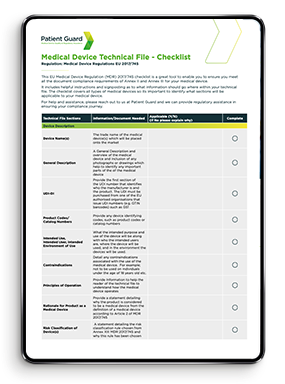
Get the Medical Device Technical Checklist

Thank you! The checklist is now ready to download.