USA Regulations

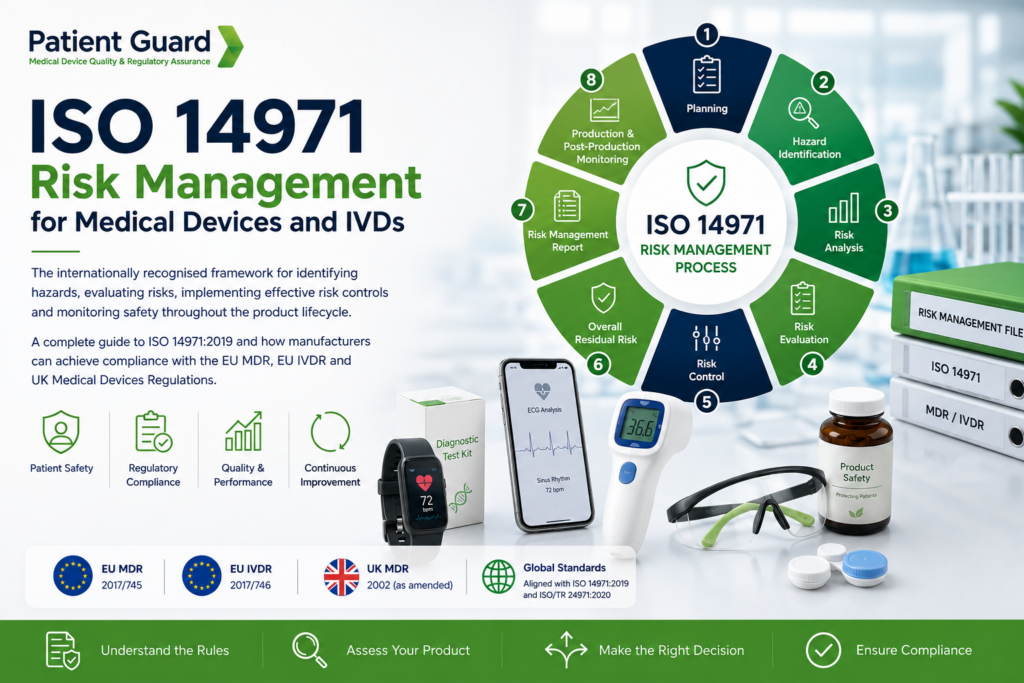
Professional hero banner illustrating the ISO 14971 risk management process for medical devices and in vitro diagnostic medical devices, showing the eight stages of risk management including planning, hazard identification, risk analysis, risk evaluation, risk control, residual risk evaluation, risk management reporting and post-production monitoring to support compliance with the EU MDR, EU IVDR and UK Medical Devices Regulations.

ISO 14971 Risk Management for Medical Devices and IVDs

ISO 14971 provides the internationally recognised framework for identifying hazards, evaluating risks, implementing effective risk controls and monitoring safety throughout the lifecycle of a medical device or in vitro diagnostic device.

This comprehensive guide explains how manufacturers can apply ISO 14971:2019 in practice, maintain a compliant Risk Management File and demonstrate conformity with the EU MDR, EU IVDR and UK Medical Devices Regulations.

ISO 14971 Risk Management for Medical Devices and IVDs Read More »

Illustration showing the biological evaluation of a medical device under ISO 10993, highlighting the risk-based process from the Biological Evaluation Plan (BEP) through biological assessment, Biological Evaluation Report (BER), Post-Market Surveillance (PMS), and integration with ISO 14971 Risk Management throughout the medical device lifecycle.

Biological Evaluation of Medical Devices: Complete ISO 10993 Guide

Biological Evaluation is a risk-based process used to demonstrate that a medical device is biologically safe for its intended clinical use. This complete guide explains how ISO 10993 supports Biological Evaluation, when biocompatibility testing is required, how Biological Evaluation Plans (BEPs) and Biological Evaluation Reports (BERs) are developed, and how Biological Evaluation integrates with Risk Management and Clinical Evaluation throughout the device lifecycle.

Biological Evaluation of Medical Devices: Complete ISO 10993 Guide Read More »

Hero image illustrating the process of determining whether a product is a medical device, featuring examples of medical and non-medical products alongside CE Marking and UKCA symbols, highlighting intended purpose, mode of action, medical claims, borderline products and the regulatory pathway under the EU MDR and UK Medical Devices Regulations.

Is My Product a Medical Device? How to Determine Whether the EU MDR or UK Regulations Apply

Determining whether your product is a medical device is the first and most important step towards regulatory compliance. This guide explains how regulators assess intended purpose, mode of action and medical claims, helping you understand whether your product falls within the scope of the EU Medical Device Regulation (MDR), the UK Medical Devices Regulations or the IVDR. Whether you’re developing software, wearable technology, wellness products, cosmetics or innovative healthcare solutions, this article will help you identify the correct regulatory pathway and avoid common classification mistakes.

Is My Product a Medical Device? How to Determine Whether the EU MDR or UK Regulations Apply Read More »

Skin Irritation Testing in the biological evaluation of medical devices (ISO 10993-23)

ISO 10993-23 Skin Irritation Testing Explained: Methods, Requirements and Regulatory Expectations

Skin irritation occurs when a substance causes inflammation or damage to the skin upon contact. For medical devices, this can be a serious concern, as they are often in prolonged contact with the skin. The consequences of not adequately testing for irritation can range from minor redness to severe dermatitis, leading to discomfort, injury, or even infection in users. Therefore, reliable testing methods are crucial to ensure that products are safe before they reach the market.

ISO 10993-23 Skin Irritation Testing Explained: Methods, Requirements and Regulatory Expectations Read More »

Cytotoxicity Testing in Medial Devices ISO 10993-5

Cytotoxicity Testing in Medical Device Biological Evaluation

In the highly regulated world of medical devices, ensuring patient safety is paramount. One of the essential components of this safety assurance is cytotoxicity testing, specifically adhering to ISO 10993-5 standards. This blog explores the importance of ISO 10993-5 cytotoxicity testing, particularly for medical devices that come into direct contact with patients, and how it contributes to the overall safety and efficacy of these devices.

Cytotoxicity Testing in Medical Device Biological Evaluation Read More »

drug Infusion bag

Drug Stability in Medical Devices: Syringes, Infusion Sets and Bags

Ensuring the stability of drugs in contact with medical devices such as syringes, infusion administration sets and infusion administration bags is paramount. This article delves into the importance of drug stability testing, the challenges faced, and the methodologies employed to guarantee that the drugs administered through these devices remain safe and effective.

Drug Stability in Medical Devices: Syringes, Infusion Sets and Bags Read More »

E&L Testing in medical devices

ISO 10993 Extractables and Leachables Testing: Chemical Characterisation and Toxicological Risk Assessment

In medical device design and development and manufacturing, ensuring the safety and biocompatibility of products is paramount. As part of the biological evaluation process, extractables and leachables (E&L) testing plays a crucial role. This testing ensures that any chemicals that might migrate from the device materials into the body do not pose a risk to patients. The ISO 10993 standard series provides comprehensive guidelines for the biological evaluation of medical devices, including protocols for E&L testing. In this blog, we will delve into the importance of extractables and leachables testing, its procedures, and its relevance within the ISO 10993 framework.

ISO 10993 Extractables and Leachables Testing: Chemical Characterisation and Toxicological Risk Assessment Read More »

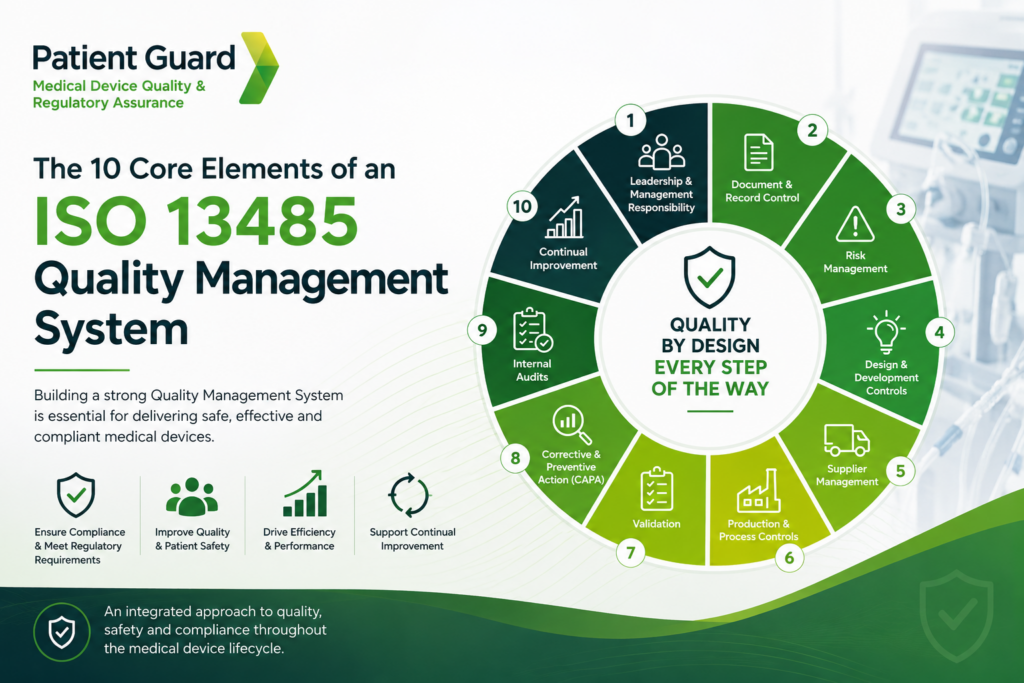
Patient Guard hero image illustrating the core elements of an ISO 13485 Quality Management System, including leadership, document control, risk management, design and development, supplier management, validation, internal audits, CAPA and continual improvement for medical device manufacturers.

Understanding the core elements of Quality Management Systems

In today’s competitive marketplace, delivering high-quality products and services is essential for business success. A Quality Management System (QMS) is a structured framework that helps organizations ensure they meet customer requirements and enhance customer satisfaction. But what are the fundamental elements that constitute a robust QMS? In this blog, we will explore the basic components that form the backbone of effective quality management systems.

Understanding the core elements of Quality Management Systems Read More »

Hero image comparing ISO 13485 and the FDA Quality System Regulation (21 CFR Part 820/QMSR), illustrating the key differences between international and US medical device quality management systems, including risk management, design controls, documentation, supplier management and regulatory compliance.

5 Differences Between ISO 13485 & FDAs Medical Device QSR

Medical device manufacturers face a daunting task: navigating complex regulatory landscapes to ensure their products meet safety and quality standards. In order to sell products in the US, manufacturers are required to comply with CFR 21 Part 820, whereas for global markets, the voluntary ISO 13485 is used. These two standards are not the same, and companies must understand the differences between them if they are to get their products to market across regions. However, with the FDA actively working to align CFR 21 Part 820 more closely with ISO 13485, the effort toward global harmonization is a promising sign for medical device manufacturers.

5 Differences Between ISO 13485 & FDAs Medical Device QSR Read More »

A certificate that says 'ISO 13485 certified' on it - This image is used by patient guard to represent ISO 13485 quality assurance and QMS services.

What is ISO 13485? The Complete Guide to Medical Device QMS

ISO 13485:2016 is the international standout standard that defines the precise requirements for a Quality Management System (QMS) specific to the medical device industry. Unlike general business quality frameworks, it prioritizes patient safety, clinical efficacy, and global regulatory compliance ahead of standard consumer satisfaction metrics.

Whether you are an active medical device manufacturer, a software-as-a-service (SaMD) developer, an importer, or an EU/UK distributor, demonstrating compliance with this standard is virtually mandatory to secure and retain critical market access.

What is ISO 13485? The Complete Guide to Medical Device QMS Read More »

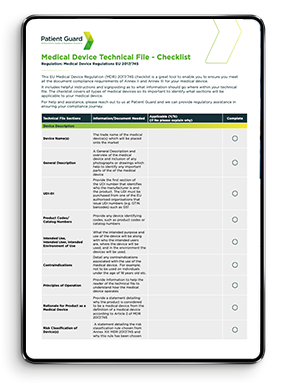
Get the Medical Device Technical Checklist

Thank you! The checklist is now ready to download.