

NHS Procurement Ready

Preparing to supply digital health technologies to the NHS involves much more than developing a great product. Organisations must demonstrate compliance across multiple regulatory, quality, clinical safety and information governance requirements before NHS buyers can purchase with confidence. Patient Guard helps you bring these requirements together, ensuring your organisation is ready for NHS procurement.

500+ Manufacturers Supported
BSI ISO 13485 Certified
UK & EU Offices
Former MHRA Expertise
Established 2017
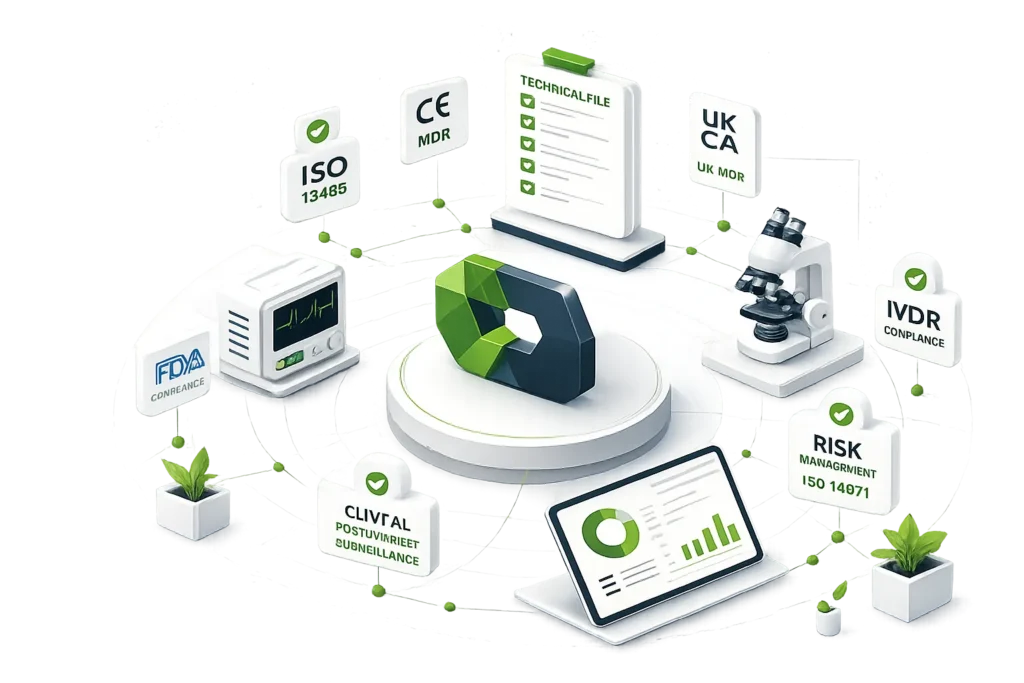
Patient Guard medical device regulatory consultancy illustration showing UKCA, CE MDR, FDA, ISO 13485, IVDR and technical documentation.

What Does NHS Procurement Ready Mean?

Being NHS Procurement Ready means your organisation has the documentation, governance, clinical safety evidence and regulatory compliance needed to satisfy NHS procurement teams and support successful deployment within healthcare organisations. Depending on your technology and intended use, this may include compliance with the NHS Digital Technology Assessment Criteria (DTAC), Clinical Risk Management standards such as DCB0129 and DCB0160, cyber security requirements, regulatory approvals, quality management systems and robust technical documentation.

Preparing these requirements independently can be challenging, particularly for innovative digital health companies and growing healthcare technology businesses. Patient Guard provides a coordinated approach that brings together regulatory affairs, quality assurance, clinical safety and digital health expertise, helping organisations prepare confidently for NHS procurement while reducing delays and avoiding common compliance pitfalls.

David Small - Patient Guard - CEO and Founder
"Winning NHS business isn't simply about having an innovative product—it's about giving NHS organisations confidence that your technology is safe, secure, compliant and ready for deployment. By bringing together regulatory compliance, clinical safety, cyber security and governance, organisations can significantly reduce procurement delays and demonstrate that they are ready to become trusted NHS suppliers."
Infographic illustrating the NHS Procurement Readiness journey for digital health technologies, showing the stages of assessing requirements, performing a gap analysis, implementing compliance measures, developing supporting documentation, validating readiness and demonstrating confidence to NHS buyers through regulatory, clinical safety, cyber security and governance compliance.

Why Choose Patient Guard?

NHS procurement specialists

We understand the regulatory, quality, clinical safety and governance requirements NHS buyers expect to see, helping organisations prepare for successful procurement and deployment.

End-to-end compliance support

From DTAC and Clinical Safety through to regulatory compliance, quality management and technical documentation, we coordinate every aspect of NHS Procurement Readiness.

Practical gap analysis

We identify exactly what is missing, prioritise the actions required and develop a clear roadmap to help you become procurement ready without unnecessary delays.

Established regulatory consultancy

Providing specialist regulatory affairs, quality assurance and digital health compliance services to the healthcare industry since 2017.

Trusted by 500+ companies

From innovative health technology start-ups to established medical device manufacturers and healthcare organisations, we help businesses demonstrate compliance with confidence.

Accelerate NHS market access

Our integrated approach helps reduce procurement delays, strengthen buyer confidence and position your organisation for successful NHS procurement opportunities.

What's Included in Our NHS Procurement Readiness Service

Procurement Readiness Assessment

We evaluate your organisation, product and existing documentation to identify the regulatory, quality, clinical safety and governance requirements needed for NHS procurement.

Gap Analysis & Roadmap

Receive a detailed assessment of your current level of compliance, together with a prioritised action plan that provides a clear route to becoming NHS Procurement Ready.

DTAC & Digital Health Compliance

We help you implement the NHS Digital Technology Assessment Criteria (DTAC), ensuring your organisation can demonstrate compliance across all required domains.

Clinical Safety & Risk Management

Our consultants develop Clinical Risk Management documentation, Hazard Logs and Clinical Safety Cases in accordance with DCB0129 and DCB0160 where required.

Regulatory & Quality Compliance

We support compliance with applicable medical device regulations, ISO 13485 quality management systems and the technical documentation expected by NHS buyers.

Procurement Evidence Pack

We help you assemble the documentation and evidence NHS procurement teams typically expect, giving your organisation greater confidence during buyer due diligence and supplier assessments.

Who Needs NHS Procurement Readiness?

Key Requirements for NHS Procurement

Successfully supplying products or services to the NHS requires more than an innovative solution. NHS buyers expect organisations to demonstrate that their technology is safe, secure, compliant and supported by appropriate governance processes. Depending on the nature of your product or service, this may involve regulatory compliance, digital health assessments, clinical safety assurance, quality management systems and robust supporting documentation. Patient Guard helps organisations understand these requirements and build the evidence needed to demonstrate procurement readiness.

Our NHS Procurement Readiness Process

01

Step 1 – Procurement Readiness Assessment

We begin by reviewing your organisation, product and existing documentation to understand your current level of compliance. Our consultants identify the regulatory, quality, clinical safety, cyber security and governance requirements applicable to your technology, before carrying out a comprehensive gap analysis and developing a prioritised roadmap to NHS Procurement Readiness.

02

Step 2 – Compliance Implementation & Evidence Development

Working alongside your team, we help address the identified gaps by implementing the required compliance activities. Depending on your organisation, this may include DTAC compliance, Clinical Risk Management under DCB0129 and DCB0160, regulatory support, quality management systems, technical documentation, information governance and the development of the evidence expected by NHS procurement teams.

03

Step 3 – Procurement Readiness Review & Ongoing Support

Once the required compliance activities have been completed, we carry out a final readiness review to ensure your documentation and evidence are complete, consistent and suitable for NHS procurement. We continue to provide expert support as your organisation grows, helping you maintain compliance, respond to buyer due diligence requests and prepare for future NHS procurement opportunities.

Infographic illustrating the five pillars of NHS Procurement Readiness: regulatory compliance, DTAC, clinical safety, quality management and governance, and supporting documentation and evidence required to build confidence with NHS procurement teams.

Digital Health Technologies We Support

Organisation Type How Our DTAC Readiness Assessment Helps
Digital Health Start-ups Understand NHS requirements before engaging with customers or procurement frameworks.
Scale-up Health Technology Companies Identify compliance gaps before expanding into NHS markets.
Software as a Medical Device Manufacturers Align DTAC readiness with regulatory and clinical safety obligations.
Medical Device Manufacturers with Digital Products Prepare connected devices and companion software for NHS adoption.
AI Healthcare Developers Demonstrate governance, safety and compliance to NHS buyers.
NHS Suppliers Strengthen evidence before responding to tenders or framework opportunities.
Healthcare Software Vendors Assess readiness against all DTAC domains and prioritise improvements.
International Companies Entering the UK Understand NHS procurement expectations and prepare supporting evidence.

NHS Procurement Readiness Service Pricing

Premium

NHS Procurement Readiness Programme

£ 12,500

From

Prepare your organisation for successful NHS procurement with a comprehensive readiness programme that brings together regulatory compliance, DTAC, Clinical Safety, quality management and procurement evidence into a single coordinated project.

What's Included

  • Comprehensive NHS Procurement Readiness Assessment
  • Detailed Gap Analysis & Implementation Roadmap
  • DTAC Compliance Support
  • Clinical Safety Compliance (DCB0129/DCB0160)
  • Regulatory Compliance Review
  • Quality Management & Governance Review
  • Procurement Documentation & Evidence Pack
  • Final Procurement Readiness Review
  • Ongoing Expert Consultancy Throughout the Project

Time Lines

01

Week 1–2 - Assessment & Gap Analysis

We review your organisation, product and existing documentation, identify the NHS procurement requirements applicable to your technology and produce a detailed Procurement Readiness Assessment with a prioritised implementation roadmap.

02

Weeks 3–10 - Compliance Implementation

Working alongside your team, we implement the required compliance activities, which may include DTAC, Clinical Safety (DCB0129/DCB0160), regulatory compliance, quality management, cyber security, information governance and supporting procurement documentation.

03

Weeks 11–12 - Procurement Readiness Review

We perform a final review of your documentation and evidence to ensure you are prepared for NHS procurement, providing recommendations where necessary and supporting your organisation through procurement questionnaires and buyer due diligence.

Typical project duration: Most NHS Procurement Readiness programmes are completed within 8–12 weeks, depending on the complexity of your technology, the maturity of your existing compliance documentation and the scope of implementation required. Larger organisations or more complex digital health solutions may require additional time where multiple compliance workstreams are being delivered concurrently.

Frequently Asked Questions (FAQs)

Being NHS Procurement Ready means your organisation has the policies, processes, documentation and evidence needed to demonstrate that your product or service is safe, compliant and suitable for use within the NHS. Depending on your technology, this may include regulatory compliance, DTAC, Clinical Safety, information governance, cyber security and quality management.

No. DTAC is an important component for many digital health technologies, but NHS Procurement Readiness is broader. NHS buyers may also expect evidence of regulatory compliance, Clinical Risk Management, quality management systems, cyber security, information governance and supporting technical documentation before awarding contracts.

Not necessarily. Clinical Safety requirements depend on the nature of your product and whether it could impact patient care. Where applicable, organisations may need to comply with DCB0129 and/or DCB0160, supported by Clinical Risk Management documentation such as Hazard Logs and Clinical Safety Cases. We help determine what applies to your technology.

Most organisations can achieve NHS Procurement Readiness within 8 to 12 weeks, although the timescale depends on the complexity of the technology, the maturity of your existing documentation and the amount of compliance work required. Organisations with well-established quality systems and documentation are often able to complete the process more quickly.

Yes. We offer ongoing consultancy to help organisations maintain compliance, update documentation, respond to NHS procurement questionnaires, support audits and implement new regulatory or NHS requirements as your products and services evolve. This helps ensure your organisation remains procurement ready as expectations and regulations continue to change.

Related Services

Click on the links below to discover more:

Do you need Training?

Check out Patient Guards Training Courses

Recent Blog Posts

IVDR Performance Evaluation Explained image for Patient Guards blog on IVDR Performance Evaluation

IVDR Performance Evaluation Explained: A Complete Guide for Manufacturers

Performance Evaluation is one of the most important requirements under the EU In Vitro Diagnostic Regulation (IVDR). Every manufacturer must demonstrate that their in vitro diagnostic medical device achieves its intended purpose through robust scientific validity, analytical performance and clinical performance evidence. This guide explains every stage of IVDR Performance Evaluation, including Performance Evaluation Plans (PEPs), Performance Evaluation Reports (PERs), Post-Market Performance Follow-up (PMPF) and how Performance Evaluation supports successful CE marking under Regulation (EU) 2017/746.

Read More »

IVDR Classification Explained: A Complete Guide to Class A, B, C and D IVDs

Understanding how your in vitro diagnostic device is classified under the EU IVDR is one of the first and most important steps towards regulatory compliance. This guide explains the IVDR classification rules, the differences between Class A, B, C and D IVDs, how Annex VIII is applied, and how classification affects conformity assessment, technical documentation and Notified Body involvement.

Read More »

When Do You Need New Biocompatibility Testing for a Medical Device?

A material change, supplier switch, manufacturing transfer or design modification does not automatically require new ISO 10993 biocompatibility testing. Learn how manufacturers use Biological Evaluation Plans (BEPs), chemical characterisation, toxicological risk assessments and Biological Evaluation Reports (BERs) to determine whether existing biological evidence remains valid or whether additional testing is required under ISO 10993-1, the EU MDR and FDA expectations.

Read More »

Why Notified Bodies Reject IVDR Performance Evaluation Reports: The Top 3 Mistakes Manufacturers Make

More than half of IVDR submissions face deficiencies during Notified Body review, with Performance Evaluation Reports (PERs) among the most common areas of concern. Learn the three critical mistakes that lead to PER rejections—including weak State of the Art justification, non-systematic literature reviews, and poor traceability between Scientific Validity, Analytical Performance, and Clinical Performance data—and discover how to build a compliant, audit-ready IVDR technical file.

Read More »
10 Common Technical Documentation Deficiencies Found During EU MDR and IVDR Notified Body Reviews

10 Common Technical Documentation Deficiencies Found During EU MDR and IVDR Notified Body Reviews

Preparing technical documentation for EU MDR or IVDR certification is only half the challenge. Successfully passing a Notified Body review depends on demonstrating consistency across your Quality Management System, Clinical Evaluation, Risk Management, Biological Evaluation, Performance Evaluation and Post-Market Surveillance activities. Discover ten of the most common technical documentation deficiencies identified during MDR and IVDR conformity assessments—and learn how to reduce the likelihood of costly review cycles and certification delays.

Read More »
Patient Guard EU Authorised Representative Services

EU Authorised Representative Services for Medical Device & IVD Manufacturers

Selling medical devices or IVDs in Europe? If your company is based outside the EU, appointing an EU Authorised Representative (EC Rep) is a legal requirement under EU MDR 2017/745 and IVDR 2017/746. Patient Guard provides expert EU Authorised Representative services, EUDAMED support, regulatory guidance, and ongoing compliance management to help manufacturers access and maintain the European market with confidence.

Read More »

Get in touch

Our Friendly Team are here to help.

Book a Free Consultation

Speak to one of our regulatory and compliance experts to arrange an obligation-free call. Our experienced team is ready to help you get your medical device to market.

UK Office

Get the Medical Device Technical Checklist

Thank you! The checklist is now ready to download.