
Updated 21st May 2026
Understanding Basic UDI-DI, UDI-DI and UDI-PI Under EU MDR
UDI means Unique Device Identifier, it is implemented within latest regulations to assist with medical device and IVD (In Vitro Diagnostic) device traceability. In this blog we discuss this complex topic.
01. Reusable Devices
Devices that require cleaning and sterilization between patients have the strictest physical requirements under EU MDR.
- Permanent Marking: UDI must be on the device itself (Direct Part Marking).
- Durability: Must remain legible throughout the entire expected lifetime of the device.
- Reprocessing: The UDI carrier must withstand multiple cycles of disinfection and sterilization.
- Traceability: Linked to the specific reprocessing cycle records.
02. Software (SaMD)
Medical software does not have physical packaging in the traditional sense, so the UDI is digital.
- Internal Display: UDI must be accessible via a menu (e.g., "About" or "System Info" screen).
- Version Control: Every major version change requires a new UDI-DI.
- PI Requirements: The UDI-PI must include the software version number rather than a batch code.
- Distribution: UDI must be included on any physical media (USB/CD) or download site.
03. Systems & Packs
When multiple devices are combined into a single kit, the UDI requirements apply to both the pack and the contents.
- The Pack UDI: The system itself must have its own unique Basic UDI-DI and UDI-DI.
- Individual Components: Each device within the pack must have its own UDI unless they are not CE marked separately.
- EUDAMED: The "System/Procedure Pack Producer" must register the kit under their own Actor ID.
- Sterilization: If the pack is sterilized, a new UDI-PI must be assigned for that process.
04. Implantable Devices
As the highest risk class, these devices require the most comprehensive digital "paper trail."
- Implant Cards: UDI must be present on the mandatory Implant Card provided to the patient.
- Storage: Healthcare institutions must store the UDI of implantable devices they have received.
- SSC: The UDI-DI must be linked to the Summary of Safety and Clinical Performance.
- Rapid Recalls: Enables targeted tracking if an individual batch shows performance issues.
⚡ Quick Summary
- Basic UDI-DI: For administration/EUDAMED (not on label).
- UDI-DI: Identifies the specific model (on label).
- UDI-PI: Identifies the batch/expiry (on label).

What is UDI in medical devices?
Accurate Identification
UDI eliminates the ambiguity of similar product names by providing a globally unique numeric key for every version and variant of a device.
Efficient Recall Management
In the event of a safety alert, manufacturers can pinpoint affected batches instantly, preventing unnecessary disruption to clinical operations.
PMS Data Integration
Post-Market Surveillance relies on clean data. UDI allows for the seamless aggregation of incident reports and clinical performance metrics.
Supply Chain Integrity
Distributors and importers can automate inventory tracking, reducing manual entry errors and ensuring stock rotation is compliant with expiry dates.
EUDAMED Synchronicity
The UDI acts as the bridge between your physical product and the EUDAMED database, ensuring the public and regulators see consistent data.
Market Access Readiness
By following EU MDR UDI standards, you align your technical file with IMDRF guidelines, significantly lowering the barrier for entry into non-EU markets.
UDI requirements under EU MDR
The UDI Requirements EU MDR are operational, not theoretical.
Manufacturer Obligations
- Assign unique identifiers (Basic UDI-DI & UDI-DI)
- Place the UDI carrier on physical labels and packaging
- Register and validate device data in EUDAMED
- Maintain UDI data throughout the entire device lifecycle
MDCG 2021-19: Makes it clear that Basic UDI-DI must be assigned before placing a device on the market and before Notified Body submission.
Strategic Integration
UDI is not an isolated task. It is the connective tissue linking your core regulatory assets:
- Technical Documentation
- Declarations of Conformity
- Notified Body Certification
- Post-Market Surveillance
- Vigilance Reporting
UDI hierarchy explained
This is where things either click or fall apart. UDI is not a single identifier—it is a structured hierarchy. Understanding this is the difference between compliance and chaos.
Basic UDI-DI
The anchor of your UDI system. It identifies a group of devices at a model or family level.
- Used in Certificates & SSCP
- Declaration of Conformity
- Technical Documentation
- Note: Does NOT appear on labels
UDI-DI
Identifies a specific device version or configuration. It is fixed and assigned per packaging level.
- Mandatory on the Label
- Required for Sterile vs Non-Sterile
- Distinct for each packaging level
UDI-PI (Production Identifier)
The variable element that makes real-world traceability possible across the supply chain.
- Lot / Batch Numbers
- Serial Numbers
- Expiry & Manufacturing Dates
Special Exception: Master UDI-DI
While not relevant for most medical devices, the Master UDI-DI applies specifically to highly customized categories like contact lenses, spectacle frames, and ready-to-wear reading glasses.
UDI hierarchy summary
| Identifier | What it identifies | On Label | EUDAMED | Documentation | Type |
|---|---|---|---|---|---|
| Basic UDI-DI | Device family/group | No | Yes | Yes | Fixed |
| UDI-DI | Specific device/version | Yes | Yes | Yes | Fixed |
| UDI-PI | Production-level data | Yes | Traceability only | No | Variable |
| Master UDI-DI | Special device grouping | No | Yes | Yes | Fixed |
How UDI works in practice
A Compliant UDI System Requires:
- Correct identifier assignment
- Proper label and packaging integration
- Structured data for EUDAMED
Manufacturers Must:
- Place the UDI carrier on labels or packaging
- Ensure identifiers match documentation
- Register device data in EUDAMED
Critical Milestone: 28 May 2026
From this date, the UDI/Device registration module in EUDAMED becomes mandatory. This turns UDI from a regulatory requirement into a critical operational dependency.

UDI-DI Triggers: When Does a Change Require a New ID?
A frequent point of failure in Post-Market Surveillance is the "silent change"—making a modification to a device without updating its UDI-DI. According to EU MDR Annex VI, Part C, any change that could lead to the misidentification of the device or its traceability requires a new UDI-DI.
Beyond the Manufacturer: Economic Operator Duties
UDI is not solely the manufacturer's burden. Article 25 of the MDR places strict verification duties on Importers and Distributors. If you are an Economic Operator, you are legally required to verify that the UDI is present and correctly registered.
Verification
Importers must verify that the UDI has been assigned and the carrier is affixed before placing the device on the market.Sample Checking
Distributors must perform representative sampling to ensure that the UDI data on the label matches the documentation.Storage Records
All Economic Operators must store and keep, preferably by electronic means, the UDI of Class III implantable devices.Failure to verify UDI data makes an Importer or Distributor liable for the non-compliance. This creates a "network effect" where your customers (distributors) will eventually reject shipments if your UDI data structure is flawed.
Common UDI Mistakes
These show up again and again in manufacturer audits. They are rarely minor—they create systemic failures.
How to Implement a UDI System
A practical, scalable implementation approach for high-stakes compliance.
UKCA and Future UK UDI Strategy
Let’s keep it grounded: UK requirements are still evolving, but market access depends on clarity.
EU MDR Scope
Applies in EU Member States and Northern Ireland.Great Britain (UK MDR)
Operates under UK MDR 2002. Non-UK manufacturers must appoint a UKRP.The MHRA confirms that devices placed on the GB market must be registered. The key takeaway: Do not build a rigid, EU-only UDI system. Build something scalable.
How Patient Guard supports UDI compliance
UDI Strategy and Scoping
- Portfolio Analysis: We audit your product range to identify UDI requirements and implementation timelines.
- Risk Class Assessment: Determining Class I, IIa, IIb, or III status to dictate EUDAMED deadlines.
- Legacy Device Strategy: Navigating the transition for MDD-certified devices into the UDI system.
Basic UDI-DI & Structuring
- The Regulatory Umbrella: Defining the Basic UDI-DI as the primary key for your EUDAMED registration.
- Granular Traceability: Assigning UDI-DIs for every packaging level (unit, box, carton).
- Issuing Entity Guidance: Expert advice on selecting and managing codes via GS1, HIBCC, or IFA.
EUDAMED Readiness
- Actor Registration: Ensuring correct registration for Manufacturers, Reps, and Importers.
- Data Attribute Mapping: Mapping internal data to the 100+ mandatory EUDAMED attributes.
- Validation & Submission: "Pre-flight" data checks to ensure first-time submission success.
Labelling Alignment
- AIDC & HRI Integration: Ensuring labels meet both barcode and human-readable requirements.
- Symbol Implementation: Integrating ISO symbols for sterile status, expiry, and batch numbers.
- Direct Part Marking (DPM): Guidance on permanent marking for reusable medical devices.
Notified Body Preparation
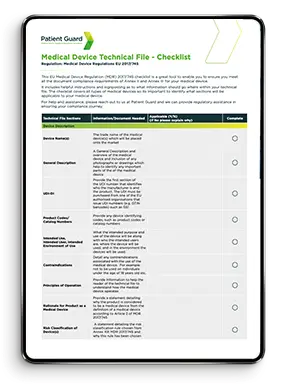
- Technical Documentation: Updating Technical Files to include robust UDI traceability data.
- QMS Integration: Embedding UDI management into your Quality Management System and SOPs.
- Audit Defense: Preparing your team for specific NB questions regarding assignment logic.
EU MDR Compliance Integration
- Post-Market Surveillance: Leveraging UDI for faster tracking of field safety actions (FSCA).
- Clinical Evaluation: Linking clinical data to specific identifiers for accurate CER reports.
- Supply Chain Transparency: Ensuring Economic Operators verify UDI data at every stage.
The Golden Thread: Physical Labeling vs. Digital Records
Under EU MDR, the UDI is often described as the "Golden Thread" that connects a physical medical device in a hospital ward to its regulatory history in EUDAMED. This connection is not merely a label; it is a live data link. Manufacturers often underestimate the complexity of ensuring that the Human Readable Interpretation (HRI) and the Automatic Identification and Data Capture (AIDC)—typically a 2D DataMatrix or Barcode—are perfectly synchronized.
If the barcode scans a UDI-DI that does not match the printed text, the device is technically mislabeled and non-compliant. Furthermore, this data must be mirrored exactly in the EUDAMED UDI/Device module. Any discrepancy between the physical label, the Technical File, and the EUDAMED entry is a "major non-conformity" during a Notified Body audit. Maintaining this 1:1:1 ratio across thousands of SKUs is where operational excellence is tested.
The Legacy Device Challenge (Article 120)
A significant point of confusion remains for "Legacy Devices"—those placed on the market under MDD or AIMDD certificates during the transition period. While Article 120 of the EU MDR provides an extension for certificate validity, it does not exempt these devices from UDI requirements.
Legacy devices must still be assigned a Basic UDI-DI and UDI-DI for registration in EUDAMED, even if the physical label does not yet carry the UDI carrier. However, the moment a "significant change" in design or intended purpose occurs, the device loses its legacy status and must fully comply with MDR labeling. Navigating this "grey zone" requires a documented strategy to avoid premature label changes or, conversely, missing the deadline for digital registration.
What Notified Bodies Look For in a UDI Audit
During a Quality Management System (QMS) audit under ISO 13485:2016 and EU MDR, auditors will move beyond checking if a barcode exists. They will perform a vertical trace. They will select a random device from your warehouse and ask to see the link between the UDI-PI on that box and the production batch record, the sterilization validation, and the EUDAMED registration.
Auditors expect to see a formal UDI Procedure within your QMS. This procedure must define who is responsible for data accuracy, how UDI-DIs are issued for new products, and how "triggers" for a new UDI-DI are identified (e.g., changes to the brand name, device model, or clinical use). If your QMS does not explicitly govern UDI lifecycle management, you are at risk of a finding.
UDI as an Operational Dependency
While UDI is a regulatory burden, the most sophisticated manufacturers view it as a supply chain upgrade. A robust UDI system enables High-Precision Traceability. In the event of a Field Safety Corrective Action (FSCA) or a recall, a functional UDI-PI system allows you to pinpoint exactly which batches are affected, rather than performing a "blanket recall" that destroys profit and brand reputation.
By 2026, hospitals and procurement bodies across Europe will rely on UDI for inventory management. If your UDI data is structured poorly, your products may be "invisible" to automated hospital systems, creating an unofficial barrier to sale. UDI is no longer just about compliance; it is about your ability to transact in a digital healthcare economy.
The Final Verdict
UDI for medical devices is not about generating identifiers. It is about building regulatory infrastructure.
Done Properly
UDI becomes a strategic asset supporting:
- End-to-end traceability
- Global regulatory consistency
- Permanent audit readiness
- Multi-market scalability
Done Poorly
UDI becomes a liability that creates:
- Compliance process friction
- Documentation inconsistencies
- Registration delays
- Increased audit risk
The foundation you build today determines your market access tomorrow.
Watch our YouTube Video about UDI
FAQs
Is the Basic UDI-DI printed on the product label?
No. Unlike the UDI-DI, the Basic UDI-DI is a purely administrative identifier used for regulatory documentation (like the Declaration of Conformity) and EUDAMED registration. It does not appear on the physical label or the packaging.
When do I need to assign a new UDI-DI to my device?
You must assign a new UDI-DI whenever there is a change that could lead to the misidentification of the device or its traceability. This includes changes to the device name/model, its risk class, its "single-use" status, or its sterile packaging.
Do reusable devices need a UDI on the device itself?
Yes. Reusable devices that require cleaning, disinfection, or sterilization between uses must have a permanent UDI carrier (direct marking) on the device itself. This ensures traceability throughout the product's entire lifecycle, even if the original packaging is long gone.
What is the difference between a UDI-DI and a UDI-PI?
UDI-DI (Device Identifier): The static part of the code that identifies the specific model and manufacturer.
UDI-PI (Production Identifier): The dynamic part of the code that includes production-specific data like the batch number, serial number, expiry date, or manufacturing date.
Does software (SaMD) need a UDI?
Yes. Software that is commercially available on its own and qualifies as a medical device must have a UDI. For software, the UDI is typically assigned at the system level and should be displayed on a "header" or "about" screen within the user interface.
What is the deadline for EUDAMED UDI registration?
Under the current EU MDR timeline, the UDI/Device registration module is expected to become mandatory by May 2026. However, manufacturers are encouraged to register early to ensure compliance and smooth market access.

Steve Condie, MTROPRA
Reviewed by
Steve Condie, MTOPRA
Regulatory Manager | ISO 13485 Internal Auditor
20+ years in medical device regulatory affairs, ISO 10993 biocompatibility, MDR/IVDR compliance and quality systems.
Patient Guards Recent Posts

Medical Device Regulatory Consulting Services Explained
Explore medical device regulatory consulting services for ISO, FDA, EU, and more. Build compliant systems, pass audits, and scale globally with expert support.

Patient Guard’s QMS Achieves ISO 13485 Certification
A milestone that strengthens our commitment to quality
Regulatory and quality consulting is one thing. Building, implementing, and passing audits on your own Quality Management System is another.
UDI Medical Devices: Types Explained (EU MDR Guide)
UDI medical devices are not just a labelling requirement. They are the backbone of traceability under EU MDR.