
Guides and Advice

Cytotoxicity Testing in Medial Devices ISO 10993-5

Cytotoxicity Testing in Medical Device Biological Evaluation

In the highly regulated world of medical devices, ensuring patient safety is paramount. One of the essential components of this safety assurance is cytotoxicity testing, specifically adhering to ISO 10993-5 standards. This blog explores the importance of ISO 10993-5 cytotoxicity testing, particularly for medical devices that come into direct contact with patients, and how it contributes to the overall safety and efficacy of these devices.

Cytotoxicity Testing in Medical Device Biological Evaluation Read More »

drug Infusion bag

Drug Stability in Medical Devices: Syringes, Infusion Sets and Bags

Ensuring the stability of drugs in contact with medical devices such as syringes, infusion administration sets and infusion administration bags is paramount. This article delves into the importance of drug stability testing, the challenges faced, and the methodologies employed to guarantee that the drugs administered through these devices remain safe and effective.

Drug Stability in Medical Devices: Syringes, Infusion Sets and Bags Read More »

Hero image illustrating IEC 62366-1 usability engineering for medical devices, showing healthcare professionals evaluating a medical device to support user-centred design, human factors engineering, usability testing, risk management and patient safety throughout the product lifecycle.

IEC 62366-1 Explained: Medical Device Usability Engineering Guide

Learn how IEC 62366-1 helps medical device and IVD manufacturers design safer, more intuitive products through usability engineering. Discover the usability engineering process, human factors, formative and summative evaluations, usability files and regulatory expectations under the MDR, IVDR and FDA.

IEC 62366-1 Explained: Medical Device Usability Engineering Guide Read More »

Regulatory workspace illustrating EU MDR Article 120 transitional provisions, featuring a transition timeline, key MDR deadlines calendar, Regulation (EU) 2017/745 open to Article 120, legacy medical device technical documentation, ISO 13485 Quality Management System files, CE-marked medical device packaging, transition compliance checklist and project plan for MDR compliance.

EU MDR Article 120 Explained: Transitional Provisions and Extended Deadlines

Article 120 of the EU Medical Device Regulation (MDR) introduced transitional provisions allowing certain legacy devices to remain on the market beyond the original MDR application date. However, these extended deadlines are only available to manufacturers that satisfy specific regulatory conditions. This guide explains how Article 120 works, which devices qualify, the current transition deadlines, what constitutes a significant change, and the practical steps manufacturers should take to maintain compliance under the EU MDR.

EU MDR Article 120 Explained: Transitional Provisions and Extended Deadlines Read More »

A certificate that says 'ISO 13485 certified' on it - This image is used by patient guard to represent ISO 13485 quality assurance and QMS services.

What is ISO 13485? The Complete Guide to Medical Device QMS

ISO 13485:2016 is the international standout standard that defines the precise requirements for a Quality Management System (QMS) specific to the medical device industry. Unlike general business quality frameworks, it prioritizes patient safety, clinical efficacy, and global regulatory compliance ahead of standard consumer satisfaction metrics.

Whether you are an active medical device manufacturer, a software-as-a-service (SaMD) developer, an importer, or an EU/UK distributor, demonstrating compliance with this standard is virtually mandatory to secure and retain critical market access.

What is ISO 13485? The Complete Guide to Medical Device QMS Read More »

Hero image illustrating the structure of a medical device technical file under the EU MDR, showing the key documentation required for CE marking, including device description, General Safety and Performance Requirements (GSPRs), Risk Management File, verification and validation, Clinical Evaluation, Biological Evaluation and Post-Market Surveillance in accordance with Regulation (EU) 2017/745.

How to Structure a Medical Device Technical File

A medical device technical file is a concise set of documents created by a manufacturer to explain the performance and safety of a particular Medical Device in a clear, well-organized, easily searchable, and unambiguous manner.

In order to prove compliance with the general safety and performance criteria of the legislation, the manufacturer must have – and keep up-to-date – this technical documentation, regardless of  medical device class.

How to Structure a Medical Device Technical File Read More »

Illustration of Regulation (EU) 2017/746 (IVDR) showing laboratory diagnostics, CE marking and compliance requirements for in vitro diagnostic medical devices in the European Union.

Regulation (EU) 2017/746 Explained: The Complete Guide to the EU IVDR

Regulation (EU) 2017/746, commonly known as the In Vitro Diagnostic Medical Device Regulation (IVDR), establishes the legal framework for placing in vitro diagnostic medical devices on the European Union market. It replaced the previous IVDD, introducing stricter requirements for clinical evidence, quality management systems, technical documentation and ongoing post-market surveillance.

Whether you manufacture laboratory diagnostics, companion diagnostics, self-tests or IVD software, understanding the IVDR is essential for achieving and maintaining CE marking. This guide explains the key requirements of Regulation (EU) 2017/746, helping manufacturers navigate compliance with confidence.

Regulation (EU) 2017/746 Explained: The Complete Guide to the EU IVDR Read More »

medical device consultancy

Medical Device Regulatory Strategy for Startups: A Complete Guide (2026)

Launching a medical device startup can be an exciting journey, but regulatory requirements are often underestimated during the early stages of product development. Many start-ups focus on innovation, funding, and product design while leaving regulatory planning until later. Unfortunately, this approach can lead to significant delays, increased costs, and even project failure.

A well-defined regulatory strategy should be established as early as possible to ensure your medical device reaches the market efficiently while meeting all applicable regulatory requirements.

In this guide, we explain how medical device startups can build a successful regulatory strategy and avoid common compliance pitfalls.

Medical Device Regulatory Strategy for Startups: A Complete Guide (2026) Read More »

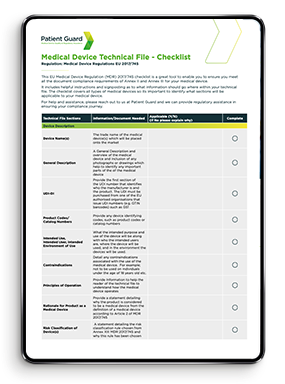
Get the Medical Device Technical Checklist

Thank you! The checklist is now ready to download.