
Supply Chain

FDA Medical Device Regulations: A Complete Guide for Manufacturers

FDA Medical Device Regulations: A Complete Guide for Manufacturers

Planning to place a medical device on the US market? This complete guide explains FDA medical device regulations, including device classification, 510(k), De Novo and PMA pathways, QMSR and ISO 13485, establishment registration, device listing, U.S. Agent requirements, UDI and post-market obligations.

FDA Medical Device Regulations: A Complete Guide for Manufacturers Read More »

How to Become NHS Procurement Ready: From DTAC to NHS Market Access

Preparing to sell digital health technology to the NHS requires more than completing DTAC. This guide explains how manufacturers can build a procurement-ready position by aligning regulatory compliance, clinical safety, data protection, cybersecurity, interoperability, accessibility and commercial evidence for NHS market access.

How to Become NHS Procurement Ready: From DTAC to NHS Market Access Read More »

DCB0129 and Clinical Safety: What Digital Health Manufacturers Need for NHS DTAC

For digital health manufacturers preparing to enter the NHS, clinical safety can be one of the most important—and sometimes misunderstood—parts of DTAC.
It is not enough to demonstrate that your software works.
Manufacturers need to consider what could happen if the technology fails, produces incorrect information, presents information incorrectly, contributes to a workflow error or is used in circumstances that could expose patients to harm.
This is where clinical risk management and DCB0129 become particularly important.
NHS England identifies DCB0129 as the clinical risk management standard for manufacturers of health IT systems. Its counterpart, DCB0160, applies to health organisations deploying and using health IT systems. NHS England states that compliance with these standards is required under the Health and Social Care Act 2012.
For manufacturers working towards NHS DTAC readiness, understanding the distinction—and having the right clinical safety evidence—is essential.

DCB0129 and Clinical Safety: What Digital Health Manufacturers Need for NHS DTAC Read More »

DTAC Requirements Explained: The 5 Areas Digital Health Manufacturers Need to Get Right

If your digital health technology is heading towards the NHS, understanding the Digital Technology Assessment Criteria (DTAC) should be part of your market-access planning.
But one of the biggest mistakes manufacturers can make is treating DTAC as simply another questionnaire to complete.
The questions are only part of the process.
Behind your answers needs to be evidence showing that your technology and organisation have appropriate arrangements for clinical safety, data protection, technical security, interoperability, and usability and accessibility.
These five areas form the core of NHS DTAC. NHS England describes DTAC as national baseline criteria for digital health technologies entering NHS and social care.
For digital health manufacturers, the practical question is therefore not simply:
“Can we complete the DTAC assessment?”
It is:
“Can we demonstrate that our product meets the requirements?”
This guide looks at each of the five DTAC areas, the types of evidence manufacturers should consider and some of the common gaps that can delay NHS readiness.

DTAC Requirements Explained: The 5 Areas Digital Health Manufacturers Need to Get Right Read More »

The Complete Guide to NHS DTAC Compliance for Digital Health Manufacturers

A complete guide to NHS DTAC compliance for digital health manufacturers, covering the five DTAC assessment areas, required evidence, clinical safety, data protection, technical security, interoperability and usability, and how to prepare your digital health technology for NHS procurement.

The Complete Guide to NHS DTAC Compliance for Digital Health Manufacturers Read More »

IVD Consultancy: Practical IVDR Compliance Strategies

IVD Consultancy: Practical IVDR Compliance Strategies

IVDR has fundamentally reshaped the regulatory landscape for in vitro diagnostic devices, and, yes, it’s still catching many manufacturers off guard years after its implementation.

IVD Consultancy: Practical IVDR Compliance Strategies Read More »

Top-5-Quality-Management-System-Failures-to-Prevent

Top 5 Quality Management System Failures to Prevent

Even the most sophisticated medical device companies can stumble when their quality management system (QMS) fails. When that happens, it’s rarely a minor inconvenience – it is more often a chain reaction of recalls, warning letters, certificate suspensions, and huge remediation bills.

Top 5 Quality Management System Failures to Prevent Read More »

CE-Marking-vs-UKCA-2025-Guide-for-Manufacturers

CE Marking vs UKCA: What’s the Difference for Medical Device Manufacturers?

Confused about the difference between CE Marking and UKCA marking? This guide explains the key regulatory differences, where each marking applies, the transition arrangements through to 2030, and what medical device manufacturers need to do to access the EU and Great Britain markets.

CE Marking vs UKCA: What’s the Difference for Medical Device Manufacturers? Read More »

ISO-10993-12025-–-Whats-New-in-Biological-Evaluation

ISO 10993-1:2025 Explained: What’s Changed and What Manufacturers Need to Do

The newly revised ISO 10993-1:2025 has quietly done something big: it’s turned biological evaluation from a “tick-the-box biocompatibility test list” into a fully integrated risk narrative that regulators now expect to hold together scientifically, from chemistry through to clinical data.

ISO 10993-1:2025 Explained: What’s Changed and What Manufacturers Need to Do Read More »

EUDAMED-Mandatory-from-May-2026-What-You-Need-to-Know

EUDAMED Mandatory from May 2026: What You Need to Know

After years of “coming soon”, the EU has finally put a fixed date on reality: the first EUDAMED mandatory modules must be used from 28 May 2026.

EUDAMED Mandatory from May 2026: What You Need to Know Read More »

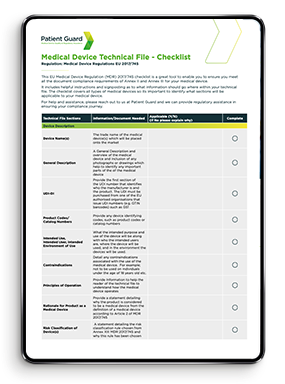
Get the Medical Device Technical Checklist

Thank you! The checklist is now ready to download.