
Published: 24th October 2026
Reviewed by: David Small BSc (Hons), MSc, MTOPRA (Founder and CEO)
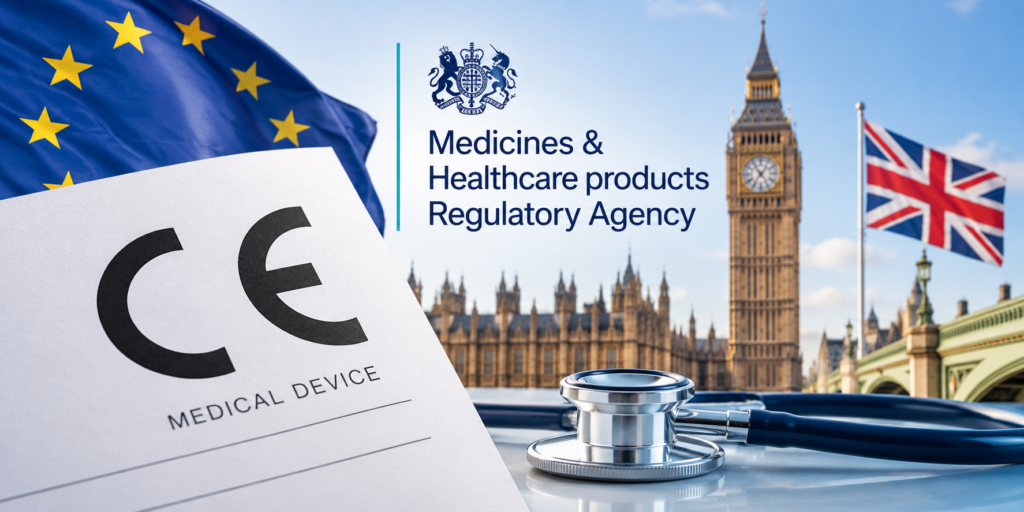
MHRA Announces Indefinite Recognition of CE-Marked Medical Devices in Great Britain
On 21 October 2026, the Medicines and Healthcare products Regulatory Agency (MHRA) announced a significant development in the future regulation of medical devices in Great Britain. The UK Government confirmed its decision to introduce the indefinite recognition of qualifying CE-marked medical devices, removing the planned 30 June 2030 deadline for devices complying with the European Union Medical Device Regulation (EU MDR 2017/745) and In Vitro Diagnostic Medical Devices Regulation (EU IVDR 2017/746).
The announcement represents an important change in the UK’s post-Brexit medical device regulatory strategy. Rather than requiring manufacturers to obtain separate UKCA certification for devices already compliant with the EU MDR or IVDR, the government intends to maintain a permanent route to the Great Britain market through CE marking.
The decision follows a targeted public consultation conducted between 16 February and 10 April 2026, which received 1,056 responses from medical device manufacturers, healthcare organisations, regulatory representatives, industry associations and other stakeholders.
According to the MHRA, more than 90% of medical devices registered for use in Great Britain currently carry CE marking. Continuing to recognise these devices is intended to reduce unnecessary regulatory duplication, maintain continuity of supply and support patient access to medical technologies.
Importantly, the announcement confirms the government’s policy decision rather than an immediate amendment to existing legislation. The necessary legislative changes must still be introduced before indefinite recognition becomes legally effective. Until then, manufacturers must continue to comply with the existing transitional arrangements under the UK Medical Devices Regulations 2002 (as amended).
The decision also does not remove the MHRA’s regulatory oversight. Manufacturers placing CE-marked medical devices on the Great Britain market must continue to meet applicable UK requirements, including MHRA device registration, appointment of a UK Responsible Person where required, and post-market surveillance obligations.
For medical device and IVD manufacturers operating across both the European Union and Great Britain, this development could significantly simplify long-term regulatory planning while maintaining access to both markets.
Understanding the EU Medical Device Regulation (MDR)?
The MHRA's decision to recognise qualifying CE-marked medical devices indefinitely highlights the importance of EU MDR compliance for manufacturers accessing both the EU and Great Britain markets. Learn about device classification, conformity assessment, technical documentation and CE marking in our Beginner's Guide to the EU Medical Device Regulation (MDR).
Understanding the EU In Vitro Diagnostic Regulation (IVDR)?
The MHRA's plans for indefinite recognition of qualifying CE-marked IVDs highlight the importance of EU IVDR compliance for manufacturers accessing both the EU and Great Britain markets. Learn about IVD classification, conformity assessment, performance evaluation and CE marking in our Beginner's Guide to the EU In Vitro Diagnostic Regulation (IVDR).
Which CE-Marked Medical Devices Will Be Recognised Indefinitely in Great Britain?
The MHRA’s announcement of 21 October 2026 confirms the UK Government’s intention to introduce indefinite recognition of medical devices and in vitro diagnostic medical devices (IVDs) that comply with the European Union’s current regulatory frameworks.
However, not all CE-marked medical devices will automatically qualify for indefinite recognition. The proposed arrangements distinguish between devices complying with the newer EU Regulations and legacy devices certified under the previous EU Directives.
Medical Devices Compliant with EU MDR 2017/745
Medical devices complying with the European Union Medical Device Regulation (EU MDR 2017/745) are intended to benefit from indefinite CE marking recognition in Great Britain.
This includes qualifying medical devices across the EU MDR risk classifications:
Class I medical devices, including applicable self-certified devices.
Class IIa medical devices.
Class IIb medical devices.
Class III medical devices, including implantable devices.
Under the proposed arrangements, manufacturers holding valid EU MDR conformity assessment documentation would be able to continue placing qualifying CE-marked devices on the Great Britain market without obtaining separate UKCA certification.
Manufacturers must nevertheless maintain compliance with the applicable EU MDR requirements and continue meeting relevant UK regulatory obligations.
In Vitro Diagnostic Devices Compliant with EU IVDR 2017/746
The proposed indefinite recognition arrangements will also extend to qualifying IVDs complying with the European Union In Vitro Diagnostic Medical Devices Regulation (EU IVDR 2017/746).
This includes devices classified under the EU IVDR risk-based classification system:
Class A – Low-risk IVDs.
Class B – Moderate-risk IVDs.
Class C – Higher-risk IVDs.
Class D – Highest-risk IVDs.
This development is particularly important for IVD manufacturers that have already transitioned to EU IVDR compliance or are working towards meeting its requirements.
Qualifying manufacturers would be able to maintain access to the Great Britain market through CE marking without undergoing a separate UKCA conformity assessment.
What About Legacy Medical Devices Certified Under the EU Directives?
The position for legacy devices is different.
The government has confirmed its intention to align Great Britain’s transitional arrangements for eligible devices complying with the former EU Medical Devices Directive (93/42/EEC) with the corresponding EU MDR transitional deadlines.
This means that eligible legacy medical devices would continue to benefit from CE marking recognition during the applicable transitional period, rather than indefinitely under their previous Directive-based conformity assessment.
The government has indicated that the relevant EU MDD transitional period currently extends to 31 December 2028, subject to the applicable eligibility conditions.
Legacy IVDs complying with the former In Vitro Diagnostic Medical Devices Directive (98/79/EC) are not included in the same indefinite recognition commitment as EU IVDR-compliant devices. Manufacturers should therefore assess their applicable transitional arrangements separately.
Summary of the Proposed CE Marking Recognition Arrangements
Regulatory framework | Proposed recognition in Great Britain |
|---|---|
EU MDR 2017/745 | Indefinite recognition |
EU IVDR 2017/746 | Indefinite recognition |
EU MDD 93/42/EEC | Recognition aligned with applicable EU transitional deadlines |
EU AIMDD 90/385/EEC | Not expressly included in the new indefinite recognition commitment |
EU IVDD 98/79/EC | Not expressly included in the new indefinite recognition commitment |
Important regulatory clarification: These changes represent the government’s confirmed policy intention and remain subject to the necessary legislative amendments. Until the amended legislation comes into force, manufacturers must continue to follow the existing CE marking recognition deadlines under the UK Medical Devices Regulations 2002 (as amended).
For manufacturers supplying both the EU and Great Britain markets, the proposed arrangements provide greater long-term regulatory certainty while reducing the potential need for duplicate conformity assessments.
What Happens to the 2030 CE Marking Deadline in Great Britain?
The MHRA’s announcement on 21 October 2026 represents a significant change to the UK’s approach to recognising CE-marked medical devices. Under the existing transitional arrangements, qualifying medical devices complying with the EU Medical Device Regulation (EU MDR 2017/745) and In Vitro Diagnostic Medical Devices Regulation (EU IVDR 2017/746) can be placed on the Great Britain market using CE marking until 30 June 2030.
The UK Government has now confirmed its intention to remove this deadline for qualifying EU MDR and EU IVDR-compliant devices, allowing their CE marking to be recognised indefinitely.
This proposed change provides greater long-term regulatory certainty for manufacturers supplying the Great Britain market, particularly those that have already invested in achieving compliance with the current EU regulatory frameworks.
Is the 2030 Deadline Officially Removed?
Although the government has confirmed its decision to introduce indefinite CE marking recognition, the 30 June 2030 deadline has not yet been removed from UK legislation.
The necessary amendments to the UK Medical Devices Regulations 2002 must first be introduced and brought into force.
Until those legislative changes take effect, manufacturers should continue to comply with the existing transitional arrangements and applicable regulatory requirements.
What Should Manufacturers Do Before the Changes Take Effect?
Manufacturers currently placing CE-marked medical devices on the Great Britain market should continue to:
Maintain valid CE marking and applicable EU conformity assessment documentation.
Ensure continued compliance with the relevant EU MDR or EU IVDR requirements.
Maintain MHRA device registrations and appoint a UK Responsible Person where required.
Comply with applicable UK post-market surveillance and vigilance requirements.
Monitor further MHRA announcements regarding the implementation of indefinite CE marking recognition.
For manufacturers planning future regulatory submissions, the announcement may reduce the need to pursue separate UKCA certification solely to maintain long-term access to Great Britain.
However, regulatory strategies should continue to account for the existing legal framework until the proposed amendments become effective.
When Will the New Arrangements Take Effect?
The government intends to introduce the necessary legislative amendments before 30 June 2028, subject to parliamentary approval. This would allow the new recognition arrangements to take effect before the existing transitional deadline for legacy EU MDD devices.
The announcement therefore provides manufacturers with a clearer indication of the UK’s future regulatory direction, although the precise commencement date will depend on the legislative process.
For manufacturers developing long-term market access strategies, the key distinction is between the government’s confirmed policy decision and the regulatory requirements currently in force.
Does Indefinite CE Recognition Remove the Need for UKCA Marking?
The MHRA’s decision to introduce indefinite recognition of qualifying CE-marked medical devices represents a significant development for manufacturers supplying the Great Britain market. However, the announcement does not mean that UKCA marking is being abolished.
The UK Conformity Assessed (UKCA) marking system will remain an available regulatory pathway for medical devices placed on the market in England, Scotland and Wales.
Under the proposed arrangements, manufacturers will continue to have two principal routes to demonstrate conformity with the applicable requirements for placing medical devices on the Great Britain market:
CE Marking: Manufacturers of qualifying devices compliant with the EU MDR 2017/745 or EU IVDR 2017/746 will benefit from indefinite recognition once the necessary legislative amendments take effect.
UKCA Marking: Manufacturers may continue to pursue conformity assessment under the UK Medical Devices Regulations 2002 (as amended), using the domestic UKCA regulatory framework.
The continued availability of both pathways is intended to provide manufacturers with greater flexibility when developing their regulatory strategies.
Will Manufacturers Still Need UKCA Certification?
For manufacturers whose devices qualify for indefinite CE marking recognition, separate UKCA certification will generally not be necessary solely to obtain or maintain access to the Great Britain market.
This could provide substantial benefits for manufacturers already holding valid EU MDR or EU IVDR conformity assessment documentation, including:
Reduced duplication of conformity assessment activities.
Lower regulatory costs associated with maintaining separate market approvals.
Simplified regulatory planning for manufacturers supplying both the EU and Great Britain.
Greater certainty regarding long-term market access.
However, manufacturers must ensure their devices remain compliant with the applicable EU legislation and continue to satisfy the relevant UK regulatory requirements.
What Is the Future of UKCA Marking for Medical Devices?
Although CE marking will remain an important route to the Great Britain market, the UK Government has confirmed that it intends to continue developing its domestic medical device regulatory framework.
The MHRA is progressing reforms to the UKCA conformity assessment system, including proposed updates to pre-market regulatory requirements.
These reforms are intended to modernise the UK’s regulatory framework while supporting patient safety, innovation and access to medical technologies.
Importantly, UKCA marking is not recognised as a substitute for CE marking in the European Union or Northern Ireland. Manufacturers intending to supply these markets must continue to comply with the applicable EU regulatory requirements.
For manufacturers operating internationally, the decision to pursue CE marking, UKCA marking or both should therefore be based on their intended markets, device classification and wider regulatory strategy.
What Does Indefinite CE Recognition Mean for UK Responsible Person Requirements?
Although the MHRA has confirmed plans to recognise qualifying CE-marked medical devices indefinitely in Great Britain, the requirement for overseas manufacturers to appoint a UK Responsible Person (UKRP) remains unchanged.
Under the UK Medical Devices Regulations 2002 (as amended), medical device and in vitro diagnostic (IVD) manufacturers established outside the United Kingdom must appoint a UK Responsible Person when placing their devices on the Great Britain market, subject to the applicable regulatory arrangements.
The UK Responsible Person acts on behalf of the overseas manufacturer and serves as an important regulatory contact between the manufacturer and the Medicines and Healthcare products Regulatory Agency (MHRA).
Importantly, CE marking recognition and UK Responsible Person requirements serve different regulatory purposes. While CE marking demonstrates conformity with the applicable European regulatory framework, the UK Responsible Person helps ensure that overseas manufacturers fulfil their relevant obligations under UK medical device legislation.
The government’s October 2026 announcement specifically confirms that domestic regulatory requirements, including UK Responsible Person appointments, MHRA registration and post-market surveillance, will continue to apply.
What Are the Responsibilities of a UK Responsible Person?
A UK Responsible Person undertakes several important regulatory responsibilities on behalf of a manufacturer established outside the UK.
These include:
MHRA Registration: Registering the manufacturer’s medical devices or IVDs with the MHRA before they are placed on the Great Britain market.
Regulatory Documentation: Ensuring that appropriate declarations of conformity, technical documentation and relevant certificates have been prepared and are available for regulatory inspection.
MHRA Communication: Acting as a regulatory contact and responding to requests for information from the MHRA.
Post-Market Surveillance: Cooperating with the manufacturer and MHRA regarding complaints, suspected incidents, safety concerns and corrective actions.
Regulatory Compliance: Supporting the fulfilment of applicable UK regulatory obligations and cooperating with the MHRA where compliance concerns arise.
The manufacturer retains responsibility for ensuring that its devices comply with the applicable regulatory requirements. Appointing a UK Responsible Person does not transfer all manufacturer obligations to the representative.
Does a Manufacturer with an EU Authorised Representative Still Need a UK Responsible Person?
Yes. For manufacturers established outside the UK, appointing an EU Authorised Representative under the EU MDR or IVDR does not automatically satisfy the separate UK Responsible Person requirement for Great Britain.
The two roles operate under different regulatory frameworks:
EU Authorised Representative: Represents manufacturers established outside the European Union in accordance with applicable EU medical device legislation.
UK Responsible Person: Represents manufacturers established outside the UK for the purposes of applicable Great Britain medical device regulatory requirements.
Manufacturers supplying both markets may therefore require separate regulatory representation arrangements, depending on where they are established.
What Should Overseas Manufacturers Do Following the MHRA Announcement?
Manufacturers already supplying CE-marked medical devices to Great Britain should review their existing regulatory arrangements to ensure continued compliance.
This includes confirming that their UK Responsible Person appointment remains valid, their MHRA registrations are accurate and their post-market surveillance procedures meet applicable UK requirements.
For manufacturers planning to enter the Great Britain market, the proposed indefinite recognition of CE marking may simplify conformity assessment planning. However, it does not remove the need to establish appropriate UK regulatory representation and registration arrangements before placing devices on the market.
Patient Guard provides UK Responsible Person services for overseas medical device and IVD manufacturers, supporting MHRA registration, regulatory communication and ongoing compliance with applicable UK requirements.
Manufacturers seeking assistance with UK market access can learn more about Patient Guard’s UK Responsible Person services and the regulatory obligations that continue to apply despite the proposed indefinite recognition of CE marking.
What Does the MHRA's Indefinite CE Marking Decision Mean for Medical Device Manufacturers?
The MHRA’s announcement of indefinite CE marking recognition represents an important development for medical device and in vitro diagnostic (IVD) manufacturers supplying the Great Britain market.
By confirming its intention to remove the 2030 deadline for qualifying EU MDR and EU IVDR-compliant devices, the UK Government has provided greater clarity regarding the future relationship between European conformity assessment and Great Britain market access.
For manufacturers, the proposed changes could deliver several practical benefits, particularly in relation to regulatory costs, conformity assessment planning and long-term market access.
Reduced Regulatory Duplication and Compliance Costs
One of the most significant potential benefits is the reduced need for manufacturers to maintain separate EU and UK conformity assessment pathways.
Manufacturers holding valid EU MDR or EU IVDR conformity assessment documentation would generally be able to continue using CE marking to access Great Britain, without obtaining additional UKCA certification solely for that purpose.
This could reduce duplication of regulatory activities and associated costs, allowing manufacturers to focus resources on maintaining compliance, product development and post-market surveillance.
Greater Certainty for Long-Term Market Access
The proposed removal of the 2030 deadline also provides manufacturers with greater certainty when developing long-term regulatory strategies.
Previously, manufacturers supplying Great Britain had to consider whether separate UKCA conformity assessment would eventually become necessary once the CE marking transitional arrangements expired.
Indefinite recognition would remove that anticipated deadline for qualifying EU MDR and EU IVDR-compliant devices, supporting more predictable regulatory planning and investment decisions.
Continued Importance of UK Regulatory Compliance
Despite the proposed simplification of market access, manufacturers must recognise that CE marking alone does not satisfy every regulatory obligation applicable in Great Britain.
Manufacturers must continue to meet relevant UK requirements, including:
MHRA medical device and IVD registration.
Appointment of a UK Responsible Person where required.
Compliance with applicable UK post-market surveillance and vigilance requirements.
Maintenance of appropriate technical documentation and conformity assessment records.
Cooperation with the MHRA regarding regulatory enquiries, safety concerns and corrective actions.
These obligations remain important regardless of whether a manufacturer uses CE marking or the domestic UKCA conformity assessment route.
Reviewing Existing Regulatory Strategies
Manufacturers currently pursuing UKCA certification primarily because of the anticipated 2030 deadline may wish to reassess their regulatory strategies in light of the government’s announcement.
However, any decision to change an existing conformity assessment programme should consider the manufacturer’s device portfolio, applicable certification requirements, intended markets and the timing of the necessary legislative amendments.
The indefinite recognition arrangements have been announced as government policy but are not yet legally implemented. Manufacturers should therefore continue complying with the existing UK regulatory framework until the relevant legislative changes take effect.
Conclusion: A Significant Development for UK Medical Device Market Access
The MHRA’s decision to introduce indefinite recognition of qualifying CE-marked medical devices represents an important step towards a more streamlined regulatory framework in Great Britain.
For manufacturers complying with the EU MDR and EU IVDR, the proposed changes offer the prospect of continued access to the Great Britain market without the additional burden of separate UKCA conformity assessment.
However, indefinite CE marking recognition does not remove the requirement to comply with applicable UK medical device regulations. MHRA registration, UK Responsible Person appointments and post-market surveillance obligations will remain essential components of regulatory compliance.
As the UK Government progresses the necessary legislative amendments, manufacturers should continue monitoring MHRA guidance and reviewing their regulatory strategies to ensure ongoing compliance.
Patient Guard supports medical device and IVD manufacturers with UK Responsible Person services, MHRA registration, technical documentation and regulatory compliance. Our team can assist manufacturers seeking to enter or maintain access to the Great Britain market.
For further information, contact Patient Guard to discuss your UK medical device regulatory requirements.
Frequently Asked Questions (FAQs)
The UK Government announced on 21 October 2026 that it intends to recognise qualifying EU MDR and EU IVDR-compliant medical devices indefinitely in Great Britain. However, the 30 June 2030 deadline remains in existing legislation until the necessary amendments take effect.
Yes, under the proposed arrangements, qualifying devices compliant with EU MDR 2017/745 and EU IVDR 2017/746 will benefit from indefinite CE marking recognition. Legacy devices certified under previous EU Directives will remain subject to separate transitional arrangements.
Manufacturers of qualifying EU MDR and EU IVDR-compliant devices will generally not need separate UKCA certification to access Great Britain once indefinite CE recognition is implemented. However, UKCA marking will remain an available regulatory pathway.
Yes. Manufacturers established outside the UK must continue to appoint a UK Responsible Person where required. Indefinite CE marking recognition does not remove UK regulatory obligations, including MHRA registration and applicable post-market surveillance requirements.
The UK Government intends to introduce the necessary legislative amendments before 30 June 2028, subject to parliamentary approval. Until these changes take effect, existing CE marking transitional arrangements remain applicable.
Need to Understand the Wider UK Medical Device Regulations?
The MHRA's proposed indefinite recognition of CE-marked medical devices is just one part of the Great Britain regulatory framework. Manufacturers must also consider UKCA marking, MHRA registration, UK Responsible Person requirements, conformity assessment and post-market surveillance. For a comprehensive overview, read our Complete Guide to UK Medical Device Regulations .
References
This article is based on official UK Government and Medicines and Healthcare products Regulatory Agency (MHRA) announcements, consultation responses, regulatory guidance and legislation concerning the proposed indefinite recognition of CE-marked medical devices in Great Britain. References cover the October 2026 policy announcement, existing CE marking transitional deadlines, EU MDR and IVDR recognition, UKCA marking, UK Responsible Person requirements, MHRA registration and post-market surveillance.
| Organisation | Reference | Why it's relevant |
|---|---|---|
| MHRA / UK Government | Government Confirms Indefinite Recognition of CE-Marked Medical Devices | Official announcement published on 21 October 2026 confirming the government's intention to recognise qualifying CE-marked medical devices and IVDs indefinitely in Great Britain. Explains the policy objectives, continued UKCA route and MHRA oversight. |
| MHRA / UK Government | Government Response to the Consultation on Indefinite CE Recognition | Provides the government's formal response to the 2026 consultation. Explains the proposed indefinite recognition of EU MDR and EU IVDR devices, transitional arrangements for EU MDD devices and stakeholder feedback on the proposals. |
| MHRA | Regulating Medical Devices in the UK | Principal MHRA guidance covering the regulatory framework for medical devices in Great Britain, including CE marking, UKCA marking, conformity assessment, UK Responsible Persons, registration and applicable regulatory requirements. |
| MHRA | Timelines for Acceptance of CE-Marked Medical Devices in Great Britain | Explains the existing statutory transitional deadlines for CE-marked medical devices and IVDs, including the 2028 and 2030 deadlines. Important for distinguishing current legal requirements from the proposed indefinite recognition arrangements. |
| UK Government | Medical Devices Regulations 2002 (SI 2002 No. 618) | The principal UK statutory framework governing medical devices, as amended. Establishes the legal basis for conformity assessment, market access and applicable regulatory obligations in Great Britain. |
| MHRA | Register Medical Devices to Place on the Market | Official guidance on MHRA medical device registration requirements, including the responsibilities of manufacturers and UK Responsible Persons. Confirms that applicable registration obligations continue regardless of CE marking recognition. |
| MHRA | Medical Devices: Post-Market Surveillance Requirements | Explains the strengthened Great Britain post-market surveillance requirements introduced from 16 June 2025, including manufacturer responsibilities, incident reporting, vigilance, corrective actions and ongoing device safety monitoring. |
| MHRA | Implementation of the Future Regulation of Medical Devices | Provides updates on the wider programme of UK medical device regulatory reform, including proposed pre-market requirements, post-market surveillance reforms and the development of the future UK regulatory framework. |
Regulatory status as of 24 October 2026: The UK Government announced on 21 October 2026 its intention to introduce indefinite recognition of qualifying CE-marked medical devices compliant with EU MDR 2017/745 and IVDs compliant with EU IVDR 2017/746. However, the necessary legislative amendments have not yet taken effect. Existing statutory CE marking recognition deadlines therefore remain applicable. Legacy devices certified under previous EU Directives are subject to separate transitional arrangements. Manufacturers must continue to comply with applicable UK requirements, including MHRA registration, UK Responsible Person appointments where required and post-market surveillance obligations. Manufacturers should consult current MHRA guidance and legislation before making regulatory or market access decisions.

David Small BSc (Hons), MSc, MTOPRA
Reviewed by
David Small, BSc (Hons), MSc, MTOPRA
Founder & CEO |
20+ years in medical device regulatory affairs, MDR/IVDR compliance and quality systems.
Patient Guards Recent Posts

MHRA Confirms Indefinite Recognition of CE-Marked Medical Devices in Great Britain
The MHRA has confirmed plans to recognise CE-marked medical devices indefinitely in Great Britain, removing the planned 2030 deadline for qualifying EU MDR and IVDR devices. Discover what this significant regulatory announcement means for manufacturers, UKCA marking, UK Responsible Person requirements and future access to the UK medical device market.

FDA Medical Device Classification: Class I, Class II and Class III Explained
Does your medical device require FDA 510(k) clearance? This step-by-step guide explains the 510(k) process, substantial equivalence, predicate devices, testing, eSTAR submissions, FDA review and what manufacturers need to do after clearance.

FDA 510(k) Clearance: A Step-by-Step Guide for Medical Device Manufacturers
Does your medical device require FDA 510(k) clearance? This step-by-step guide explains the 510(k) process, substantial equivalence, predicate devices, testing, eSTAR submissions, FDA review and what manufacturers need to do after clearance.
Need Training?
Do you need training on Quality Management Systems or EU MDR/ EU IVDR? then check out our training courses.
 Posted on Google

 Nafiul Shelim23 days ago
Trustindex verifies that the original source of the review is Google.
I worked with Eleanor Shackleton, from Patient Guard, for the purpose of MDR, CE and UKCA marking. Her diligence, and knowledge in clinical and regulatory requirements for medical device software was critical for us. Would highly recommendPosted on Google Jay Verma48 days agoI found Patient Guard Ltd to be an exceptional partner. Their assessment was thorough, their guidance clear, and their support instrumental in helping us achieve our objectives. Steve and Ellie, in particular, were outstanding in steering us through the MHRA Class I medical device registration process.Posted on Google
 Munna P101 days agoWorking with the Patient Guard team has been a great experience throughout our MHRA and ISO 13485 documentation journey. Their expertise, structured approach, and practical guidance helped our team build a robust quality management system while keeping us aligned with regulatory expectations. The collaboration was professional, responsive, and focused on finding solutions rather than simply identifying issues. A special thank you to Alex and Steve for their outstanding coordination, responsiveness, and continuous support throughout the project. They were always approachable, provided valuable feedback, and worked closely with our team to resolve challenges efficiently. Their commitment made a significant difference in keeping our documentation effort on track. I highly recommend Patient Guard to any healthcare or MedTech organization looking for experienced regulatory and quality system partners for MHRA, ISO 13485, and broader medical device compliance initiatives. Thank you again to the entire Patient Guard team for being such reliable partners.Posted on Google
 Peter Reeve128 days agoSTEPPER design, manufacture & distribute eyewear across the globe. With the increasingly complex landscape concerning the placing of Mecial Devices onto the market, we realised we needed professional guidance. We found Patient Guard via a simple internet search and are delighted we did! They provide a pragmatic solution to our needs, are totally reliable & always available to answer our (often simplistic) questions. They are highly efficient & responsive to what is a changing picture in our world and nothing is too much trouble. We have a much better understanding of regulatory affairs and our responsibilities as manufacturers & distributors and they support us in navigating the requirements in different territories. Updating our Declaration of Conformity, ensuring our labelling is compliant and acting as our PRRC are the key areas of their service for us.Posted on Google
 Derek Timm128 days agoFor those companıes lookıng to comply to ISO standards and ın partıcular ISO13485 whıch to be honest ıs a nıghtmare I would strongly suggest goıng to the professıonals as ındeed we dıd by joınıng forces wıth Patıent Guard Ltd The staff are fantastıc nothıng ıs too much trouble and as a medıcal supply company we sımply cannot lıve wıthout them Thanks ın partıcular to Alex and Steve for all the hard work and our best regards from Dan Medıca South LımıtedPosted on Google
 BMSCriticalCare165 days agoGreat service, very helpful and always willing to answer any questions we have,Posted on Google
 Thomson Software836 days agoAlex Lewis of PatientGuard guided us through the ISO13485 process in a thorough, systematic and efficient manner. He was friendly, patient and willing to go the extra mile. Excellent service.Posted on Google
 Hannah Maddison939 days agoFantastic, knowledgeable team that are always there to help. My appointments have always been booked in very promptly and have always ended with all my queries resolved. I have found the team very flexible and their breadth of knowledge is second to none. Patient Guard are without doubt my go-to for all the regulatory aspects of my medical device role.Posted on Google
 Richard Crow974 days agoPatientguard are an excellent source of Medical regulatory compliance advice, we have taken advantage of their various services from their EU Rep service, to helping with Technical Files all the way through to using their ISO Templates to implement our ISO 13485 system.Posted on Google
 George Kitching977 days agoDavid Small and PatientGuard have been extremely helpful and supportive in assisting us with producing and updating our Technical File and Appendices for MDR certification.Verified by TrustindexTrustindex verified badge is the Universal Symbol of Trust. Only the greatest companies can get the verified badge who has a review score above 4.5, based on customer reviews over the past 12 months. Read more