EU Regulations

V-58.-How-Changes-in-the-EU-MDR-Impact-Your-Supply-Chain-Agreements

How EU MDR Changes Impact Supply Chain Agreements

The EU MDR supply chain agreement revolution has caught many medical device companies off guard. What started as a regulatory update has evolved into a comprehensive overhaul of how suppliers, distributors, and manufacturers must collaborate. If your contracts still look like they were written during the Medical Devices Directive era, you’re playing regulatory Russian roulette.

How EU MDR Changes Impact Supply Chain Agreements Read More »

Medical Device Distributor Responsibilities Under the EU MDR

Understand the responsibilities of medical device distributors under the EU MDR, including verification checks, storage and transport controls, traceability, complaint handling, non-compliant devices and cooperation with manufacturers, importers and competent authorities.

Medical Device Distributor Responsibilities Under the EU MDR Read More »

CHOOSING-THE-RIGHT-PARTNER

How to Select a Compliant EU Authorised Representative or Importer

Selecting an EU Authorised Representative or Importer is one of the most important regulatory decisions a non-EU medical device manufacturer will make. These organisations play a key role in market access, regulatory communications and ongoing compliance, so choosing the right partner requires more than simply comparing prices.

This guide explains how to assess prospective Authorised Representatives and Importers, the questions you should ask before appointment, the warning signs to avoid and the evidence you should review before signing an agreement.

How to Select a Compliant EU Authorised Representative or Importer Read More »

MDR/IVDR Compliance Obligations for Importers & Distributors

Understanding Your Obligations Under MDR/IVDR

Under the EU Medical Device Regulation (MDR) and In Vitro Diagnostic Regulation (IVDR), compliance isn’t just the manufacturer’s responsibility. Importers, distributors, and suppliers are now considered economic operators — and that means you are legally liable for specific obligations. From verifying CE marking and language requirements to registering devices in EUDAMED and maintaining long-term traceability, your role in the supply chain is critical.

Understanding Your Obligations Under MDR/IVDR Read More »

Illustration showing an EU MDR technical file being maintained throughout the medical device lifecycle, including document control, change management, clinical evaluation, risk management, post-market surveillance and ongoing regulatory compliance.

Building a Strong MDR Technical File: Maintaining Compliance Throughout the Medical Device Lifecycle

An MDR technical file is not a one-time submission created solely for CE marking. Under Regulation (EU) 2017/745, manufacturers must keep their technical documentation accurate, up to date and aligned with changes to the device, manufacturing processes, clinical evidence and post-market surveillance activities throughout the product lifecycle.

This guide explains how to maintain compliant technical documentation, when updates are required, and the practical steps manufacturers can take to ensure their technical file remains complete, consistent and inspection-ready.

Building a Strong MDR Technical File: Maintaining Compliance Throughout the Medical Device Lifecycle Read More »

Infographic illustrating how ISO 14971 risk management supports every stage of the medical device lifecycle, from concept and design through verification, manufacturing, market launch, Post-Market Surveillance, product changes and end-of-life.

The Role of Risk Management Throughout the Medical Device Lifecycle

Risk management is not a one-time regulatory exercise—it is a continuous process that spans the entire medical device lifecycle. From initial concept and design through manufacturing, market launch, Post-Market Surveillance (PMS) and product retirement, manufacturers must continually identify hazards, evaluate risks and update their Risk Management File as new information becomes available. This guide explains how risk management supports every stage of the device lifecycle and why it is fundamental to compliance with ISO 14971, the EU MDR, EU IVDR and UK Medical Devices Regulations.

The Role of Risk Management Throughout the Medical Device Lifecycle Read More »

EU MDR and UK MDR medical device regulations illustrating regulatory compliance and market access requirements for the EU and Great Britain.

EU MDR vs UK MDR: A Practical Compliance Guide for Medical Device Manufacturers

Medical device manufacturers placing products on both the European Union and Great Britain markets must navigate two distinct regulatory frameworks: the EU Medical Device Regulation (EU MDR) and the UK Medical Devices Regulations 2002 (UK MDR).

While the two regimes share many underlying principles, important differences exist in areas such as market access, conformity assessment, regulatory representation, device registration and post-market surveillance. This practical guide compares the EU MDR and UK MDR, explains the key requirements for each market, and outlines how manufacturers can develop an efficient compliance strategy for both the EU and Great Britain.

EU MDR vs UK MDR: A Practical Compliance Guide for Medical Device Manufacturers Read More »

Hero image illustrating MDCG guidance documents supporting EU MDR and IVDR compliance, featuring a regulatory guidance binder, European Union map and key compliance areas including classification, technical documentation, clinical evaluation, post-market surveillance and EUDAMED.

MDCG Guidance Documents for Medical Device Compliance

Understand what MDCG guidance documents are, why they matter under the EU MDR and IVDR, and how manufacturers can use them to support classification, technical documentation, clinical evidence, post-market surveillance and ongoing compliance.

MDCG Guidance Documents for Medical Device Compliance Read More »

ISO 27001

ISO 27001 for Beginners: A Simple Guide to Information Security

ISO/IEC 27001 is the internationally recognised standard for Information Security Management Systems (ISMS). It helps organisations identify information security risks, implement appropriate controls and protect sensitive information from cyber threats, data breaches and unauthorised access. Learn how ISO 27001 works, how certification is achieved and why it is increasingly important for medical device manufacturers, healthcare organisations and software developers.

ISO 27001 for Beginners: A Simple Guide to Information Security Read More »

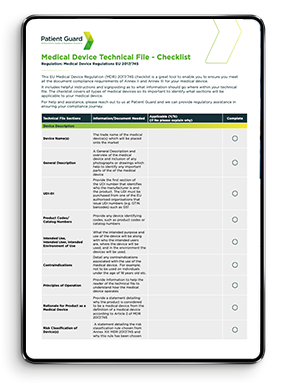
Get the Medical Device Technical Checklist

Thank you! The checklist is now ready to download.