

Published: 17th August 2026
Reviewed by: David Small BSc (Hons), MSc, MTOPRA (Founder and CEO)
Understanding IVDR Scientific Validity
Scientific Validity forms the foundation of every Performance Evaluation conducted under the European Union In Vitro Diagnostic Regulation (IVDR) (EU) 2017/746. Before manufacturers can demonstrate that an in vitro diagnostic medical device (IVD) accurately measures an analyte or provides clinically meaningful results, they must first establish that there is a scientifically accepted relationship between the analyte being measured and the clinical condition or physiological state described within the device’s intended purpose.
In simple terms, Scientific Validity answers one of the most fundamental questions in diagnostic medicine:
“Is there sufficient scientific evidence to demonstrate that this biomarker or analyte is genuinely associated with the disease, condition or physiological process the device claims to detect?”
Without this scientific foundation, even the most analytically accurate diagnostic test has limited clinical value. A device may consistently measure a particular biomarker with exceptional precision, but if that biomarker has no established relationship with the condition being investigated, the test cannot provide meaningful clinical information or support safe medical decision-making.
The IVDR places considerable emphasis on evidence-based regulatory decision-making. Rather than allowing manufacturers to rely solely on analytical testing or historical experience, Regulation (EU) 2017/746 requires a structured Performance Evaluation that begins by demonstrating Scientific Validity. This evidence forms the first of three interconnected pillars of Performance Evaluation, alongside analytical performance and clinical performance, which together demonstrate that an IVD achieves its intended purpose throughout its lifecycle.
For many devices, Scientific Validity is established through comprehensive reviews of published scientific literature, clinical guidelines, consensus statements, reference materials and other authoritative sources. Manufacturers are expected to critically evaluate the available evidence, assess its quality and relevance, and determine whether it adequately supports the intended purpose of the device. This process should be systematic, transparent and fully documented within the manufacturer’s technical documentation.
Scientific Validity is far more than a regulatory requirement—it provides the scientific rationale underpinning every diagnostic claim made by an IVD. It supports the manufacturer’s benefit-risk determination, informs the design of analytical and clinical performance studies, and provides regulators, Notified Bodies and healthcare professionals with confidence that the device is based on well-established scientific principles rather than unsupported assumptions.
The extent of Scientific Validity evidence required varies according to the intended purpose, novelty and classification of the device. Established biomarkers supported by decades of published evidence may require relatively straightforward literature reviews, whereas novel biomarkers, emerging disease targets and innovative companion diagnostics often require considerably more extensive scientific justification before conformity can be demonstrated. Regardless of device classification, every manufacturer must be able to demonstrate that the scientific basis for their IVD is robust, current and supported by objective evidence.
Ultimately, Scientific Validity provides the cornerstone upon which the entire IVDR Performance Evaluation is built. By establishing a clear and scientifically justified relationship between the analyte and its intended clinical application, manufacturers create the evidence needed to support analytical performance, clinical performance, successful conformity assessment and, ultimately, CE marking under the IVDR.
Looking for a Complete Guide to the EU IVDR?
Scientific validity is a key part of IVD Performance Evaluation, but it is only one element of compliance with Regulation (EU) 2017/746. For a broader introduction covering IVD classification, General Safety and Performance Requirements (GSPRs), Technical Documentation, conformity assessment, Notified Bodies, UDI, EUDAMED, Performance Evaluation and post-market surveillance, read our Complete Guide to the EU IVDR.
What Is IVDR Scientific Validity?
Scientific Validity is the process of demonstrating that there is an established scientific relationship between the analyte, biomarker or characteristic measured by an in vitro diagnostic medical device (IVD) and the clinical condition, physiological state or disease that the device is intended to detect, predict or monitor. It forms the first of the three scientific pillars of Performance Evaluation required under the European Union In Vitro Diagnostic Regulation (IVDR) (EU) 2017/746.
Before a manufacturer can demonstrate that an IVD accurately measures an analyte or that its results support appropriate clinical decision-making, it must first establish that the analyte itself has recognised clinical significance. Scientific Validity therefore provides the biological and clinical justification for the device’s intended purpose. Without this evidence, analytical accuracy and clinical performance become largely irrelevant because there is no proven reason to measure the analyte in the first place.
The legal basis for Scientific Validity is established within Article 56 and Annex XIII of the IVDR, which require manufacturers to perform a comprehensive Performance Evaluation demonstrating scientific validity, analytical performance and clinical performance. These three components are not independent regulatory exercises but complementary elements of a single body of evidence supporting conformity with the General Safety and Performance Requirements (GSPRs).
Unlike analytical performance, which assesses how accurately a device measures an analyte, or clinical performance, which evaluates how well test results support clinical decisions, Scientific Validity focuses on the underlying scientific evidence linking the analyte to the claimed medical purpose. It answers the fundamental question of whether the scientific community accepts that measuring a particular biomarker provides clinically meaningful information.
For example, decades of scientific research have established that elevated cardiac troponin concentrations are associated with myocardial injury. This extensive body of published evidence demonstrates the Scientific Validity of measuring cardiac troponin when assessing patients with suspected acute myocardial infarction. Similarly, the relationship between glycated haemoglobin (HbA1c) and long-term blood glucose control is supported by substantial scientific literature, providing the Scientific Validity for HbA1c assays used in diabetes diagnosis and management.
By contrast, if a manufacturer developed a test measuring a novel biomarker with limited or conflicting evidence linking it to a disease, considerably more work would be required to establish Scientific Validity before the device could successfully demonstrate conformity with the IVDR. The manufacturer would need to generate or identify sufficient scientific evidence showing that the biomarker is genuinely associated with the intended clinical condition and that measuring it provides meaningful diagnostic or prognostic information.
Scientific Validity is typically established through the systematic review and critical appraisal of published scientific literature, recognised clinical guidelines, consensus statements, reference materials, professional society recommendations and other authoritative scientific sources. Manufacturers should evaluate the quality, consistency and relevance of the available evidence rather than simply collecting publications that support their intended claims. A balanced assessment that acknowledges conflicting evidence, limitations and uncertainties is generally viewed more favourably by regulators and Notified Bodies than one presenting only positive findings.
Importantly, Scientific Validity is not a one-time assessment completed during product development. As scientific understanding evolves, new biomarkers are discovered and additional clinical evidence becomes available, manufacturers are expected to continually review the scientific literature and determine whether their Scientific Validity assessment remains current. This ongoing review forms part of the wider Performance Evaluation lifecycle and helps ensure that the evidence supporting the device continues to reflect the current state of scientific knowledge throughout its commercial life.
Ultimately, Scientific Validity provides the scientific foundation upon which every successful IVDR Performance Evaluation is built. By demonstrating that an analyte has a recognised and clinically meaningful relationship with the condition being investigated, manufacturers establish the basis for subsequent analytical performance studies, clinical performance investigations and the overall evidence required to support CE marking under Regulation (EU) 2017/746.
Explore IVD Performance Evaluation
Scientific validity forms one of the core elements of Performance Evaluation under the EU IVDR, alongside analytical performance and clinical performance. Learn how these elements fit together, what manufacturers need to document, and how Performance Evaluation is maintained throughout the IVD lifecycle in our Complete Guide to IVDR Performance Evaluation.
Why IVDR Scientific Validity Matters
Scientific Validity is much more than a regulatory requirement—it is the scientific foundation upon which every in vitro diagnostic medical device (IVD) is built. Before manufacturers can demonstrate that a device accurately measures an analyte or supports clinical decision-making, they must first establish that the analyte itself is genuinely associated with the disease, condition or physiological state described within the intended purpose.
Without robust Scientific Validity, there is no objective evidence that measuring a particular biomarker provides clinically meaningful information. Consequently, the entire Performance Evaluation, including analytical performance and clinical performance, lacks a sound scientific basis.
Under Regulation (EU) 2017/746, Scientific Validity supports every stage of the conformity assessment process, from product development and technical documentation through to Notified Body review and ongoing post-market surveillance. It provides regulators, healthcare professionals and patients with confidence that the manufacturer’s diagnostic claims are supported by established scientific evidence rather than theoretical assumptions or limited observations.
A comprehensive Scientific Validity assessment also helps manufacturers identify evidence gaps early in development, allowing additional studies or literature reviews to be undertaken before regulatory submission. This proactive approach reduces the likelihood of delays during conformity assessment and contributes to a stronger, more defensible regulatory strategy.
Providing the Scientific Foundation for Diagnostic Claims
Every diagnostic claim made by an IVD must be supported by objective scientific evidence. Scientific Validity demonstrates that there is an accepted biological or clinical relationship between the analyte measured by the device and the medical condition described within the intended purpose.
For example, decades of research have established that prostate-specific antigen (PSA) is associated with prostate disease, while elevated cardiac troponin concentrations are recognised indicators of myocardial injury. These well-established relationships provide the scientific basis for diagnostic devices measuring these biomarkers.
Without this foundation, manufacturers cannot credibly claim that their device provides clinically useful information, regardless of how accurately it measures the analyte.
Supporting Patient Safety
One of the primary objectives of the IVDR is to ensure that patients and healthcare professionals can rely upon the results generated by in vitro diagnostic medical devices.
If an IVD is based upon an analyte that lacks proven clinical significance, the consequences may include delayed diagnosis, inappropriate treatment, unnecessary investigations or missed opportunities for early intervention.
By requiring manufacturers to establish Scientific Validity before demonstrating analytical or clinical performance, the IVDR helps ensure that diagnostic tests are based upon recognised scientific principles that ultimately support safe and effective patient care.
This evidence-based approach reduces the risk of unsupported diagnostic claims entering clinical practice and strengthens confidence in the results produced by the device.
Demonstrating Compliance with the IVDR
Scientific Validity is one of the three mandatory components of Performance Evaluation required under Article 56 and Annex XIII of Regulation (EU) 2017/746.
Manufacturers are expected to critically evaluate the available scientific evidence and demonstrate that the relationship between the analyte and the intended clinical condition is supported by objective, up-to-date information.
This assessment forms an integral part of the technical documentation submitted during conformity assessment and contributes directly to demonstrating compliance with the General Safety and Performance Requirements (GSPRs).
A well-documented Scientific Validity assessment provides regulators and Notified Bodies with confidence that the manufacturer’s intended purpose is scientifically justified and supported by recognised evidence.
Supporting Notified Body Assessment
For most Class B, Class C and Class D IVDs, the Scientific Validity assessment will be reviewed during Notified Body conformity assessment.
Notified Bodies expect manufacturers to demonstrate that they have conducted a systematic and objective review of the available scientific evidence, rather than relying upon selective publications or unsupported assumptions.
During the review process, assessors will typically consider:
- Whether the literature search methodology was comprehensive and reproducible.
- Whether the scientific evidence is current and relevant.
- Whether conflicting evidence has been appropriately considered.
- Whether the conclusions accurately reflect the available data.
- Whether the evidence adequately supports the intended purpose of the device.
A robust Scientific Validity assessment can significantly reduce requests for additional information and contribute to a smoother conformity assessment process.
Guiding Device Development and Performance Evaluation
Scientific Validity influences far more than regulatory documentation. It also guides many of the technical decisions made throughout device development.
Once manufacturers have established that an analyte has recognised clinical significance, they can design analytical performance studies to demonstrate accurate measurement and develop clinical performance investigations that confirm the device provides meaningful results within the intended patient population.
Scientific Validity therefore acts as the starting point for the entire Performance Evaluation strategy. It ensures that subsequent evidence generation activities remain focused on demonstrating the safety, performance and clinical usefulness of the device.
Without a clear understanding of the underlying scientific evidence, manufacturers risk investing significant resources in developing analytical or clinical studies that ultimately fail to support the intended purpose.
Supporting Continuous Compliance Throughout the Device Lifecycle
Scientific knowledge continues to evolve throughout the commercial life of an IVD. New biomarkers may be discovered, existing clinical guidelines may be updated and additional research may strengthen or challenge current understanding of disease processes.
For this reason, Scientific Validity should not be regarded as a one-time exercise completed during product development. Manufacturers are expected to monitor emerging scientific evidence and determine whether new information affects the relationship between the analyte and its intended clinical application.
This ongoing review forms part of the wider Performance Evaluation lifecycle and supports continual compliance with the IVDR. By regularly evaluating published literature, clinical guidelines and post-market evidence, manufacturers can ensure that their Scientific Validity assessment remains current, scientifically robust and aligned with the latest state of the art throughout the product lifecycle.
Understand Regulation (EU) 2017/746
Scientific validity and Performance Evaluation requirements form part of the wider regulatory framework established by the EU IVDR. For an overview of Regulation (EU) 2017/746, including its scope, key requirements and what the regulation means for IVD manufacturers placing devices on the European market, explore our Guide to Regulation (EU) 2017/746 for In Vitro Diagnostic Medical Devices.
Scientific Validity versus Analytical Performance versus Clinical Performance
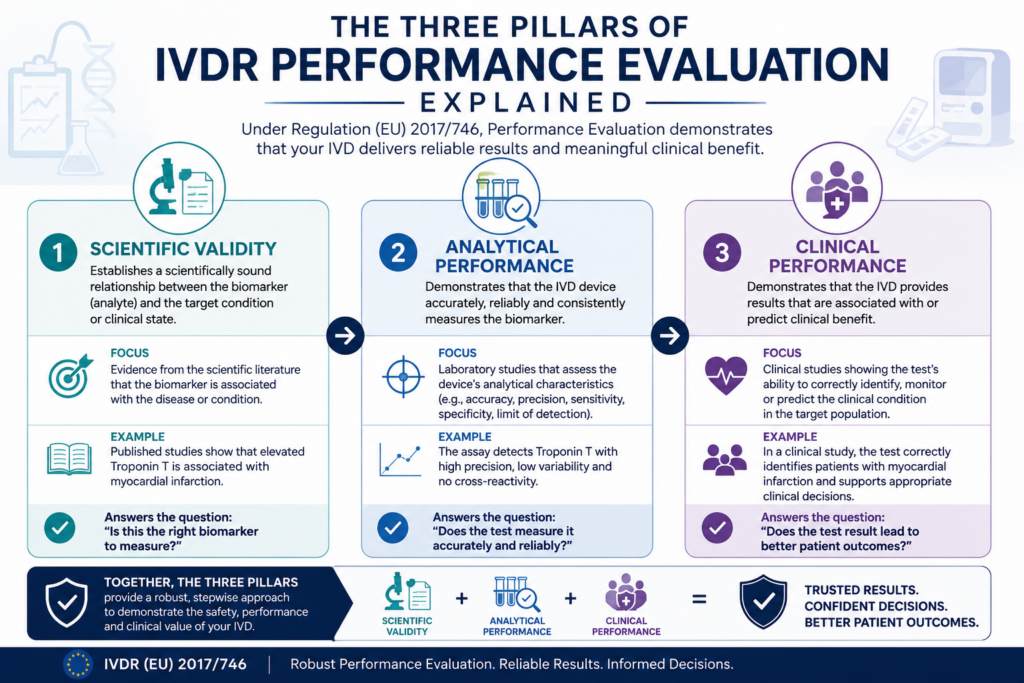
One of the most common areas of confusion during IVDR compliance is the distinction between Scientific Validity, analytical performance and clinical performance. Although these three elements form the foundation of every Performance Evaluation required under Regulation (EU) 2017/746, each evaluates a different aspect of device performance and answers a different scientific question.
Manufacturers sometimes assume that demonstrating excellent analytical performance or completing a successful clinical performance study is sufficient to establish Performance Evaluation. However, the IVDR requires objective evidence across all three pillars. Strong evidence in one area cannot compensate for weaknesses in another.
For example, an assay may accurately and reproducibly measure a biomarker with outstanding analytical performance, but if there is no accepted scientific evidence linking that biomarker to the disease being investigated, the device lacks Scientific Validity. Likewise, even if a biomarker has well-established Scientific Validity, manufacturers must still demonstrate that the device measures it accurately and that the resulting information supports meaningful clinical decision-making.
Rather than viewing these three components as separate regulatory exercises, manufacturers should consider them as complementary stages of a single evidence-based process. Scientific Validity establishes why the biomarker matters, analytical performance demonstrates that it can be measured accurately and reliably, and clinical performance confirms that the results generated by the device provide meaningful information within the intended clinical setting.
Together, these three pillars provide the comprehensive body of evidence required to support CE marking under the IVDR and demonstrate conformity with the General Safety and Performance Requirements (GSPRs).
Scientific Validity
Scientific Validity establishes the recognised relationship between the analyte, biomarker or characteristic measured by the device and the clinical condition or physiological state described within its intended purpose.
It answers the question:
“Is there sufficient scientific evidence to demonstrate that this biomarker is associated with the disease or condition being investigated?”
Manufacturers typically establish Scientific Validity through systematic literature reviews, published clinical studies, professional guidelines, consensus statements and other recognised scientific evidence. The objective is to demonstrate that measuring the analyte has genuine clinical significance before considering whether the device can measure it accurately.
Without Scientific Validity, there is no scientific justification for developing the diagnostic test, regardless of its technical performance.
Analytical Performance
Analytical performance demonstrates that the device can accurately and reliably measure the analyte under defined laboratory conditions.
Once Scientific Validity has established that the analyte is clinically relevant, analytical performance answers the next critical question:
“Can the device consistently measure the analyte accurately, precisely and reliably?”
Depending on the intended purpose of the device, analytical performance studies may evaluate characteristics such as:
- Accuracy
- Precision
- Repeatability
- Reproducibility
- Analytical sensitivity
- Analytical specificity
- Limit of detection
- Limit of quantification
- Measuring range
- Cross-reactivity
- Interference
- Stability
These investigations provide confidence that the device performs consistently before it is used in routine clinical practice.
Clinical Performance
Clinical performance demonstrates that the results generated by the device are clinically meaningful and support appropriate clinical decision-making for the intended patient population.
It answers the question:
“Do the results produced by the device provide useful clinical information that supports diagnosis, monitoring or treatment decisions?”
Clinical performance evidence may be generated through clinical performance studies, published clinical literature, comparison with established reference methods or other appropriate clinical evidence.
Depending on the intended purpose of the device, manufacturers may assess measures such as:
- Diagnostic sensitivity
- Diagnostic specificity
- Positive predictive value
- Negative predictive value
- Clinical agreement
- Concordance with comparator methods
Clinical performance confirms that the analytical results generated by the device translate into meaningful benefits for patients and healthcare professionals.
How the Three Pillars Work Together
The three pillars should never be considered independently. Each builds upon the previous one to create a complete body of scientific evidence supporting the intended purpose of the device.
For example, consider an IVD designed to detect cardiac troponin:
- Scientific Validity demonstrates that elevated cardiac troponin is a recognised indicator of myocardial injury.
- Analytical performance demonstrates that the assay accurately and reliably measures cardiac troponin concentrations.
- Clinical performance demonstrates that the assay supports accurate diagnosis of patients presenting with suspected acute myocardial infarction.
Only when all three elements have been successfully demonstrated can manufacturers conclude that the device achieves its intended purpose and satisfies the Performance Evaluation requirements of the IVDR.
This structured approach ensures that every diagnostic claim is supported by sound scientific evidence, robust laboratory performance and meaningful clinical benefit.
Comparison Table
Performance Evaluation Pillar | Primary Question Answered | Typical Evidence |
Scientific Validity | Is the analyte or biomarker scientifically associated with the disease or physiological condition? | Scientific literature, clinical guidelines, consensus documents, systematic literature reviews, reference materials |
Analytical Performance | Can the device accurately and reliably measure the analyte? | Analytical validation studies, precision, accuracy, sensitivity, specificity, stability and interference testing |
Clinical Performance | Do the results generated by the device provide meaningful clinical information for the intended patient population? | Clinical performance studies, comparator studies, clinical literature, diagnostic sensitivity and specificity data |
Sources of Scientific Validity Evidence
Establishing Scientific Validity requires manufacturers to demonstrate that the relationship between an analyte, biomarker or characteristic and the intended clinical condition is supported by objective scientific evidence. Rather than relying on individual publications or isolated research findings, the IVDR expects manufacturers to critically evaluate the totality of available evidence using a systematic, transparent and reproducible approach.
The evidence used to establish Scientific Validity should be relevant to the intended purpose of the device, reflect the current state of scientific knowledge and be sufficient to justify the manufacturer’s diagnostic claims. Depending on the novelty of the analyte and the maturity of the clinical field, this evidence may be extensive or relatively limited. Established biomarkers such as cardiac troponin, HbA1c or prostate-specific antigen (PSA) benefit from decades of published research, whereas emerging biomarkers may require manufacturers to generate or identify additional supporting evidence before conformity can be demonstrated.
Scientific Validity is therefore not based on a single source of information. Instead, manufacturers should integrate multiple complementary evidence sources to build a robust scientific rationale for the device.
Published Scientific Literature
Peer-reviewed scientific literature is typically the primary source of evidence used to establish Scientific Validity. Published studies provide independent evidence demonstrating the relationship between the analyte and the disease, physiological process or clinical condition described within the intended purpose.
Manufacturers should conduct systematic literature searches using recognised biomedical databases such as PubMed, Embase or Scopus to identify relevant publications. The literature review should include clearly defined search strategies, documented inclusion and exclusion criteria, and an objective critical appraisal of each study.
Published literature may provide evidence supporting:
- The biological role of the analyte.
- Disease mechanisms and pathophysiology.
- Clinical significance of biomarker concentrations.
- Diagnostic or prognostic value.
- Previous validation studies.
- Comparative performance against existing diagnostic approaches.
Rather than selecting only favourable publications, manufacturers should evaluate the complete body of available evidence, including studies that present conflicting findings or identify limitations.
Clinical Practice Guidelines
Clinical practice guidelines published by recognised professional organisations provide valuable evidence supporting Scientific Validity. These documents often represent expert consensus based upon extensive reviews of published research and can demonstrate that measurement of a particular biomarker is accepted within routine clinical practice.
Examples include guidance published by organisations such as:
- European Society of Cardiology (ESC)
- European Society for Medical Oncology (ESMO)
- National Institute for Health and Care Excellence (NICE)
- World Health Organization (WHO)
- International Federation of Clinical Chemistry and Laboratory Medicine (IFCC)
- American Diabetes Association (ADA)
Where a biomarker is routinely recommended within internationally recognised clinical guidelines, this provides strong supporting evidence that its measurement has established clinical significance.
Consensus Statements and Position Papers
Consensus statements and professional position papers may also contribute to Scientific Validity, particularly where emerging technologies or novel biomarkers are concerned.
These documents are typically developed by multidisciplinary panels of experts following critical evaluation of the available evidence. Although they may not carry the same weight as systematic reviews or clinical guidelines, they often provide valuable insight into current scientific understanding and accepted clinical practice.
Consensus documents may be particularly useful where:
- Clinical evidence is still evolving.
- New biomarkers are entering clinical practice.
- International guidance has not yet been developed.
- Expert interpretation of complex evidence is required.
Manufacturers should carefully evaluate the authority, scope and relevance of each consensus document before relying upon it within the Scientific Validity assessment.
Systematic Reviews and Meta-Analyses
Systematic reviews and meta-analyses frequently represent some of the highest levels of scientific evidence because they critically evaluate and combine the findings from multiple independent studies.
Unlike individual publications, systematic reviews use predefined methodologies to identify, assess and synthesise available evidence, reducing the risk of selection bias and providing a more comprehensive overview of current scientific knowledge.
Meta-analyses may also provide quantitative estimates of diagnostic accuracy, biomarker performance or clinical associations by statistically combining data from multiple studies.
Where available, these publications can significantly strengthen the Scientific Validity assessment by demonstrating consistency across the wider scientific literature.
Reference Materials and International Standards
International reference materials, recognised standards and reference measurement procedures may also contribute to establishing Scientific Validity.
These resources help demonstrate that an analyte has an accepted scientific definition, recognised measurement methodology and established clinical application.
Relevant sources may include:
- World Health Organization (WHO) International Standards.
- IFCC reference measurement procedures.
- International reference materials.
- ISO standards where applicable.
- European Reference Laboratory publications.
Although these documents do not usually establish clinical utility on their own, they provide additional scientific support and help demonstrate alignment with internationally recognised best practice.
Existing Clinical Data
Manufacturers may also utilise existing clinical data to support Scientific Validity where appropriate.
Relevant evidence may include:
- Published clinical investigations.
- Previous validation studies.
- Registry data.
- Observational studies.
- Longitudinal cohort studies.
- Real-world clinical evidence.
When relying on existing data, manufacturers should demonstrate that the evidence is directly applicable to the intended purpose of their device and reflects current scientific understanding.
If the data relates to similar or equivalent devices, the manufacturer should clearly justify its applicability and discuss any differences that may influence interpretation.
State of the Art
The IVDR requires manufacturers to consider the current state of the art when establishing Scientific Validity.
State of the art refers to the generally accepted level of scientific, technical and clinical knowledge that exists at a particular point in time. It is not limited to the newest publications but reflects the collective understanding of the scientific community based upon robust and widely accepted evidence.
Manufacturers should therefore consider whether:
- New biomarkers have emerged.
- Clinical guidelines have been updated.
- Alternative diagnostic approaches have become established.
- Existing evidence has been challenged by more recent research.
- Scientific understanding has evolved since previous evaluations.
Scientific Validity assessments should be reviewed periodically to ensure they remain aligned with the current state of the art throughout the device lifecycle.
Building a Robust Scientific Evidence Base
No single publication, guideline or clinical study is likely to provide sufficient evidence to establish Scientific Validity on its own. Instead, manufacturers should build a comprehensive body of scientific evidence by integrating multiple complementary sources of information.
For example, a Scientific Validity assessment for a cardiac biomarker may include published literature describing the biological mechanism of disease, international cardiology guidelines recommending biomarker testing, systematic reviews confirming diagnostic value, reference materials supporting measurement consistency and clinical studies demonstrating real-world application.
By critically evaluating all relevant evidence together, manufacturers can develop a balanced and scientifically robust justification that supports the intended purpose of the device and satisfies the expectations of regulators and Notified Bodies during conformity assessment.
Is Your IVD Relying on the IVDR Transitional Provisions?
Legacy IVDs benefiting from the extended IVDR transition periods must still meet important regulatory obligations, including Performance Evaluation requirements. With key 2026 milestones applying to Class C devices, manufacturers should understand the deadlines and conditions required to maintain transitional eligibility. Explore our Guide to IVDR Transitional Provisions and 2026 Milestones.
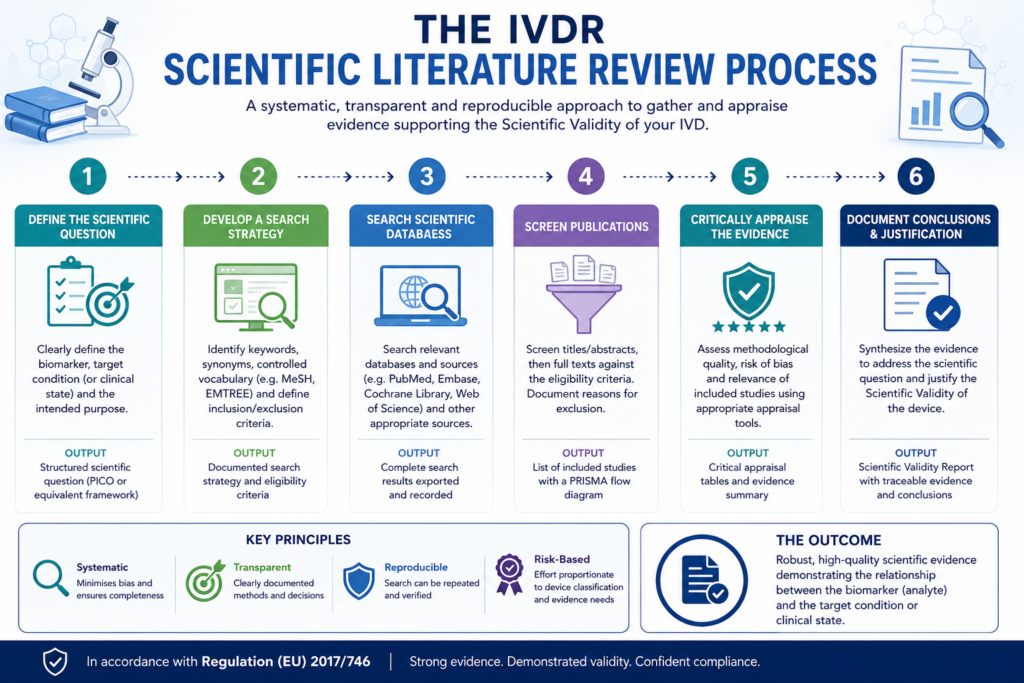
Conducting a Scientific Literature Review
A comprehensive scientific literature review is one of the most important activities undertaken during the Scientific Validity assessment. Under the IVDR, manufacturers are expected to identify, evaluate and critically appraise the available scientific evidence supporting the relationship between the analyte and the intended clinical condition using a systematic, transparent and reproducible methodology.
The objective is not simply to collect publications that support the intended purpose of the device, but to develop a balanced assessment of the current state of scientific knowledge. Manufacturers should be able to demonstrate that they have considered both supporting and conflicting evidence before concluding that Scientific Validity has been established.
A well-conducted literature review provides regulators and Notified Bodies with confidence that the manufacturer’s conclusions are based upon objective scientific evidence rather than selective interpretation of the published literature.
Defining the Scientific Question
Every literature review should begin with a clearly defined scientific question that reflects the intended purpose of the device.
Manufacturers should identify:
- The analyte or biomarker being measured.
- The disease, condition or physiological state of interest.
- The intended patient population.
- The intended clinical application (screening, diagnosis, prognosis, monitoring or treatment selection).
- The specific scientific relationship that requires evaluation.
For example, rather than searching broadly for publications relating to cardiac biomarkers, a manufacturer might define the scientific question as:
“Is there sufficient scientific evidence demonstrating that elevated cardiac troponin concentrations are associated with acute myocardial infarction in adults presenting with suspected acute coronary syndrome?”
A clearly defined question helps ensure that subsequent literature searches remain focused, relevant and reproducible.
Developing a Literature Search Strategy
The search strategy should be planned before any searches are undertaken and documented within the Scientific Validity assessment.
Manufacturers should specify:
- The databases to be searched.
- Search terms and keywords.
- Medical Subject Headings (MeSH) where appropriate.
- Boolean operators (AND, OR, NOT).
- Date restrictions.
- Language restrictions.
- Publication types to be included.
- Search dates.
- Version control for future updates.
A documented search strategy enables the review to be repeated in the future and demonstrates that the evidence was identified using a systematic rather than arbitrary process.
Where appropriate, manufacturers should pilot and refine the search strategy to ensure that relevant publications are identified without generating an unmanageable number of unrelated results.
Selecting Appropriate Databases
No single scientific database contains all relevant publications. Manufacturers should therefore select databases that are appropriate for the technology, disease area and intended purpose of the device.
Commonly used databases include:
- PubMed/MEDLINE.
- Embase.
- Scopus.
- Web of Science.
- Cochrane Library.
- Google Scholar (used cautiously for supplementary searching).
Depending on the clinical speciality, additional specialist databases may also be appropriate.
Searching multiple databases reduces the likelihood of missing important publications and helps demonstrate that the literature review has been conducted comprehensively.
Establishing Inclusion and Exclusion Criteria
Before reviewing individual publications, manufacturers should define objective inclusion and exclusion criteria.
Typical inclusion criteria may include:
- Peer-reviewed publications.
- Human clinical studies.
- Studies involving the intended patient population.
- Publications evaluating the relevant analyte.
- Articles available in full text.
- Publications within an appropriate date range.
Common exclusion criteria may include:
- Animal studies where not relevant.
- Conference abstracts without full data.
- Editorials and opinion pieces.
- Duplicate publications.
- Studies involving unrelated biomarkers.
- Poor-quality or methodologically weak research.
Applying predefined criteria helps minimise selection bias and ensures that evidence is assessed consistently throughout the review.
Screening the Literature
Once the search has been completed, manufacturers should systematically screen the identified publications to determine whether they meet the predefined inclusion criteria.
Screening is typically performed in two stages.
Initial Screening
Titles and abstracts are reviewed to remove publications that are clearly irrelevant to the scientific question.
Reasons for exclusion may include:
- Incorrect disease area.
- Incorrect biomarker.
- Non-human research.
- Review articles where primary studies are required.
- Duplicate records.
Full-Text Review
Publications passing the initial screening should undergo detailed full-text assessment.
At this stage, manufacturers evaluate whether each publication provides meaningful evidence supporting Scientific Validity and whether it should be included within the final evidence base.
Documenting reasons for exclusion during full-text review improves transparency and demonstrates a systematic review methodology.
Critically Appraising the Evidence
Identifying relevant publications is only the first step. Manufacturers must also evaluate the quality, reliability and relevance of the available evidence.
Factors to consider include:
- Study design.
- Sample size.
- Statistical methodology.
- Patient population.
- Risk of bias.
- Clinical relevance.
- Consistency with other published studies.
- Applicability to the intended purpose.
Higher-quality evidence should generally be given greater weight than isolated studies with methodological limitations.
Where conflicting evidence exists, manufacturers should explain why differing conclusions may have been reached rather than simply disregarding studies that do not support the intended purpose.
A balanced critical appraisal demonstrates scientific objectivity and is often viewed positively during Notified Body review.
Documenting the Literature Review
The literature review should be fully documented within the Scientific Validity assessment or Scientific Validity Report.
Typical documentation includes:
- Literature review protocol.
- Search strategy.
- Databases searched.
- Search dates.
- Keywords and search strings.
- Inclusion and exclusion criteria.
- Screening methodology.
- Number of records identified.
- Number of publications included.
- Critical appraisal summaries.
- Overall scientific conclusions.
Maintaining comprehensive documentation allows reviewers to understand exactly how the evidence was identified and evaluated and supports traceability throughout the technical documentation.
Keeping the Literature Review Current
Scientific knowledge continually evolves as new research is published, clinical guidelines are updated and diagnostic technologies advance.
Manufacturers should therefore regard the literature review as a living process rather than a one-time exercise.
Literature searches should be repeated:
- During major updates to the Performance Evaluation.
- Before regulatory submissions where significant time has elapsed.
- Following important scientific developments.
- When new biomarkers or competing technologies emerge.
- As part of Post-Market Performance Follow-up (PMPF), where appropriate.
Regular updates help ensure that the Scientific Validity assessment continues to reflect the current state of scientific knowledge and supports ongoing compliance with the IVDR throughout the lifecycle of the device.
Preparing a Scientific Validity Report
The Scientific Validity Report is the document that brings together the evidence supporting the relationship between the analyte or biomarker measured by an in vitro diagnostic medical device (IVD) and its intended clinical application. It provides a structured, evidence-based assessment demonstrating that the manufacturer’s intended purpose is scientifically justified and forms an integral component of the wider Performance Evaluation required under Regulation (EU) 2017/746.
Although the IVDR does not prescribe a mandatory template for a standalone Scientific Validity Report, manufacturers are expected to document their assessment in a clear, systematic and traceable manner. For many organisations, particularly those developing Class B, Class C and Class D IVDs, preparing a dedicated Scientific Validity Report provides an effective way to organise the evidence before integrating it into the Performance Evaluation Report (PER).
A well-prepared Scientific Validity Report should do far more than summarise published literature. It should critically evaluate the available scientific evidence, explain how conclusions have been reached and demonstrate why the analyte has recognised clinical significance for the intended purpose of the device.
Ultimately, the report provides the scientific foundation upon which analytical performance studies, clinical performance investigations and the overall Performance Evaluation are built.
The Purpose of a Scientific Validity Report
The primary purpose of the Scientific Validity Report is to demonstrate that there is sufficient objective scientific evidence supporting the relationship between the analyte and the clinical condition described within the intended purpose.
Rather than presenting individual studies in isolation, the report should critically evaluate the complete body of available evidence and explain how that evidence collectively demonstrates Scientific Validity.
An effective report should allow regulators, Notified Bodies and internal reviewers to understand:
- Why the analyte was selected.
- The scientific evidence supporting its clinical significance.
- The methodology used to identify and evaluate the evidence.
- The strengths and limitations of the available data.
- The manufacturer’s overall scientific conclusions.
By documenting this rationale, manufacturers create a transparent and reproducible record supporting their regulatory decisions.
What Should a Scientific Validity Report Include?
Although the exact format will depend on the complexity of the device and the manufacturer’s quality management procedures, a comprehensive Scientific Validity Report will typically include:
- Device identification and intended purpose.
- Scope of the Scientific Validity assessment.
- Description of the analyte or biomarker.
- Scientific question being investigated.
- Literature review methodology.
- Search strategy and databases searched.
- Inclusion and exclusion criteria.
- Summary of the scientific evidence identified.
- Critical appraisal of individual studies.
- Assessment of conflicting evidence where applicable.
- Discussion of evidence gaps and uncertainties.
- Overall conclusion regarding Scientific Validity.
- References and supporting documentation.
Higher-risk devices or novel technologies may require substantially more detailed evaluations than well-established diagnostic assays supported by decades of published literature.
Demonstrating Critical Evaluation Rather Than Literature Summaries
One of the most common weaknesses identified during regulatory review is the submission of literature summaries rather than genuine scientific evaluations.
Simply describing the findings of published studies does not demonstrate Scientific Validity.
Instead, manufacturers should critically assess the evidence by considering:
- The quality of each study.
- Whether the study population reflects the intended use population.
- Potential sources of bias.
- Statistical robustness.
- Consistency with other published evidence.
- Relevance to the intended purpose.
- Limitations of the available data.
The report should explain why particular publications have been given greater weight than others and how the complete body of evidence supports the manufacturer’s conclusions.
Where conflicting evidence exists, it should be discussed openly rather than ignored. Demonstrating a balanced scientific assessment often strengthens the credibility of the report during Notified Body review.
Maintaining Traceability
An effective Scientific Validity Report should maintain clear traceability between the evidence reviewed and the conclusions reached.
For example, the report should clearly demonstrate how:
- Published literature supports the biological relationship between the analyte and the disease.
- Clinical guidelines reinforce the intended clinical application.
- Consensus statements support current medical practice.
- Scientific conclusions align with the intended purpose.
- Performance claims are supported by objective evidence.
- Subsequent analytical performance and clinical performance studies build upon the Scientific Validity assessment.
Maintaining this traceability helps demonstrate that the Performance Evaluation has been developed using a logical, evidence-based approach and makes regulatory review significantly more efficient.
Integration with the Performance Evaluation Report (PER)
Scientific Validity should not be considered a standalone regulatory activity.
Instead, it forms one of the three core components incorporated into the Performance Evaluation Report (PER), alongside analytical performance and clinical performance.
The conclusions reached within the Scientific Validity Report should therefore align with:
- The Performance Evaluation Plan (PEP).
- The Performance Evaluation Report (PER).
- The intended purpose.
- The Risk Management File.
- The General Safety and Performance Requirements (GSPR) checklist.
- The Instructions for Use (IFU).
- The manufacturer’s technical documentation.
Consistency across these documents demonstrates that the manufacturer’s regulatory strategy is coherent, scientifically justified and fully integrated.
Reviewing and Updating the Scientific Validity Report
Scientific understanding rarely remains static throughout the commercial life of a medical device.
New biomarkers may emerge, clinical guidelines may change and additional evidence may strengthen—or occasionally challenge—the accepted understanding of a disease.
Manufacturers should therefore review the Scientific Validity Report periodically to determine whether updates are required.
Reviews may be triggered by:
- Publication of significant new scientific evidence.
- Updates to international clinical guidelines.
- Changes to the intended purpose.
- Expansion into new patient populations.
- Design changes affecting device claims.
- Findings arising from Post-Market Performance Follow-up (PMPF).
- Emerging safety or performance concerns identified through post-market surveillance.
Maintaining an up-to-date Scientific Validity assessment helps ensure continued compliance with the IVDR and demonstrates that the device continues to reflect the current state of scientific knowledge.
Preparing for Notified Body Review
For manufacturers of Class B, Class C and Class D IVDs, the Scientific Validity assessment forms an important part of the documentation reviewed during conformity assessment.
Although Notified Bodies ultimately assess the complete Performance Evaluation, they will expect the Scientific Validity evidence to demonstrate:
- A clearly defined scientific question.
- A documented and reproducible literature review methodology.
- Comprehensive identification of relevant evidence.
- Objective critical appraisal of the available literature.
- Balanced discussion of supporting and conflicting evidence.
- Clear scientific conclusions.
- Traceability between the evidence, intended purpose and Performance Evaluation.
Manufacturers who prepare well-structured Scientific Validity documentation are generally better positioned to respond to regulatory questions, minimise requests for additional information and achieve a smoother conformity assessment process.
Why Do Notified Bodies Reject IVDR Performance Evaluation Reports?
Even where appropriate scientific and performance evidence exists, weaknesses in how that evidence is justified, documented and linked can result in Notified Body findings. Discover three common problems—including weak Scientific Validity and State of the Art justification, non-reproducible literature reviews and poor traceability between performance evidence—in our Guide to Why Notified Bodies Reject IVDR Performance Evaluation Reports.
Common Scientific Validity Mistakes
Scientific Validity is one of the most important components of IVDR Performance Evaluation, yet it is also one of the areas where manufacturers frequently encounter deficiencies during Notified Body reviews. In many cases, the issue is not that Scientific Validity has been overlooked entirely, but that the supporting evidence has not been identified, evaluated or documented in a sufficiently systematic and objective manner.
A weak Scientific Validity assessment can undermine the entire Performance Evaluation, regardless of how comprehensive the analytical performance or clinical performance evidence may be. If manufacturers cannot demonstrate that the analyte itself has an established and scientifically accepted relationship with the intended clinical condition, regulators may question the validity of the device’s intended purpose and the conclusions drawn throughout the technical documentation.
Fortunately, many of these issues can be avoided by adopting a structured, evidence-based approach from the earliest stages of product development.
Treating Scientific Validity as a Literature Summary
One of the most common mistakes is assuming that Scientific Validity simply involves collecting publications relating to the analyte.
Many manufacturers prepare lengthy literature summaries describing individual studies without critically evaluating the evidence or explaining how the publications collectively support the intended purpose of the device.
Under the IVDR, Scientific Validity requires a critical scientific assessment rather than a bibliography. Manufacturers should objectively evaluate the quality, relevance and consistency of the available evidence before drawing conclusions.
A concise report containing robust scientific analysis is generally far more valuable than an extensive document that simply summarises published articles.
Using an Inadequate Literature Search Strategy
Another common deficiency is the use of poorly documented or incomplete literature searches.
Manufacturers sometimes perform informal internet searches or rely upon a small number of familiar publications without defining a reproducible methodology.
A compliant literature review should clearly document:
- The databases searched.
- Search dates.
- Search terms and Boolean operators.
- Inclusion and exclusion criteria.
- Screening methodology.
- Reasons for excluding publications.
- The final evidence base.
Without this information, it is difficult for regulators or Notified Bodies to determine whether the review has been conducted systematically or whether important evidence may have been overlooked.
Ignoring Conflicting Scientific Evidence
Manufacturers naturally wish to demonstrate that their device performs as intended. However, selectively including only favourable publications can significantly weaken the credibility of a Scientific Validity assessment.
Where conflicting evidence exists, it should be acknowledged and critically evaluated rather than omitted.
For example, manufacturers should discuss:
- Differences between study populations.
- Variations in methodology.
- Statistical limitations.
- Emerging areas of scientific debate.
- Reasons why apparently conflicting conclusions may exist.
A balanced discussion demonstrates scientific objectivity and often provides greater confidence than presenting only positive findings.
Failing to Consider the Current State of the Art
Scientific knowledge evolves continually. New biomarkers are discovered, clinical guidelines are revised and diagnostic technologies improve over time.
Some manufacturers rely heavily on historical publications without considering whether more recent evidence has altered current clinical understanding.
Scientific Validity should always reflect the current state of the art. Manufacturers should therefore regularly review:
- Updated clinical guidelines.
- Newly published systematic reviews.
- Recent meta-analyses.
- Professional society recommendations.
- Advances in diagnostic practice.
Maintaining an up-to-date evidence base helps ensure that the Performance Evaluation remains scientifically relevant throughout the product lifecycle.
Poor Traceability Within the Technical Documentation
Scientific Validity should not exist as an isolated document.
One of the most common weaknesses identified during regulatory review is poor traceability between the Scientific Validity assessment and other sections of the technical documentation.
Manufacturers should ensure that the conclusions reached within the Scientific Validity assessment are consistently reflected throughout:
- The intended purpose.
- Performance claims.
- The Performance Evaluation Plan (PEP).
- The Performance Evaluation Report (PER).
- The Risk Management File.
- The GSPR Checklist.
- The Instructions for Use (IFU).
Maintaining clear links between these documents demonstrates that Scientific Validity has been fully integrated into the manufacturer’s regulatory strategy.
Assuming Established Biomarkers Require No Scientific Assessment
Manufacturers sometimes believe that widely accepted biomarkers such as HbA1c, cardiac troponin or prostate-specific antigen require little or no Scientific Validity assessment because their clinical significance is already well established.
While these biomarkers are supported by extensive scientific evidence, manufacturers must still demonstrate that the available evidence has been systematically reviewed and critically evaluated.
The Scientific Validity assessment may be more straightforward for established biomarkers than for novel analytes, but it remains a mandatory component of Performance Evaluation under the IVDR.
Failing to Update Scientific Validity Throughout the Device Lifecycle
Scientific Validity should not be regarded as a document completed once and then archived.
Manufacturers are expected to monitor developments in scientific knowledge throughout the commercial life of the device.
Updates may be required following:
- Publication of important new research.
- Changes to clinical practice guidelines.
- Expansion of the intended purpose.
- Introduction of new indications.
- Emerging post-market evidence.
- Significant changes to comparable technologies.
Regular review helps ensure that the Scientific Validity assessment continues to support the manufacturer’s performance claims and remains aligned with current scientific understanding.
Underestimating Notified Body Expectations
Many manufacturers underestimate the level of scrutiny that Scientific Validity receives during conformity assessment.
Notified Bodies are increasingly looking beyond the quantity of evidence presented and focusing on:
- The quality of the literature review methodology.
- The robustness of the critical appraisal.
- The scientific justification supporting conclusions.
- The consistency between Scientific Validity and the wider technical documentation.
- The traceability of evidence throughout the Performance Evaluation.
Manufacturers who prepare structured, evidence-based Scientific Validity assessments are generally better positioned to achieve efficient reviews and minimise requests for additional information.
Key Takeaways
Many Scientific Validity deficiencies can be avoided through careful planning and a systematic approach to evidence generation.
Before finalising your Scientific Validity assessment, consider the following questions:
✔ Has a comprehensive literature review been performed?
✔ Is the search strategy fully documented and reproducible?
✔ Have all relevant scientific evidence sources been considered?
✔ Has the evidence been critically appraised rather than simply summarised?
✔ Have conflicting publications been objectively discussed?
✔ Does the assessment reflect the current state of the art?
✔ Is there clear traceability between Scientific Validity and the wider technical documentation?
✔ Will the Scientific Validity assessment be reviewed and updated throughout the product lifecycle?
Taking an objective, evidence-based approach to Scientific Validity not only supports successful IVDR conformity assessment but also provides a strong scientific foundation for analytical performance, clinical performance and the overall Performance Evaluation.
Not Sure How Your IVD Is Classified?
IVDR classification determines the regulatory pathway for your IVD and can significantly affect conformity assessment and Notified Body involvement. Understand the risk-based Classes A, B, C and D, how the IVDR classification rules apply, and what classification means for manufacturers in our Complete Guide to IVDR Classification.
Scientific Validity Within Your IVDR Regulatory Strategy
Scientific Validity should never be viewed as an isolated regulatory exercise completed solely to satisfy the requirements of Annex XIII. Instead, it underpins many of the documents, processes and decisions required to demonstrate conformity with Regulation (EU) 2017/746. The evidence generated during the Scientific Validity assessment supports the manufacturer’s intended purpose, Performance Evaluation, risk management activities and technical documentation, ultimately providing the scientific foundation for successful CE marking.
Manufacturers that integrate Scientific Validity into their wider regulatory strategy from the earliest stages of product development are generally better positioned to produce consistent technical documentation, identify evidence gaps before conformity assessment and respond efficiently to questions raised by Notified Bodies.
Rather than preparing Scientific Validity as a standalone document, manufacturers should ensure that its conclusions are fully reflected throughout the product lifecycle and remain aligned with all supporting regulatory documentation.
Supporting the Intended Purpose
The intended purpose is one of the most important documents within the technical documentation because it determines how the device is classified, evaluated and assessed during conformity assessment.
Scientific Validity provides the objective evidence supporting the claims made within the intended purpose. If the manufacturer states that an IVD detects, predicts, monitors or aids the diagnosis of a particular disease, there must be sufficient scientific evidence demonstrating that the analyte measured by the device is genuinely associated with that condition.
For example, if a manufacturer claims that an assay detects a biomarker associated with early-stage Alzheimer’s disease, the Scientific Validity assessment should demonstrate that this relationship is supported by current scientific evidence and recognised within the medical community.
Maintaining consistency between the intended purpose and the Scientific Validity assessment helps ensure that the manufacturer’s claims are scientifically justified and can be defended during regulatory review.
Supporting the Performance Evaluation Plan (PEP)
The Performance Evaluation Plan (PEP) establishes the manufacturer’s strategy for generating the evidence required to demonstrate conformity with the IVDR.
Scientific Validity forms the starting point for this strategy by identifying the existing scientific evidence supporting the analyte and highlighting any areas where additional evidence may be required.
The conclusions drawn during the Scientific Validity assessment influence:
- The analytical performance studies that should be undertaken.
- The clinical performance evidence required.
- Any evidence gaps that require further investigation.
- The overall Performance Evaluation strategy.
By establishing the scientific rationale before analytical and clinical studies begin, manufacturers can ensure that subsequent evidence generation activities remain focused, proportionate and aligned with the intended purpose of the device.
Supporting the Performance Evaluation Report (PER)
Scientific Validity represents one of the three core components incorporated into the Performance Evaluation Report (PER).
The conclusions reached within the Scientific Validity assessment should flow directly into the PER, where they are considered alongside analytical performance and clinical performance evidence to determine whether the device achieves its intended purpose.
Within the Performance Evaluation Report, Scientific Validity helps demonstrate:
- The biological relationship between the analyte and the disease.
- The scientific justification for the intended purpose.
- The rationale supporting subsequent analytical and clinical investigations.
- The overall benefit-risk assessment.
A clear relationship between the Scientific Validity assessment and the Performance Evaluation Report demonstrates that the manufacturer has adopted a logical and evidence-based approach to Performance Evaluation.
Supporting Risk Management
Scientific Validity also plays an important role within the manufacturer’s Risk Management File developed in accordance with ISO 14971.
The scientific evidence supporting the intended purpose influences the identification and evaluation of risks throughout the product lifecycle.
For example, understanding the limitations of an analyte or recognising areas where scientific uncertainty exists may influence:
- Hazard identification.
- Risk estimation.
- Risk control measures.
- Residual risk evaluation.
- Benefit-risk determination.
Likewise, risks identified during the risk management process may highlight areas where additional scientific evidence or literature review is required.
Maintaining clear traceability between Scientific Validity and the Risk Management File demonstrates that scientific evidence has been fully considered when evaluating the safety and performance of the device.
Understand ISO 14971 Medical Device Risk Management
Risk management is a fundamental part of demonstrating the safety and performance of medical devices and IVDs throughout their lifecycle. Learn how ISO 14971 provides a structured framework for identifying hazards, evaluating and controlling risks, and monitoring the effectiveness of risk controls in our Guide to ISO 14971 Medical Device Risk Management.
Demonstrating Compliance with the General Safety and Performance Requirements (GSPRs)
Manufacturers must demonstrate conformity with the General Safety and Performance Requirements (GSPRs) set out in Annex I of the IVDR.
Scientific Validity contributes significantly to this demonstration by providing objective evidence that the intended purpose of the device is scientifically justified.
The Scientific Validity assessment supports several aspects of GSPR compliance, including:
- Performance claims.
- Benefit-risk considerations.
- Intended clinical application.
- Information supplied by the manufacturer.
- Supporting scientific evidence.
Maintaining cross-references between the Scientific Validity Report and the GSPR checklist helps improve traceability and facilitates more efficient regulatory review.
Supporting the Quality Management System
An effective Quality Management System (QMS), typically established in accordance with ISO 13485, provides the framework for planning, conducting, reviewing and maintaining Scientific Validity activities throughout the product lifecycle.
Relevant QMS processes include:
- Document control.
- Design and development.
- Literature review procedures.
- Data management.
- Internal audits.
- Corrective and Preventive Actions (CAPA).
- Change control.
- Management review.
Integrating Scientific Validity into the Quality Management System ensures that scientific evidence is generated, reviewed and maintained in a consistent and controlled manner.
This also helps demonstrate that Performance Evaluation activities remain subject to appropriate quality oversight throughout the lifecycle of the device.
What Is ISO 13485?
A robust Quality Management System provides the foundation for consistently managing medical device and IVD regulatory requirements throughout the product lifecycle. Learn about ISO 13485, its key requirements, and how the standard supports quality and regulatory compliance in our Complete Guide to ISO 13485.
Supporting Post-Market Performance Follow-up (PMPF)
Scientific understanding does not stop evolving once a device receives CE marking.
As part of Post-Market Performance Follow-up (PMPF), manufacturers should continue monitoring published scientific literature, clinical guidelines and emerging evidence to determine whether their Scientific Validity assessment remains current.
Examples of information that may trigger a review include:
- Newly published systematic reviews.
- Updated clinical practice guidelines.
- Discovery of new biomarkers.
- Revised disease classifications.
- Evidence challenging existing scientific assumptions.
- New comparator technologies.
Where significant new evidence becomes available, manufacturers should review the Scientific Validity assessment and update the Performance Evaluation Report where necessary to ensure continued compliance with the IVDR.
How Does PMPF Support Ongoing Performance Evaluation?
Scientific validity forms one of the three pillars of IVDR Performance Evaluation, but the evidence supporting an IVD must continue to be reviewed throughout its lifecycle. Post-Market Performance Follow-up (PMPF) helps manufacturers identify and evaluate new performance information and determine whether updates to the Performance Evaluation are required. Learn how to plan, conduct and document these activities in our Complete Guide to IVDR Post-Market Performance Follow-up (PMPF).
Building a Cohesive Regulatory Strategy
Performance Evaluation should support every stage of the product lifecycle, from initial concept through to eventual product retirement.
By integrating Performance Evaluation into the wider regulatory strategy, manufacturers can more effectively manage design changes, respond to new scientific evidence and maintain compliance as regulatory expectations continue to evolve.
Scientific Validity should not be regarded as a document prepared solely for regulatory submission. Instead, it should form an integral part of the manufacturer’s overall regulatory strategy, providing the scientific foundation that supports every subsequent stage of Performance Evaluation and conformity assessment.
When properly integrated, Scientific Validity strengthens the consistency of the technical documentation, improves traceability between regulatory documents and helps manufacturers demonstrate that their diagnostic claims are supported by robust, objective and up-to-date scientific evidence.
By embedding Scientific Validity throughout the design, development and post-market lifecycle of an IVD, manufacturers can reduce regulatory uncertainty, facilitate smoother Notified Body reviews and build greater confidence in the long-term safety and performance of their devices.
Need Practical Support with IVDR Compliance?
Meeting the requirements of Regulation (EU) 2017/746 involves much more than preparing individual documents. From IVD classification and Performance Evaluation to Technical Documentation, quality management and regulatory strategy, the right approach can help manufacturers identify gaps and build a clear route to compliance. Explore our Practical IVDR Compliance Strategies and IVD Consultancy Guide.
Real-World Scientific Validity Examples
Although the principles of Scientific Validity are consistent across all in vitro diagnostic medical devices (IVDs), the evidence required can vary considerably depending on the intended purpose of the device, the maturity of the biomarker and the current state of scientific knowledge. Well-established biomarkers supported by decades of published research may require relatively straightforward Scientific Validity assessments, whereas novel biomarkers or emerging diagnostic technologies often require a much more comprehensive evaluation of the available evidence.
The following examples illustrate how Scientific Validity may be demonstrated for different categories of IVDs. They are intended as general guidance only, and manufacturers should always assess the evidence supporting their own device, intended purpose and performance claims.
Cardiac Troponin Assays
Cardiac troponin is one of the most extensively studied biomarkers in modern laboratory medicine and is widely recognised as the gold standard biomarker for detecting myocardial injury.
Scientific Validity is supported by:
- Thousands of peer-reviewed scientific publications.
- International cardiology guidelines.
- WHO definitions of myocardial infarction.
- European Society of Cardiology (ESC) recommendations.
- Extensive clinical evidence demonstrating the association between elevated troponin concentrations and acute myocardial infarction.
Because this relationship is well established, manufacturers generally rely upon systematic literature reviews and current clinical guidelines to demonstrate Scientific Validity before undertaking analytical and clinical performance studies.
HbA1c Assays
HbA1c assays are used for the diagnosis and long-term monitoring of diabetes mellitus.
The Scientific Validity of HbA1c is supported by decades of epidemiological research demonstrating the relationship between glycated haemoglobin levels and long-term blood glucose control.
Manufacturers typically reference:
- International diabetes guidelines.
- WHO recommendations.
- American Diabetes Association (ADA) guidance.
- IFCC standardisation programmes.
- Large prospective clinical studies.
Together, these sources establish that HbA1c provides clinically meaningful information for diagnosing and monitoring diabetes, forming the scientific basis for Performance Evaluation.
Human Papillomavirus (HPV) Tests
HPV testing is widely used in cervical cancer screening programmes because persistent infection with high-risk HPV genotypes is strongly associated with the development of cervical cancer.
Scientific Validity is demonstrated through:
- Extensive epidemiological studies.
- Long-term prospective cohort studies.
- WHO cervical cancer screening recommendations.
- International screening guidelines.
- Published evidence linking persistent HPV infection with cervical neoplasia.
This body of evidence provides a robust scientific rationale for HPV assays intended for cervical cancer screening and risk assessment.
Companion Diagnostics
Companion diagnostics represent one of the most scientifically demanding categories of IVD because they are used to determine whether a patient is suitable for treatment with a particular medicinal product.
Scientific Validity requires manufacturers to demonstrate that the biomarker measured by the device is directly associated with the safety or effectiveness of the corresponding therapy.
Supporting evidence may include:
- Clinical trial data.
- Regulatory approvals for the associated medicinal product.
- Oncology treatment guidelines.
- Published biomarker validation studies.
- Precision medicine research.
Because treatment decisions may depend entirely upon the test result, Notified Bodies generally expect particularly robust Scientific Validity evidence for companion diagnostics.
BRCA1 and BRCA2 Genetic Tests
Genetic testing for BRCA1 and BRCA2 mutations is widely used to assess hereditary breast and ovarian cancer risk.
Scientific Validity is supported by decades of molecular genetics research demonstrating the association between pathogenic BRCA mutations and increased lifetime cancer risk.
Manufacturers commonly reference:
- Large genetic epidemiology studies.
- International oncology guidelines.
- Clinical genetics consensus statements.
- Published mutation databases.
- Long-term observational studies.
These evidence sources establish the clinical significance of BRCA mutations and support the intended purpose of genetic testing devices.
HIV Blood Donor Screening Assays
Blood donor screening assays represent some of the highest-risk IVDs regulated under the IVDR.
Scientific Validity is exceptionally well established through:
- WHO recommendations.
- European Centre for Disease Prevention and Control (ECDC) guidance.
- International blood transfusion standards.
- Decades of published virology research.
- Global public health surveillance programmes.
These data clearly demonstrate the relationship between HIV infection and transfusion-transmitted disease, providing an exceptionally robust Scientific Validity foundation for blood donor screening assays.
Novel Biomarkers
Not every Scientific Validity assessment benefits from decades of published evidence.
Manufacturers developing tests for newly discovered biomarkers often face significantly greater challenges because limited scientific literature may exist.
In these situations, manufacturers may need to combine:
- Early clinical investigations.
- Pilot studies.
- Mechanistic research.
- Translational medicine studies.
- Published laboratory research.
- Emerging clinical evidence.
The Scientific Validity assessment should acknowledge any remaining uncertainties and explain why the available evidence is nevertheless sufficient to support the intended purpose.
Where evidence remains limited, additional analytical or clinical investigations may be required before conformity can be demonstrated.
Lessons from These Examples
These examples demonstrate that Scientific Validity is not determined by the complexity of the technology but by the strength of the scientific evidence supporting the analyte and its intended clinical application.
For well-established biomarkers such as cardiac troponin or HbA1c, Scientific Validity may be demonstrated primarily through comprehensive literature reviews and internationally recognised clinical guidelines. For newer biomarkers or precision medicine applications, manufacturers may need to generate additional scientific evidence before sufficient Scientific Validity can be established.
Regardless of the technology involved, manufacturers should adopt a systematic, evidence-based approach that critically evaluates all relevant scientific information, documents the assessment transparently and maintains alignment with the current state of the art throughout the device lifecycle.
Conclusion
Scientific Validity is the cornerstone of IVDR Performance Evaluation and provides the scientific foundation for every diagnostic claim made by an in vitro diagnostic medical device. Before manufacturers can demonstrate that a device accurately measures an analyte or supports clinical decision-making, they must first establish that the analyte itself has a recognised and scientifically accepted relationship with the intended disease, condition or physiological state.
By systematically reviewing and critically appraising published scientific literature, clinical guidelines and other authoritative evidence, manufacturers can demonstrate that their intended purpose is supported by the current state of scientific knowledge. This evidence underpins analytical performance, clinical performance and the wider Performance Evaluation, providing regulators and Notified Bodies with confidence that the device achieves its intended purpose safely and effectively.
A robust Scientific Validity assessment is not simply a regulatory requirement—it is an essential part of building a successful IVDR strategy. When integrated with technical documentation, risk management, Performance Evaluation and post-market activities, Scientific Validity helps manufacturers produce consistent, evidence-based documentation that supports smoother conformity assessment and long-term regulatory compliance.
Whether you are developing a novel biomarker, transitioning an existing device to the IVDR or preparing documentation for Notified Body review, investing time in a comprehensive and well-documented Scientific Validity assessment will strengthen your Performance Evaluation and provide a solid scientific foundation for successful CE marking under Regulation (EU) 2017/746.
Frequently Asked Questions About IVDR Scientific Validation
Scientific Validity is the process of demonstrating that there is an established scientific relationship between the analyte or biomarker measured by an in vitro diagnostic medical device (IVD) and the disease, physiological condition or clinical state described within its intended purpose. It is one of the three mandatory pillars of Performance Evaluation required under Regulation (EU) 2017/746.
Yes. Scientific Validity is a mandatory component of Performance Evaluation for every IVD placed on the European market under the IVDR. Regardless of whether the device is Class A, B, C or D, manufacturers must demonstrate that the analyte measured by the device has recognised clinical significance and supports the intended purpose.
The primary requirements are found within:
- Article 56 of Regulation (EU) 2017/746.
- Annex XIII – Performance Evaluation, Performance Studies and Post-Market Performance Follow-up.
- Annex I – General Safety and Performance Requirements (GSPRs).
Together, these establish the legal framework requiring manufacturers to demonstrate Scientific Validity as part of their overall Performance Evaluation.
Scientific Validity establishes that the analyte or biomarker is scientifically associated with the disease or condition being investigated.
Analytical performance demonstrates that the device can accurately and reliably measure the analyte.
Clinical performance demonstrates that the results generated by the device are clinically meaningful and support appropriate clinical decision-making.
Together, these three elements form the Performance Evaluation required under the IVDR.
Yes. Every in vitro diagnostic medical device requires a Scientific Validity assessment, although the amount of evidence required will vary according to the intended purpose, classification and maturity of the biomarker.
Well-established biomarkers may require relatively straightforward literature reviews, whereas novel biomarkers often require considerably more supporting evidence.
A Scientific Validity Report is a structured document that critically evaluates the scientific evidence supporting the relationship between the analyte and the intended clinical condition.
It typically includes:
- Literature review methodology.
- Scientific evidence identified.
- Critical appraisal of the evidence.
- Discussion of limitations.
- Scientific conclusions.
- References supporting the intended purpose.
The report provides the scientific foundation for the wider Performance Evaluation.
Scientific Validity is generally established through the systematic review and critical appraisal of multiple evidence sources, including:
- Peer-reviewed scientific literature.
- Clinical practice guidelines.
- Consensus statements.
- Systematic reviews.
- Meta-analyses.
- Reference materials.
- Existing clinical data.
- International standards.
Manufacturers should evaluate the complete body of evidence rather than relying on isolated publications.
Not necessarily.
For many well-established biomarkers, existing published scientific evidence is sufficient to demonstrate Scientific Validity.
However, novel biomarkers or emerging diagnostic technologies may require manufacturers to generate additional evidence where published data is limited or insufficient to support the intended purpose.
Scientific Validity should be regarded as a living assessment rather than a one-time exercise.
Manufacturers should review and update the Scientific Validity assessment whenever significant new scientific evidence becomes available, such as:
- Updated clinical guidelines.
- New systematic reviews.
- Emerging biomarkers.
- Changes to the intended purpose.
- Significant post-market findings.
Regular review helps ensure continued compliance with the IVDR throughout the product lifecycle.
During conformity assessment, Notified Bodies typically expect manufacturers to provide:
- A documented literature review methodology.
- A reproducible search strategy.
- Clearly defined inclusion and exclusion criteria.
- Critical appraisal of the evidence.
- Discussion of conflicting publications.
- Robust scientific conclusions.
- Clear traceability between Scientific Validity and the wider technical documentation.
A well-documented and objective Scientific Validity assessment can significantly improve the efficiency of the review process.
In many cases, yes.
For established biomarkers supported by extensive scientific research, published literature, clinical guidelines and consensus statements may provide sufficient evidence to establish Scientific Validity.
Where evidence is limited or the biomarker is novel, manufacturers may need to supplement the literature with additional scientific or clinical evidence.
Yes.
Scientific Validity is one of the three core components incorporated into the Performance Evaluation Report (PER), alongside analytical performance and clinical performance.
Together, these assessments demonstrate that the device achieves its intended purpose and complies with the IVDR.
Scientific Validity provides the scientific justification for the intended purpose of an IVD.
By demonstrating that the analyte measured by the device has recognised clinical significance, manufacturers establish the foundation upon which analytical performance, clinical performance and the overall Performance Evaluation are built.
This evidence is essential for demonstrating conformity with Regulation (EU) 2017/746 and achieving CE marking.
Some of the most common deficiencies identified during regulatory reviews include:
- Poorly documented literature searches.
- Failure to critically appraise the evidence.
- Relying only on favourable publications.
- Ignoring conflicting scientific evidence.
- Poor traceability within the technical documentation.
- Failing to keep the Scientific Validity assessment up to date.
- Confusing Scientific Validity with analytical or clinical performance.
Taking a structured and evidence-based approach can help avoid these common issues.
Yes.
Patient Guard supports manufacturers throughout the IVDR Performance Evaluation process, including Scientific Validity assessments, systematic literature reviews, literature search strategies, Scientific Validity Reports, Performance Evaluation Plans (PEPs), Performance Evaluation Reports (PERs) and complete IVDR technical documentation.
Our regulatory specialists work with manufacturers of Class A, B, C and D IVDs to develop robust, evidence-based documentation that supports successful conformity assessment and CE marking under Regulation (EU) 2017/746.
References
This guide is based on the following European legislation, international standards and official regulatory guidance relating to IVDR Performance Evaluation, scientific validity, analytical performance, clinical performance, Performance Evaluation Plans, Performance Evaluation Reports and Post-Market Performance Follow-up.
| Organisation | Reference | Why it's relevant |
|---|---|---|
| European Union | Regulation (EU) 2017/746 on In Vitro Diagnostic Medical Devices (IVDR) | Provides the legal framework for placing in vitro diagnostic medical devices on the European Union market. Article 56 and Annex XIII establish the principal requirements for Performance Evaluation, including scientific validity, analytical performance, clinical performance, Performance Evaluation Plans, Performance Evaluation Reports and Post-Market Performance Follow-up. |
| Medical Device Coordination Group (MDCG) | MDCG 2022-2 – Guidance on General Principles of Clinical Evidence for In Vitro Diagnostic Medical Devices | Provides detailed guidance on the generation, collection and documentation of clinical evidence for IVDs. It explains the Performance Evaluation process, the three scientific pillars, the role of the Performance Evaluation Plan and Report, integration with risk management and the continuous updating of evidence through PMPF. |
| Medical Device Coordination Group (MDCG) | MDCG 2025-5 – Questions and Answers Regarding Performance Studies of In Vitro Diagnostic Medical Devices Under Regulation (EU) 2017/746 | Clarifies the regulatory requirements applying to analytical and clinical performance studies, including study categorisation, sponsor and manufacturer responsibilities, application and notification requirements and the circumstances in which IVDR performance-study provisions apply. |
| Medical Device Coordination Group (MDCG) | MDCG 2024-4 – Safety Reporting in Performance Studies of In Vitro Diagnostic Medical Devices | Provides guidance on reporting serious adverse events, device deficiencies and new findings arising during IVDR performance studies. It is particularly relevant where clinical performance evidence is generated through prospective or interventional studies. |
| International Organization for Standardization (ISO) | ISO 20916:2019 – In Vitro Diagnostic Medical Devices – Clinical Performance Studies Using Specimens from Human Subjects – Good Study Practice | Defines good study practice for planning, designing, conducting, recording and reporting clinical performance studies involving specimens from human subjects. It supports the generation of reliable clinical performance evidence for regulatory purposes. |
| International Organization for Standardization (ISO) | ISO 14971:2019 – Medical Devices – Application of Risk Management to Medical Devices | Provides the internationally recognised risk management framework for medical devices and IVDs. Performance Evaluation evidence should be aligned with identified risks, benefit-risk conclusions, performance claims and the ongoing assessment of residual risk throughout the device lifecycle. |
| International Organization for Standardization (ISO) | ISO 13485:2016 – Medical Devices – Quality Management Systems – Requirements for Regulatory Purposes | Defines the Quality Management System requirements supporting the planning, conduct, review, approval and lifecycle maintenance of Performance Evaluation activities, including design controls, document control, competence, change management and post-market processes. |
| Medical Device Coordination Group (MDCG) | MDCG-Endorsed Documents and Other Medical Device Guidance | Provides the European Commission’s central index of current MDCG guidance supporting implementation of the IVDR, including documents covering clinical evidence, performance studies, IVD classification, post-market surveillance, software and conformity assessment. |
IVDR Performance Evaluation is a continuous lifecycle process rather than a one-time regulatory submission. Manufacturers should consult the latest consolidated legislation, applicable international standards and current MDCG guidance when planning Performance Evaluation activities, generating scientific and performance evidence, preparing the Performance Evaluation Report and maintaining the evaluation through Post-Market Performance Follow-up.

David Small BSc (Hons), MSc, MTOPRA
Reviewed by
David Small, BSc (Hons), MSc, MTOPRA
Founder & CEO |
20+ years in medical device regulatory affairs, MDR/IVDR compliance and quality systems.
Patient Guards Recent Posts

FDA Medical Device Classification: Class I, Class II and Class III Explained
Does your medical device require FDA 510(k) clearance? This step-by-step guide explains the 510(k) process, substantial equivalence, predicate devices, testing, eSTAR submissions, FDA review and what manufacturers need to do after clearance.

FDA 510(k) Clearance: A Step-by-Step Guide for Medical Device Manufacturers
Does your medical device require FDA 510(k) clearance? This step-by-step guide explains the 510(k) process, substantial equivalence, predicate devices, testing, eSTAR submissions, FDA review and what manufacturers need to do after clearance.

FDA Medical Device Regulations: A Complete Guide for Manufacturers
Planning to place a medical device on the US market? This complete guide explains FDA medical device regulations, including device classification, 510(k), De Novo and PMA pathways, QMSR and ISO 13485, establishment registration, device listing, U.S. Agent requirements, UDI and post-market obligations.
Need Training?
Do you need training on Quality Management Systems or EU MDR/ EU IVDR? then check out our training courses.
 Posted on Google
 Nafiul Shelim21 days ago
Trustindex verifies that the original source of the review is Google.
I worked with Eleanor Shackleton, from Patient Guard, for the purpose of MDR, CE and UKCA marking. Her diligence, and knowledge in clinical and regulatory requirements for medical device software was critical for us. Would highly recommendPosted on Google Jay Verma46 days agoI found Patient Guard Ltd to be an exceptional partner. Their assessment was thorough, their guidance clear, and their support instrumental in helping us achieve our objectives. Steve and Ellie, in particular, were outstanding in steering us through the MHRA Class I medical device registration process.Posted on Google
 Munna P99 days agoWorking with the Patient Guard team has been a great experience throughout our MHRA and ISO 13485 documentation journey. Their expertise, structured approach, and practical guidance helped our team build a robust quality management system while keeping us aligned with regulatory expectations. The collaboration was professional, responsive, and focused on finding solutions rather than simply identifying issues. A special thank you to Alex and Steve for their outstanding coordination, responsiveness, and continuous support throughout the project. They were always approachable, provided valuable feedback, and worked closely with our team to resolve challenges efficiently. Their commitment made a significant difference in keeping our documentation effort on track. I highly recommend Patient Guard to any healthcare or MedTech organization looking for experienced regulatory and quality system partners for MHRA, ISO 13485, and broader medical device compliance initiatives. Thank you again to the entire Patient Guard team for being such reliable partners.Posted on Google
 Peter Reeve126 days agoSTEPPER design, manufacture & distribute eyewear across the globe. With the increasingly complex landscape concerning the placing of Mecial Devices onto the market, we realised we needed professional guidance. We found Patient Guard via a simple internet search and are delighted we did! They provide a pragmatic solution to our needs, are totally reliable & always available to answer our (often simplistic) questions. They are highly efficient & responsive to what is a changing picture in our world and nothing is too much trouble. We have a much better understanding of regulatory affairs and our responsibilities as manufacturers & distributors and they support us in navigating the requirements in different territories. Updating our Declaration of Conformity, ensuring our labelling is compliant and acting as our PRRC are the key areas of their service for us.Posted on Google
 Derek Timm126 days agoFor those companıes lookıng to comply to ISO standards and ın partıcular ISO13485 whıch to be honest ıs a nıghtmare I would strongly suggest goıng to the professıonals as ındeed we dıd by joınıng forces wıth Patıent Guard Ltd The staff are fantastıc nothıng ıs too much trouble and as a medıcal supply company we sımply cannot lıve wıthout them Thanks ın partıcular to Alex and Steve for all the hard work and our best regards from Dan Medıca South LımıtedPosted on Google
 BMSCriticalCare163 days agoGreat service, very helpful and always willing to answer any questions we have,Posted on Google
 Thomson Software834 days agoAlex Lewis of PatientGuard guided us through the ISO13485 process in a thorough, systematic and efficient manner. He was friendly, patient and willing to go the extra mile. Excellent service.Posted on Google
 Hannah Maddison937 days agoFantastic, knowledgeable team that are always there to help. My appointments have always been booked in very promptly and have always ended with all my queries resolved. I have found the team very flexible and their breadth of knowledge is second to none. Patient Guard are without doubt my go-to for all the regulatory aspects of my medical device role.Posted on Google
 Richard Crow972 days agoPatientguard are an excellent source of Medical regulatory compliance advice, we have taken advantage of their various services from their EU Rep service, to helping with Technical Files all the way through to using their ISO Templates to implement our ISO 13485 system.Posted on Google
 George Kitching975 days agoDavid Small and PatientGuard have been extremely helpful and supportive in assisting us with producing and updating our Technical File and Appendices for MDR certification.Verified by TrustindexTrustindex verified badge is the Universal Symbol of Trust. Only the greatest companies can get the verified badge who has a review score above 4.5, based on customer reviews over the past 12 months. Read more