Updated: 4th July 2026
Reviewed by: David Small BSc (Hons), MSc, MTOPRA (Founder and CEO)
The Medical Device Design and Development Process
The medical device design and development process is a critical stage in bringing a safe, effective and compliant medical device to market. A structured development process not only helps ensure regulatory compliance but also demonstrates that the device consistently meets its intended purpose, user needs and applicable safety and performance requirements. In this guide, we’ll walk through the complete lifecycle of medical device design and development, highlighting the key regulations, international standards, design controls and technical documentation manufacturers should consider from initial concept through to commercialisation and post-market activities.
Planning a Medical Device Development Project?
This guide explains the medical device design and development process, from concept through to commercialisation. If you need expert support with design controls, regulatory strategy, ISO 13485, Technical Documentation, Clinical Evaluation, Biological Evaluation, CE marking, UKCA, FDA submissions or market access, read our Complete Guide to Medical Device Consultancy.
The Medical Device Design and Development Lifecycle
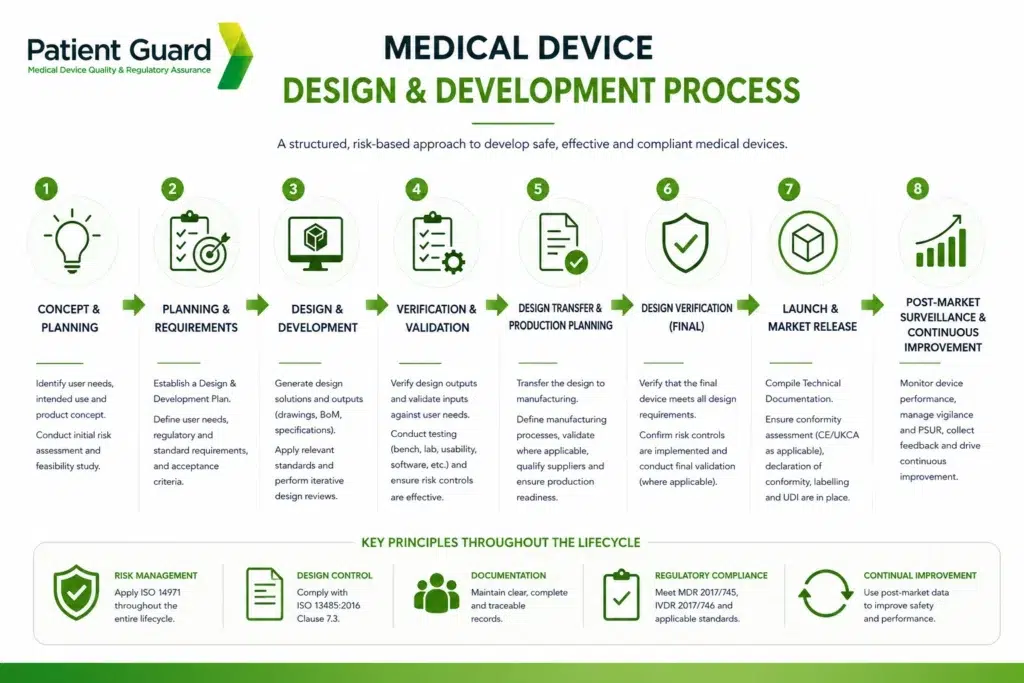
The design and development lifecycle for medical devices and in vitro diagnostic (IVD) medical devices follows a structured, documented process that demonstrates safety, performance and regulatory compliance at every stage. From defining user needs and design inputs through to verification, validation, production transfer and post-market surveillance, each phase generates documented evidence to ensure full traceability and design control. This documentation forms a key part of the Technical Documentation required under the EU MDR, IVDR and UK Medical Device Regulations, providing regulators and conformity assessment bodies with objective evidence that the device has been developed in accordance with applicable standards and regulatory requirements. In the following section, we’ll explore each stage of the design and development process together with the documentation manufacturers should maintain to support compliance and successful market access.
Medical Device and IVD Regulation
Regulations define the risk, safety, and performance requirements that must be met by manufacturers.
There are numerous different standards, which apply to different regions, groups and specific medical
devices. So, when you start to design and develop a medical device or IVD, it’s important to review the
regulations specific to its intended use. With an understanding of these, you can discuss them with the
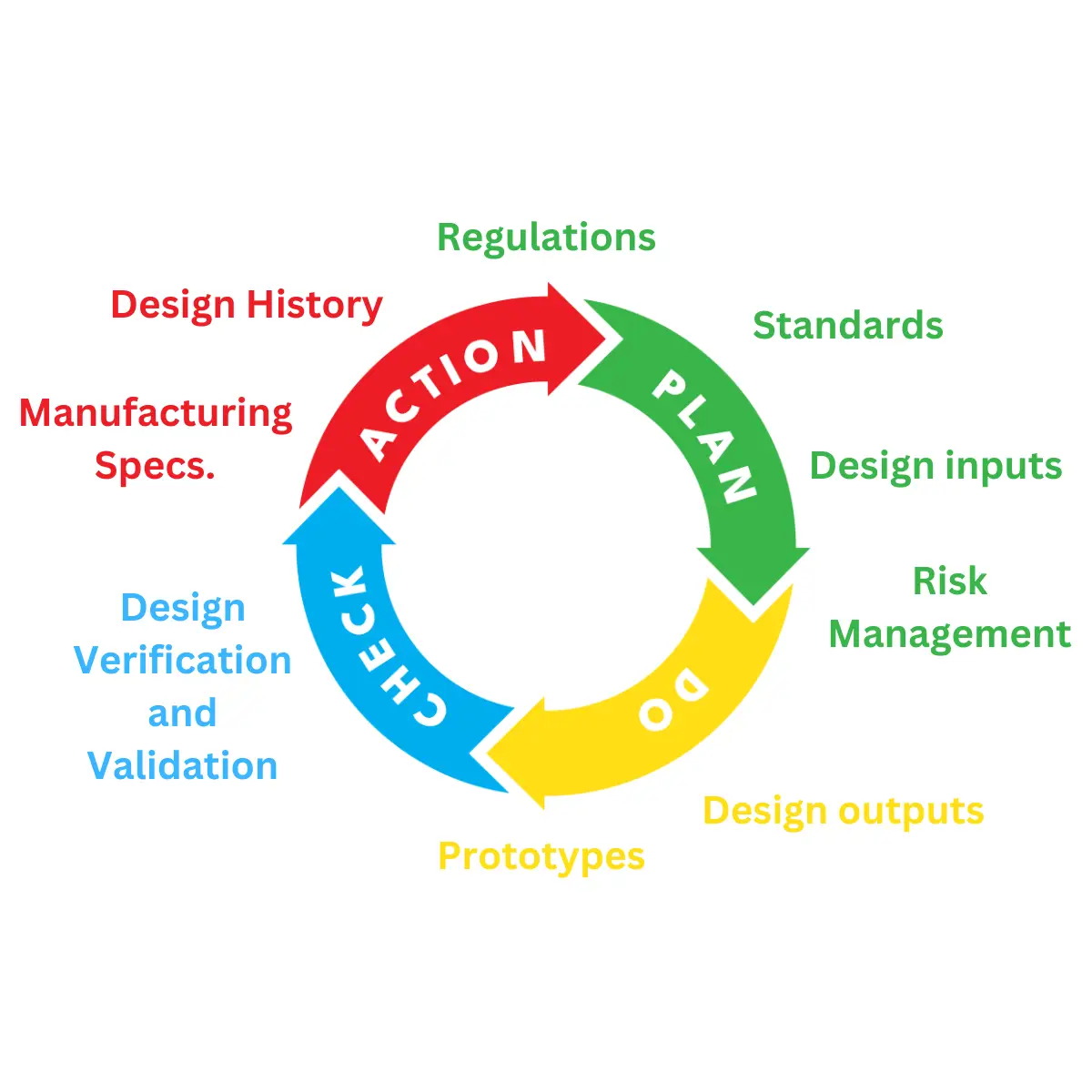
design team, before they start the design and development process.Medical device regulations define the legal requirements manufacturers must meet to demonstrate that their products are safe, perform as intended and deliver an acceptable benefit-risk profile throughout their lifecycle. These regulations establish the framework for activities such as device classification, risk management, clinical or performance evaluation, usability engineering, biological safety, software lifecycle processes, post-market surveillance and technical documentation. Compliance is not simply a final step before market launch—it should be considered from the very beginning of the design and development process.
Different markets have different regulatory frameworks and supporting standards. For example, manufacturers placing devices on the European market must comply with the EU Medical Device Regulation (EU MDR 2017/745) or In Vitro Diagnostic Regulation (EU IVDR 2017/746), while manufacturers targeting Great Britain must comply with the UK Medical Devices Regulations 2002 (as amended). International standards such as ISO 13485, ISO 14971, IEC 62366-1, IEC 62304 and the ISO 10993 series also play a fundamental role in demonstrating compliance with regulatory requirements.
Before design work begins, manufacturers should identify the intended purpose of the device, its target users, intended patient population, clinical environment, classification and applicable regulatory pathway. This early regulatory assessment helps determine which regulations, harmonised or recognised standards, testing requirements and design controls will apply to the project. Incorporating these requirements into the Design and Development Plan from the outset reduces the likelihood of costly redesigns, delays during conformity assessment and unexpected regulatory challenges later in the development programme.
By establishing regulatory requirements at the planning stage, the design team can develop products that meet both user needs and regulatory expectations, ensuring compliance is built into the device rather than added retrospectively. This proactive approach ultimately leads to a more efficient development process, stronger technical documentation and a smoother route to CE marking, UKCA marking or other global market approvals.
EU MDR and IVDR
In the European Union, medical devices and in vitro diagnostic (IVD) medical devices are regulated under two separate pieces of legislation, depending on the intended purpose of the product:
- Medical Devices – EU Medical Device Regulation (MDR) (EU) 2017/745
- In Vitro Diagnostic Medical Devices – EU In Vitro Diagnostic Regulation (IVDR) (EU) 2017/746
Both regulations establish the legal framework manufacturers must follow to demonstrate that their devices are safe, perform as intended and can be placed on the European market. They define requirements relating to device classification, quality management systems, technical documentation, clinical or performance evaluation, risk management, post-market surveillance, vigilance and conformity assessment.
A fundamental component of both regulations is Annex I – General Safety and Performance Requirements (GSPRs). The GSPRs replace the Essential Requirements contained within the previous Medical Devices Directives and form the foundation of every compliant Technical Documentation file.
During the design and development process, manufacturers should assess each applicable GSPR against the device’s intended purpose, design, materials, manufacturing methods, intended users and foreseeable risks. Evidence demonstrating compliance should be generated throughout the design lifecycle rather than being compiled at the end of development. This ensures regulatory requirements are incorporated into the product from the outset and helps avoid costly redesigns during conformity assessment.
A documented GSPR checklist is typically used to map each applicable requirement to the supporting evidence within the Technical Documentation, including risk management files, Clinical Evaluation Reports (CERs), Biological Evaluation Reports (BERs), verification and validation testing, usability engineering, labelling and Instructions for Use (IFU).
UK Medical Device Regulations 2002
For manufacturers placing medical devices on the Great Britain market (England, Scotland and Wales), compliance with the UK Medical Devices Regulations 2002 (UK MDR 2002), as amended, is essential. While the UK regulatory framework continues to evolve following Brexit, manufacturers must ensure their devices meet the applicable legal requirements before they can be placed on the market.
At present, the UK regulatory framework recognises both UKCA and, under current transitional arrangements, many CE-marked medical devices. Manufacturers should also monitor forthcoming MHRA reforms, which will introduce new requirements for areas such as post-market surveillance, international reliance, software and artificial intelligence, and other aspects of the UK regulatory framework.
For manufacturers seeking both UK and EU market access, it is generally recommended that devices are designed and developed to meet the requirements of the EU MDR (EU) 2017/745 or EU IVDR (EU) 2017/746, as these regulations represent the most comprehensive regulatory framework currently applied across Europe. Aligning design controls, risk management, verification, validation and Technical Documentation with the MDR or IVDR can also simplify future UK compliance as the MHRA continues to modernise the UK regulations.
Although legacy devices certified under the former Medical Devices Directives may still reference the Essential Requirements (ERs), manufacturers developing new devices should instead focus on demonstrating compliance with the General Safety and Performance Requirements (GSPRs) under the MDR or IVDR, together with the applicable requirements of the UK Medical Devices Regulations.
International Medical Device Standards
Harmonised standards ensure that medical devices meet international safety and performance
benchmarks. Here are some important medical device-related standards that are accepted
internationally.
All medical devices:
- ISO 14971 – Medical devices. Application of risk management to medical devices
- ISO 20417 – Medical devices. Information to be supplied by the manufacturer
- ISO 15223 – Medical devices. Symbols to be used with information to be supplied by the manufacturer – General requirements
- ISO 13485 – Medical devices. Quality management systems. Requirements for regulatory purposes
- ISO 62366 – Medical devices – Application of usability engineering to medical devices
Medical devices containing software or software as a standalone medical device:
Electrical devices:
- ISO 60601-1 series – General requirements for safety – Collateral standard. Safety requirements
for medical electrical systems - ISO 60601-2 series – Particular requirements for the basic safety and essential performance of magnetic resonance equipment for medical diagnosis
Biological Evaluation for patient contacting devices:
- ISO 10993 series – Evaluation and testing within a risk management process
Sterilised medical devices:
- ISO 11135 – Sterilization of health care products. Ethylene oxide – Requirements for
development, validation and routine control of a sterilization process for medical devices - ISO 11137 – Sterilization of health care products – Radiation – Requirements for development,
validation and routine control of a sterilization process for medical device - ISO 17665 – Sterilization of health care products – Moist heat – Requirements for the
development, validation and routine control of a sterilization process for medical devices - ISO 11607-1 – Packaging for terminally sterilized medical devices – Requirements for materials,
sterile barrier systems and packaging systems - ISO 11607-2 – Packaging for terminally sterilized medical devices – Validation requirements for
forming, sealing and assembly processes
For Specific Equipment:
- ISO 60601-2-24 – Medical electrical equipment – Particular requirements for the basic safety
and essential performance of infusion pumps and controllers
• ISO 3826-4 – Plastics collapsible containers for human blood and blood components –
Aphaeresis blood bag systems with integrated features
Important Note on Applicable Standards
This is not an exhaustive list of standards. Manufacturers should always assess which harmonised, designated, collateral and product-specific standards apply to their medical device or IVD based on its intended purpose, classification, technology, materials, software, users and clinical environment.
Design and Development Plan
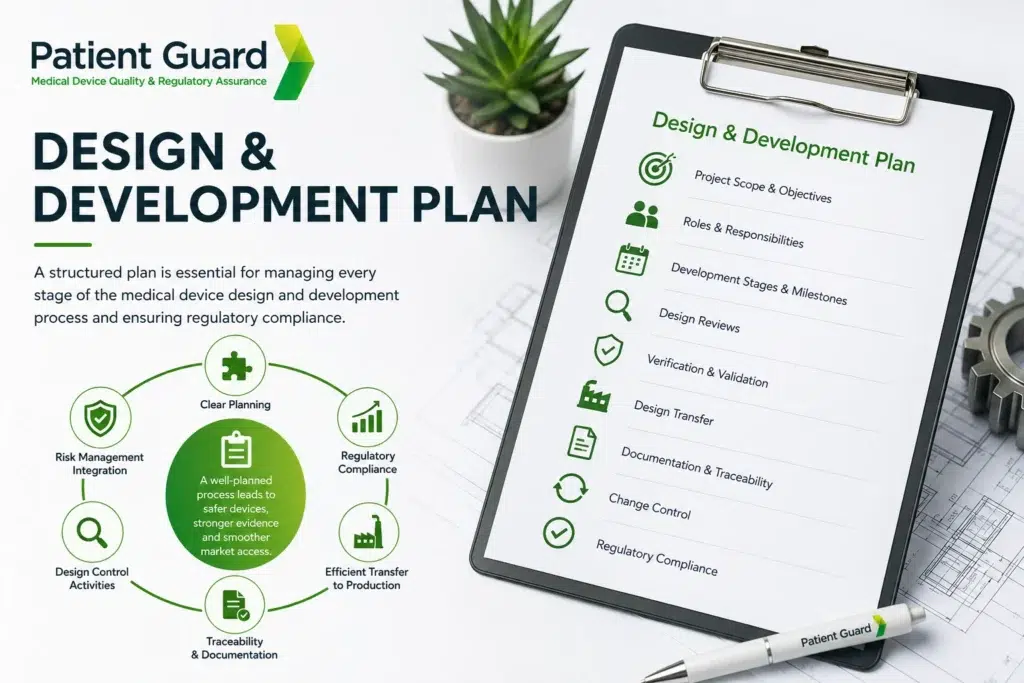
Once the applicable regulatory requirements have been identified, manufacturers should develop a comprehensive Design and Development Plan before detailed design activities begin. This is a key requirement of ISO 13485:2016 and provides the framework for managing the entire development project in a controlled, documented and traceable manner.
The Design and Development Plan should define the scope of the project, development objectives, intended purpose of the device, key milestones, deliverables and project timescales. It should also identify the resources required, allocate responsibilities and authorities, and establish how communication between different departments will be managed throughout the project.
In addition, the plan should describe the design control activities that will be undertaken, including design inputs, design outputs, formal design reviews, verification, validation and design transfer into manufacturing. Manufacturers should also define how changes to the design will be controlled, documented and approved, ensuring full traceability throughout the product lifecycle.
The Design and Development Plan should integrate with other elements of the Quality Management System, including risk management, usability engineering, software development (where applicable), biological evaluation, clinical evaluation, supplier management and Technical Documentation. As the project progresses, the plan should be reviewed and updated whenever significant changes occur, ensuring it continues to reflect the current state of development.
A well-structured Design and Development Plan not only supports compliance with ISO 13485 and the EU MDR/IVDR but also helps minimise project risks, improve cross-functional collaboration and provide objective evidence that the device has been developed using appropriate design controls. Ultimately, it forms one of the foundation documents within the Design History File (DHF) or equivalent Technical Documentation, demonstrating that the development process has been planned, executed and documented in a systematic and compliant manner.
Quality Management Systems (QMS)
Before beginning the medical device design and development process, manufacturers should establish and maintain a robust Quality Management System (QMS). A QMS provides the framework for planning, controlling and documenting the development lifecycle, ensuring that products are designed consistently, regulatory requirements are met and objective evidence of compliance is maintained.
For manufacturers intending to market medical devices internationally, certification to ISO 13485:2016 is widely regarded as the benchmark for medical device quality management. Although certification is not mandatory for every Class I manufacturer, implementing an ISO 13485-compliant QMS demonstrates a commitment to quality and significantly simplifies regulatory submissions, Notified Body audits and customer due diligence.
The applicable quality management requirements vary depending on the target market:
- European Union (EU): EN ISO 13485:2016 (supported by the requirements of the EU MDR 2017/745 and IVDR 2017/746)
- United Kingdom (Great Britain): EN ISO 13485:2016 (supporting compliance with the UK Medical Devices Regulations 2002, as amended)
- United States (FDA): 21 CFR Part 820 – Quality Management System Regulation (QMSR), which incorporates ISO 13485:2016 by reference
- Other international markets: Many jurisdictions, including Canada, Australia and Japan, also recognise or require ISO 13485 as the foundation of their regulatory framework.
A compliant Quality Management System should ensure that every stage of the design and development process is planned, documented, reviewed and controlled. This provides manufacturers with confidence that products are developed in accordance with regulatory requirements while maintaining complete traceability from initial concept through to commercial manufacture and post-market activities.
At a minimum, Design and Development Planning should define:
- The design and development stages and associated project milestones.
- Design inputs and expected design outputs.
- Formal design reviews at appropriate stages of development.
- Design verification activities to confirm design outputs meet design inputs.
- Design validation activities demonstrating the device fulfils its intended purpose and user needs.
- Design transfer activities to ensure the product can be consistently manufactured.
- Roles, responsibilities and authorities for all personnel involved in the project.
- Methods for maintaining traceability between user needs, design inputs, design outputs, verification, validation and risk management activities.
- The resources required, including suitably qualified personnel, equipment, software and infrastructure.
- Design change control procedures to manage modifications throughout the product lifecycle.
- Integration with supporting QMS processes such as Risk Management (ISO 14971), Supplier Management, Document Control, Clinical Evaluation, Biological Evaluation, Usability Engineering, Software Lifecycle Processes (where applicable), and Post-Market Surveillance.
Maintaining an effective QMS throughout the development process ensures that design decisions are documented, risks are managed systematically and regulatory evidence is generated as the device evolves. Rather than being viewed as an administrative exercise, the QMS should be considered the foundation of successful medical device design and development, supporting product quality, patient safety and long-term regulatory compliance.
Need Help Understanding ISO 13485?
A Quality Management System is central to medical device design and development. To learn more about ISO 13485 requirements, certification, design controls, document control, risk management and regulatory compliance, read our complete guide to ISO 13485.
Developing Software or Connected Medical Devices?
Information security should be considered from the earliest stages of design and development, particularly for Software as a Medical Device (SaMD), connected devices and digital health technologies. Learn how to establish an Information Security Management System (ISMS), manage cybersecurity risks and achieve ISO 27001 compliance in our complete beginner's guide to ISO 27001.
Design and Development Stages
Designing a medical device involves a series of controlled activities defined within ISO 13485:2016, ensuring the device is developed in a systematic, safe and compliant manner.
Design Inputs define what the device must achieve and form the foundation of the design process. They typically include functional, performance, usability and safety requirements, together with applicable regulatory requirements, intended use, user needs, applicable standards and the outputs of the risk management process. Design inputs should be complete, unambiguous and capable of being verified.
Design Outputs are the documented results of the design process and must demonstrate that all design input requirements have been met. They provide the information necessary for purchasing, manufacturing, verification, validation, servicing and post-market activities. Design outputs typically include engineering drawings, specifications, software requirements, manufacturing instructions, labelling, Instructions for Use (IFU), packaging specifications and product characteristics that are essential for the safe and effective use of the medical device.
Design and Development Reviews
Design Reviews are formal, documented assessments carried out at predefined stages throughout the design and development process. Their purpose is to confirm that the project is progressing as planned, design outputs continue to satisfy design input requirements, and any technical, regulatory or quality issues are identified early. Design reviews should involve representatives from all relevant functions, such as engineering, quality assurance, regulatory affairs, manufacturing and clinical specialists where appropriate. Any actions, decisions or recommendations arising from the review should be documented, assigned to responsible individuals and tracked through to completion before the project progresses to the next development stage.
Design and Development Verification
Design Verification provides objective evidence that the design outputs satisfy the design input requirements. In other words, it confirms that the device has been designed correctly and that every specified requirement has been addressed. Verification activities should be planned in advance and include the methods to be used, acceptance criteria, responsibilities and, where appropriate, statistically justified sampling techniques. Typical verification activities may include inspections, engineering assessments, laboratory testing, software testing and document reviews. Where a medical device is intended to interface or connect with another medical device, accessory or software system, verification should also demonstrate that the device continues to meet its design input requirements when used within the intended operating environment and under the specified conditions of use.
Design Validation
Design Validation provides objective evidence that the finished medical device fulfils its intended purpose and meets the needs of its intended users in the intended use environment. Validation is performed using representative production units, batches or their equivalent to demonstrate that the final product performs safely and effectively under real or simulated conditions of use. Validation activities should be planned in advance and include defined methods, acceptance criteria, responsibilities and, where appropriate, statistically justified sampling techniques. Depending on the device, validation may include usability studies, software validation, simulated use testing, clinical evaluation (for medical devices) or performance evaluation (for IVDs), together with any additional testing required to demonstrate compliance with applicable regulatory requirements. Design validation should be successfully completed, and the results documented and approved, before the device is released for commercial manufacture or placed on the market.
Need More Guidance on Medical Device Validation?
Design validation is a key stage of the medical device design and development lifecycle, confirming that the finished device meets its intended use, user needs and regulatory requirements. For more detail on validation planning, acceptance criteria, clinical evaluation, performance evaluation and documented evidence, read our guide to validation of medical devices.
Design and Development Transfer
Design Transfer is the process of ensuring that the completed design can be consistently and reliably manufactured while continuing to meet all specified product requirements. Before production begins, manufacturers should verify that design outputs have been accurately translated into manufacturing specifications, production processes, inspection methods and quality controls. This includes confirming that manufacturing personnel have the necessary information, equipment and training to produce the device consistently. Documented design transfer procedures should also demonstrate that production processes are capable of repeatedly delivering products that meet their intended performance, safety and regulatory requirements before full-scale commercial manufacture commences.
Control of Design and Development Changes
Design Changes are an inevitable part of the medical device development lifecycle and must be managed through a formal design change control process. Any modification to the device, its intended purpose, materials, software, manufacturing process or labelling should be assessed to determine its potential impact on safety, performance, regulatory compliance and associated documentation. All design changes should be documented, reviewed, verified and, where appropriate, validated before implementation. They should also be approved by authorised personnel and reflected in the relevant Technical Documentation, Risk Management File, Clinical Evaluation, manufacturing records and other associated documents. Effective design change control ensures product integrity is maintained, traceability is preserved and any regulatory implications are identified before the modified device is released to production or placed on the market.
Risk Management in Design and Development
Risk Management is a fundamental part of the medical device design and development process and should begin at the earliest stages of product development. In accordance with ISO 14971, manufacturers should establish, implement and maintain a documented risk management process throughout the entire product lifecycle. This includes identifying hazards, estimating and evaluating risks, implementing appropriate risk control measures and monitoring the effectiveness of those controls. Risk management should be an ongoing activity that evolves alongside the design, ensuring that new risks introduced by design changes, manufacturing processes or post-market information are identified and addressed. A well-maintained Risk Management File provides objective evidence that the benefits of the medical device outweigh any residual risks and supports compliance with the EU MDR, IVDR, UK Medical Devices Regulations and other international regulatory requirements.
Risk Management Plan
A documented Risk Management Plan forms the foundation of the risk management process and should be established before significant design activities begin. The plan defines how risks will be identified, assessed, controlled and monitored throughout the design, manufacturing and post-market phases of the medical device lifecycle. It also ensures that risk management activities are carried out consistently and in accordance with ISO 14971.
As a minimum, the Risk Management Plan should define:
- The scope of the planned risk management activities and the medical device(s) to which they apply.
- Roles, responsibilities and authorities for personnel involved in the risk management process.
- Requirements for reviewing and updating risk management activities throughout the product lifecycle.
- The criteria for determining whether identified risks are acceptable.
- The methods and criteria used to evaluate the overall residual risk and benefit-risk balance.
- Planned activities for verifying that risk control measures have been correctly implemented and are effective.
- The process for collecting, reviewing and acting upon production and post-production information, including complaints, nonconformities, vigilance reports, trend analysis and post-market surveillance data.
The Risk Management Plan should be reviewed and updated whenever significant changes occur to the device, its intended use, manufacturing processes or applicable regulatory requirements, ensuring that it remains relevant throughout the product lifecycle.
Risk Identification and Evaluation
Risk Identification and Evaluation should begin as early as possible in the design and development process and continue throughout the entire product lifecycle. Manufacturers should systematically identify potential hazards associated with the medical device, including those relating to its intended use, reasonably foreseeable misuse, materials, software, usability, manufacturing processes and clinical application. Each identified hazardous situation should be analysed by estimating the probability of occurrence and the severity of potential harm, allowing the associated risk to be evaluated against the predefined risk acceptability criteria. Where risks are not acceptable, appropriate risk control measures should be implemented following the hierarchy defined in ISO 14971, with the effectiveness of those controls verified before reassessing the residual risk. This iterative process continues until all identified risks have been reduced, as far as possible, to acceptable levels and the overall benefit-risk profile of the device is considered acceptable.
Risk Control and Evaluation
Risk Control and Risk Evaluation are ongoing activities throughout the design and development process. Once risk control measures have been implemented, manufacturers should verify that they have been correctly applied and are effective in reducing the identified risks. The residual risks should then be re-evaluated against the predefined risk acceptability criteria established within the Risk Management Plan. Where residual risks remain, they should be communicated to users through appropriate labelling, Instructions for Use (IFU) or training where necessary. Finally, an overall benefit-risk analysis should be performed to determine whether the anticipated clinical or diagnostic benefits of the medical device outweigh any remaining residual risks. This assessment should be documented within the Risk Management File and reviewed throughout the product lifecycle as new information becomes available from production, post-market surveillance and vigilance activities.
Mitigating Risk: An Example
Risk control measures can take many forms, including inherent safe design, protective measures, verification and validation testing, compliance with recognised standards, and information provided to the user. Applying relevant international standards is often one of the most effective ways of demonstrating that identified risks have been reduced to acceptable levels.
For example, consider a medical device that is sterilised using ethylene oxide (EO) and comes into direct contact with the patient.
Ethylene oxide is an effective sterilisation agent; however, residual EO remaining on the finished device can present risks to patients and users. Exposure to excessive EO residuals has been associated with irritation, organ toxicity, mutagenicity, carcinogenicity and adverse reproductive effects. Therefore, one identified hazard is the presence of unacceptable levels of ethylene oxide residuals following sterilisation.
As part of the risk management process, appropriate risk control measures should be implemented to minimise this hazard. These may include:
- Validation of the ethylene oxide sterilisation process in accordance with ISO 11135.
- Establishing validated aeration processes to reduce EO residuals following sterilisation.
- Testing finished, sterilised devices for residual ethylene oxide in accordance with ISO 10993-7.
- Evaluating the toxicological significance of the test results as part of the Biological Evaluation Report (BER) in accordance with ISO 10993-1, performed by a suitably qualified toxicologist or biological safety expert.
Once these risk control measures have been implemented and verified, the risk should be re-evaluated by reassessing both the probability of harm and the severity of any remaining residual risk. If the residual risk is considered acceptable according to the criteria defined within the Risk Management Plan—and the overall benefits of the device continue to outweigh the remaining risks—the risk can be accepted and documented within the Risk Management File. If the residual risk remains unacceptable, additional risk control measures should be identified and implemented before the device progresses further through the design and development process.
Want to Learn More About ISO 14971 Risk Management?
Risk management is embedded throughout the medical device design and development lifecycle and is a fundamental requirement of ISO 13485, the EU MDR, IVDR and FDA regulations. To understand how to identify hazards, evaluate risks, implement risk controls and maintain a compliant Risk Management File, read our complete guide to ISO 14971 Risk Management.
Proof of Concept
Proof of Concept (PoC) Testing is an important early stage of the medical device design and development process that demonstrates whether the proposed design is technically feasible and capable of performing its intended function. At this stage, prototype devices or laboratory models are typically evaluated to confirm that key design features, technologies and engineering principles work as expected before significant resources are committed to further development. Proof of concept testing helps identify technical challenges, usability issues, performance limitations and potential safety concerns early in the project, allowing design improvements to be made before formal design verification, validation and clinical or performance evaluations begin. Although PoC testing is not generally intended to demonstrate regulatory compliance, it provides valuable evidence that the concept is viable and supports informed design decisions as the project progresses through the design and development lifecycle.
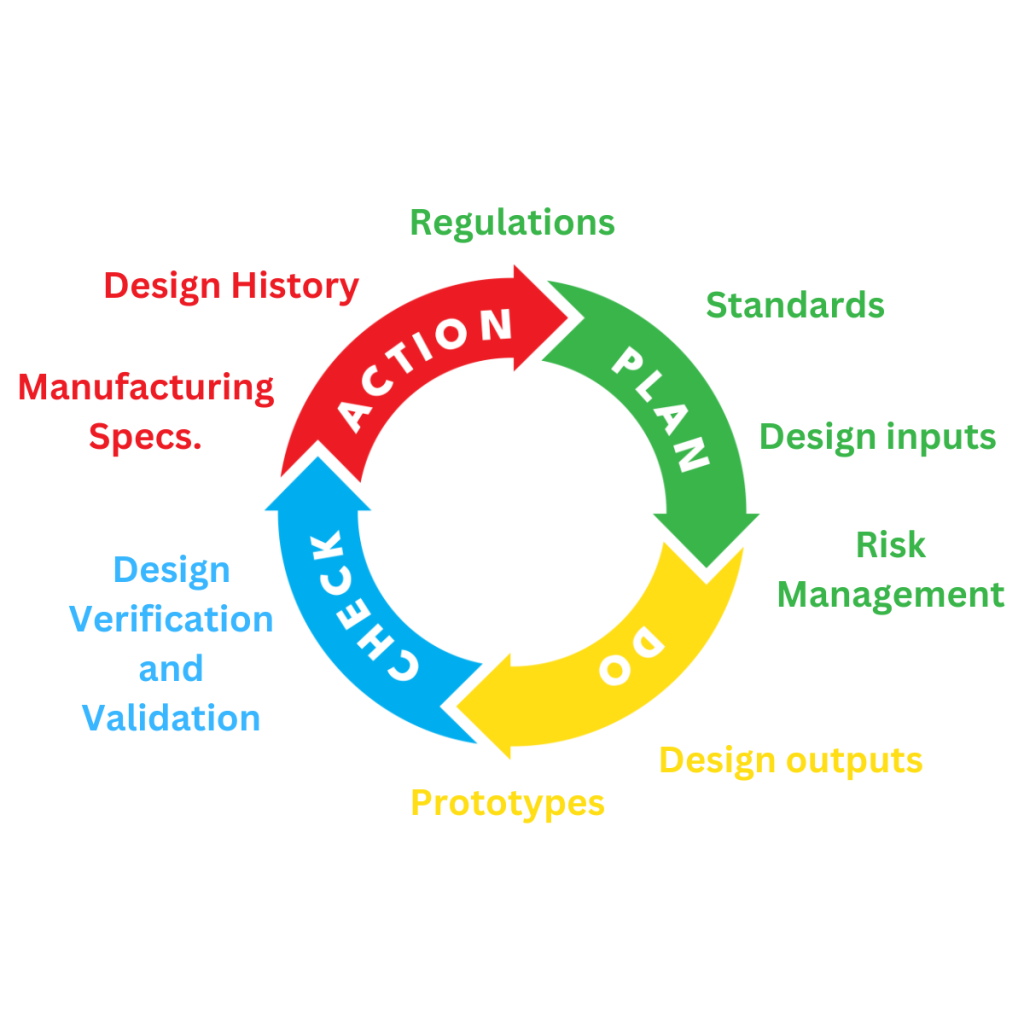
Design History
Throughout the medical device design and development process, manufacturers should maintain a comprehensive record of all design activities within their Quality Management System (QMS). This information is typically compiled within a Design History File (DHF) or equivalent design documentation, providing objective evidence that the device has been developed in accordance with approved design controls and applicable regulatory requirements.
The Design History File should include records such as the Design and Development Plan, design inputs and outputs, design reviews, verification and validation reports, risk management documentation, design change records, usability studies, software documentation (where applicable), test reports and evidence of design transfer into manufacturing. Together, these records provide complete traceability from the original user needs and intended purpose through to the finished medical device.
Maintaining a complete and well-organised design history not only supports compliance with ISO 13485, the EU MDR, EU IVDR and other international regulations, but also provides valuable evidence during Notified Body audits, regulatory inspections and customer assessments. It demonstrates that the device has been developed using a controlled, risk-based process and that all design decisions have been appropriately reviewed, verified, validated and documented.
By following a structured design and development process and maintaining comprehensive documentation throughout the product lifecycle, manufacturers can demonstrate regulatory compliance, support patient safety and facilitate a more efficient route to market. Robust design controls and accurate records also simplify future product updates, regulatory submissions and post-market activities, helping to ensure the continued safety and performance of the medical device throughout its commercial lifecycle.
How can Patient Guard Help?
Since 2017, Patient Guard has supported hundreds of medical device and IVD manufacturers, from innovative start-ups to established multinational organisations, throughout the entire design and development lifecycle. Whether you are developing a brand-new medical device, modifying an existing product or preparing for CE marking, UKCA marking or other international market approvals, our experienced regulatory consultants can help you navigate the complex regulatory landscape with confidence.
Our team provides practical, commercially focused support across every stage of development, including regulatory strategy, device classification, Quality Management Systems (ISO 13485), Risk Management (ISO 14971), Clinical Evaluation, Biological Evaluation, Technical Documentation, usability engineering, software lifecycle compliance, post-market surveillance and regulatory submissions. We work closely with manufacturers to ensure that regulatory requirements are considered from the earliest stages of product development, helping to reduce delays, minimise costly redesigns and accelerate market access.
Whether you need support with a specific aspect of your project or require a complete outsourced regulatory partner, Patient Guard can provide the expertise needed to take your medical device from concept through to commercialisation. Our consultants have extensive experience supporting manufacturers across a wide range of medical devices and IVDs, helping clients achieve compliance with the EU MDR, IVDR, UK Medical Devices Regulations and other international regulatory frameworks.
If you are designing and developing a medical device or IVD and would like expert guidance, contact Patient Guard today to discuss your project. We’d be delighted to help you develop a safe, compliant and commercially successful product.
Frequently Asked Questions About Medical Device Design and Development
The design and development process for medical devices involves transforming an initial concept into a market-ready product. It includes defining user needs, creating a design plan, prototyping, testing, and ensuring regulatory compliance.
Why it matters: A structured process ensures the device is safe, effective, and meets regulatory requirements such as the EU MDR, FDA regulations, or ISO 13485.
The process typically includes:
- Concept and Feasibility: Defining user needs and technical feasibility.
- Design Planning: Developing a structured plan, including regulatory considerations.
- Design Inputs: Documenting specifications based on user needs and safety requirements.
- Design Outputs: Creating detailed designs, including prototypes and schematics.
- Design Verification and Validation: Ensuring the design meets specifications and performs as intended.
- Transfer to Manufacturing: Scaling production with quality controls in place.
Pro tip: Aligning the process with regulatory standards like ISO 13485 ensures smoother market entry.
Risk management, as outlined in ISO 14971, is integral to medical device design. It involves:
- Identifying Risks: Assessing potential hazards associated with the device.
- Mitigating Risks: Designing controls to minimize risks.
- Residual Risk Evaluation: Ensuring remaining risks are acceptable.
- Ongoing Monitoring: Updating risk assessments based on post-market data.
Key takeaway: Incorporating risk management early reduces safety issues and ensures compliance.
- Design Verification: Confirms the design meets input specifications (e.g., performance, safety).
- Design Validation: Ensures the device meets user needs and intended purposes under real-world conditions.
Why it matters: Verification and validation are regulatory requirements under frameworks like FDA QSR and EU MDR, and they ensure the device functions safely and effectively.
Regulations like the EU MDR, IVDR, and FDA guidelines shape every stage of design and development. Key requirements include:
- Defining intended use and classification early in the process.
- Ensuring a Quality Management System (QMS) aligned with ISO 13485.
- Documenting design controls, risk management, and verification/validation results.
- Preparing for regulatory submissions with complete technical documentation.
Key insight: Integrating compliance from the start avoids costly redesigns or approval delays.
Yes! Patient Guard offers expert support throughout the design and development process, including:
- Developing regulatory-compliant design and development plans.
- Assisting with risk management and design verification/validation.
- Preparing technical documentation for CE marking, FDA, or UKCA submissions.
- Guiding compliance with standards like ISO 13485 and ISO 14971.
Why choose Patient Guard: With extensive experience in regulatory frameworks and over 500 successful projects, we ensure your device is designed for safety, performance, and compliance.

David Small BSc (Hons), MSc, MTOPRA
Reviewed by
David Small, BSc (Hons), MSc, MTOPRA
Founder & CEO |
20+ years in medical device regulatory affairs, MDR/IVDR compliance and quality systems.
Patient Guards Recent Posts

IVDR Performance Evaluation Explained: A Complete Guide for Manufacturers
Performance Evaluation is one of the most important requirements under the EU In Vitro Diagnostic Regulation (IVDR). Every manufacturer must demonstrate that their in vitro diagnostic medical device achieves its intended purpose through robust scientific validity, analytical performance and clinical performance evidence. This guide explains every stage of IVDR Performance Evaluation, including Performance Evaluation Plans (PEPs), Performance Evaluation Reports (PERs), Post-Market Performance Follow-up (PMPF) and how Performance Evaluation supports successful CE marking under Regulation (EU) 2017/746.

IVDR Classification Explained: A Complete Guide to Class A, B, C and D IVDs
Understanding how your in vitro diagnostic device is classified under the EU IVDR is one of the first and most important steps towards regulatory compliance. This guide explains the IVDR classification rules, the differences between Class A, B, C and D IVDs, how Annex VIII is applied, and how classification affects conformity assessment, technical documentation and Notified Body involvement.

When Do You Need New Biocompatibility Testing for a Medical Device?
A material change, supplier switch, manufacturing transfer or design modification does not automatically require new ISO 10993 biocompatibility testing. Learn how manufacturers use Biological Evaluation Plans (BEPs), chemical characterisation, toxicological risk assessments and Biological Evaluation Reports (BERs) to determine whether existing biological evidence remains valid or whether additional testing is required under ISO 10993-1, the EU MDR and FDA expectations.
Patient Guards Related Services
Patient Guards Regulatory Tools
Need Training?
Do you need training on Quality Management Systems or EU MDR/ EU IVDR? then check out our training courses.